|
Getting your Trinity Audio player ready...
|
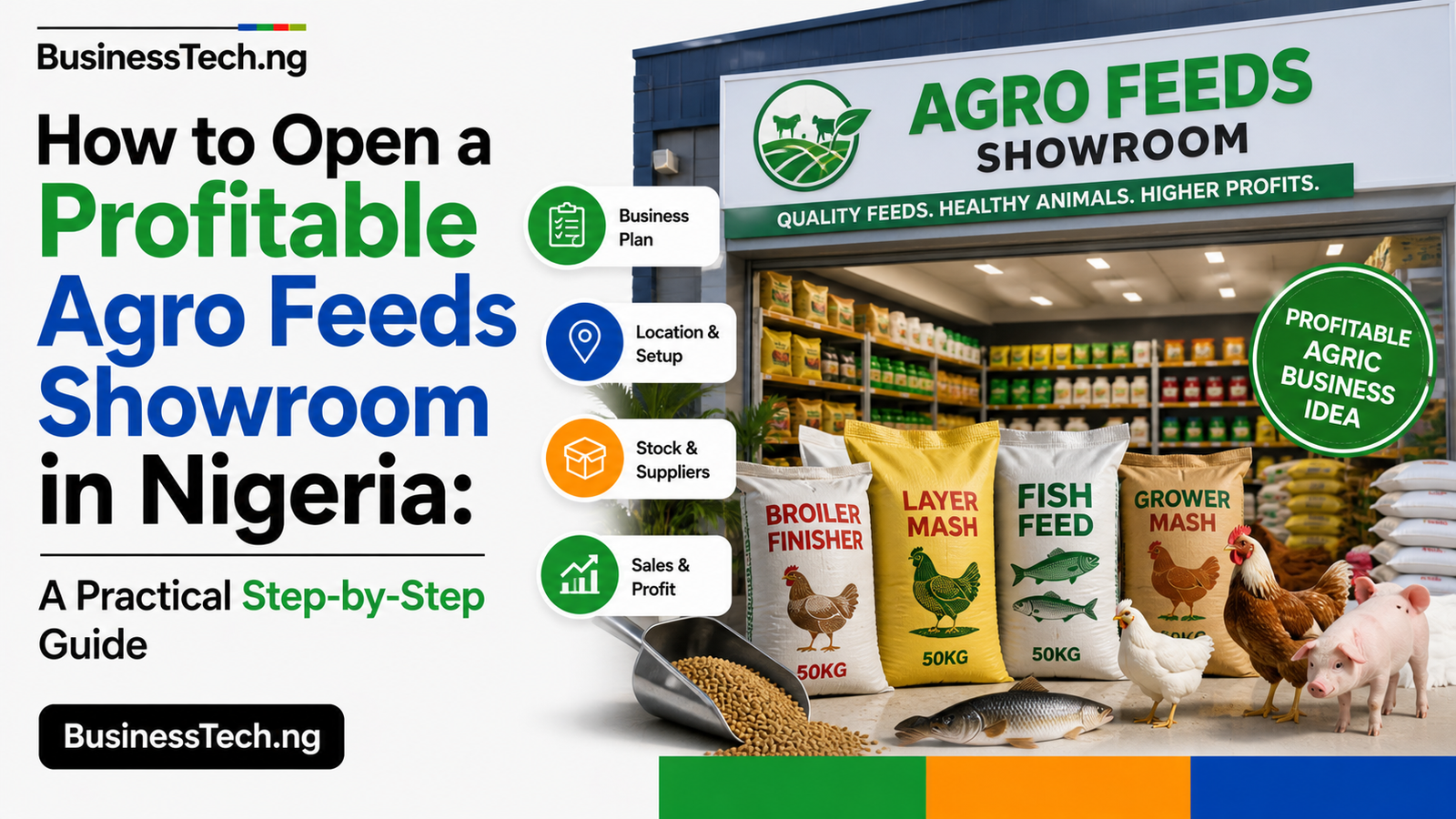
How to Open a Profitable Agro Feeds Showroom in Nigeria: A Practical Step-by-Step Guide
Ask any poultry farmer in Nigeria why they still drive to a physical feed dealer instead of ordering online, and you’ll get some version of the same answer: they want to feel the pellets, check for mould or weevils, confirm the bag weight themselves, and hear from someone who actually understands what a layer bird eats differently from a broiler at six weeks. A price list on a website can’t do any of that. A showroom can.
If you’re planning to open an agro feeds showroom, that’s really the whole game: give farmers a place they trust enough to keep coming back to, month after month, season after season. Here’s how to build one properly.
1. Get specific about what you’ll actually sell
“Agro feeds” is a broad label, and trying to be everything to everyone at the start usually backfires. Decide early whether you’re focused on poultry feed (broiler, layer, starter, grower), fish feed for catfish and tilapia farmers, feed for pigs and cattle, or a mix. Also decide whether you’ll stock established brands like Top Feeds, Vital Feeds, Animal Care, or Grand Cereals, or whether you eventually want to blend and bag your own feed on-site.
Many successful agro feed businesses start purely as a distributor of trusted brands, build a customer base, and only move into their own feed formulation once they understand local demand and have the capital for proper mixing equipment. There’s no shame in starting simple.
2. Register the business the right way
Beyond the standard CAC business name registration, agro feed businesses carry a few extra regulatory considerations. If you plan to blend, repackage, or manufacture feed rather than just resell sealed bags from established brands, you’ll need to look into NAFDAC registration for the products you’re putting your name on. Get familiar with the Standards Organisation of Nigeria’s requirements around weights and measures too, since farmers pay close attention to whether a “25kg bag” is actually 25kg, and disputes over short weight are one of the fastest ways to lose customer trust in this business.
Talk to an accountant early as well. Feed input costs (maize, soybean meal, fishmeal) move with both harvest seasons and the exchange rate, and understanding how that affects your margins from day one will save you from underpricing yourself later.
3. Choose a name farmers will remember and trust
A name like “Blessed Ventures” tells a potential customer nothing. Something like “Kaduna Poultry Feeds” or “Delta Agro Feeds & Supplies” does two jobs at once: it tells people exactly what you sell, and it helps you show up when someone nearby searches for a feed dealer online or asks around in their farming WhatsApp group. You can still fold a family name in if you want that personal touch, something like “Adeyemi Agro Feeds” works fine, since farmers do business with people they know by name in this industry.
4. Know your customer before you know your shelves
Your customer base likely splits into at least two very different groups: small backyard farmers who buy one or two bags at a time and want friendly advice, and commercial farmers who buy in bulk, expect credit terms, and want reliable delivery more than they want conversation. Decide early how you’ll serve both without one group feeling neglected. A lot of agro feed dealers succeed simply by being the one place in town that treats a farmer with five birds exactly as respectfully as one with five thousand.
5. Put it all in writing with a real business plan
Skipping this step is one of the most common reasons small agro businesses stall within the first year. Your plan should cover who else is already selling feed in your area and what they’re doing well or badly, how you’ll reach farmers, what your day-to-day customer experience will look like, who you need to hire and why, your store policies, and a realistic three-to-five year financial projection that accounts for feed price volatility rather than assuming today’s prices hold steady.
6. Pick a location built for how farmers actually shop
Location matters in every retail business, but agro feeds has its own rules. You want to be reachable by the trucks and okadas farmers use to haul bags home, ideally along a route farmers already travel, and close enough to farming clusters that you’re not asking someone to cross town for a bag of feed. You’ll also need enough space behind or beside your showroom for bulk storage that’s properly ventilated and protected from rodents and moisture, since damaged stock is a direct hit to your margin in this business more than in most.
7. Build supplier relationships you can actually rely on
Reach out directly to feed millers about becoming an authorized distributor rather than buying through multiple middlemen where possible, since direct relationships usually mean better pricing and more consistent supply during scarcity periods. When you’re negotiating, don’t just talk price. Ask about credit terms, how damaged or expired stock is handled, and how they support you during the periods when maize and soybean prices spike and supply gets tight. Those conversations matter more than the first invoice.
8. Set your store policies before your first customer walks in
Decide in advance how you’ll handle credit sales to regular farmers (extremely common in this business and often the difference between a farmer choosing you or a competitor), what happens if a bag turns out underweight or spoiled, whether you deliver and at what cost, and how you’ll verify bag weight in front of a customer without turning every sale into a negotiation. Write it down and train any staff you hire to apply it consistently, so customers never feel like the rules change depending on who’s behind the counter that day.
9. Design the showroom around how farmers evaluate feed
This is where a lot of agro feed shops fall short, because they set up like a general grocery store instead of thinking about what a farmer actually needs to feel confident buying. Keep clear sample containers of your feed types open for farmers to see, touch, and smell rather than everything sealed in bags they can’t inspect. A visible, calibrated weighing scale near the counter builds more trust than any sign you could put up. If you sell in bulk, keep a loading area at the back where trucks and okadas can pull up without customers on foot having to navigate around them.
Lay your products out in a logical order too: starter feeds near the entrance since new farmers often start there, then grower and finisher feeds, then supplements and drugs, ending near the till with the small, easy add-ons like vitamins, dewormers, feeders, drinkers, and egg trays that a farmer might not have come in for but will happily pick up while they’re there.
10. Hire for animal nutrition knowledge, not just sales charm
A friendly attendant who can’t answer a basic question about feed conversion ratio or why a farmer’s birds have stopped laying will lose that customer to whoever can. Where possible, bring in at least one staff member with an agricultural background, even informal experience counts, who can give farmers real advice. In this business, being genuinely useful is the marketing.
11. Soft-launch before you announce anything
Run for a week or two without any formal announcement. Let real customers walk in, test your pricing, your staff’s answers, and your restocking process, and fix whatever breaks quietly before you spend money telling the whole town you’re open.
12. Market where farmers actually pay attention
Farmers in Nigeria are heavy users of radio, especially local-language agricultural programs, and increasingly organize through WhatsApp groups tied to farming cooperatives and extension programs. Get involved with local agro-dealer associations and extension officers where you can, since a recommendation from someone farmers already trust carries more weight than any advert you could run yourself. Time your promotions around real farming calendars too: feed demand climbs before major poultry-selling periods like Christmas, Sallah, and Easter, and around the start of planting and rearing seasons.
13. Collect contact information and stay in the conversation
Feed prices shift often enough that farmers genuinely want to be told when something changes, up or down. Keep a simple record of regular customers’ phone numbers and start a WhatsApp broadcast list for price updates, restock alerts, and seasonal promotions. It costs you nothing and it’s the reason a farmer who could buy anywhere chooses to keep buying from you.
The bottom line
An agro feeds showroom succeeds on the same thing every good retail business succeeds on: trust, built one honest transaction at a time. Get your products, your pricing, and your regulatory footing right, but don’t underestimate how much of this business comes down to a farmer feeling like you know what you’re talking about and won’t shortchange them on a bag of feed. Get that part right and the rest tends to follow.
By the BusinessTech.ng Business Desk