|
Getting your Trinity Audio player ready...
|
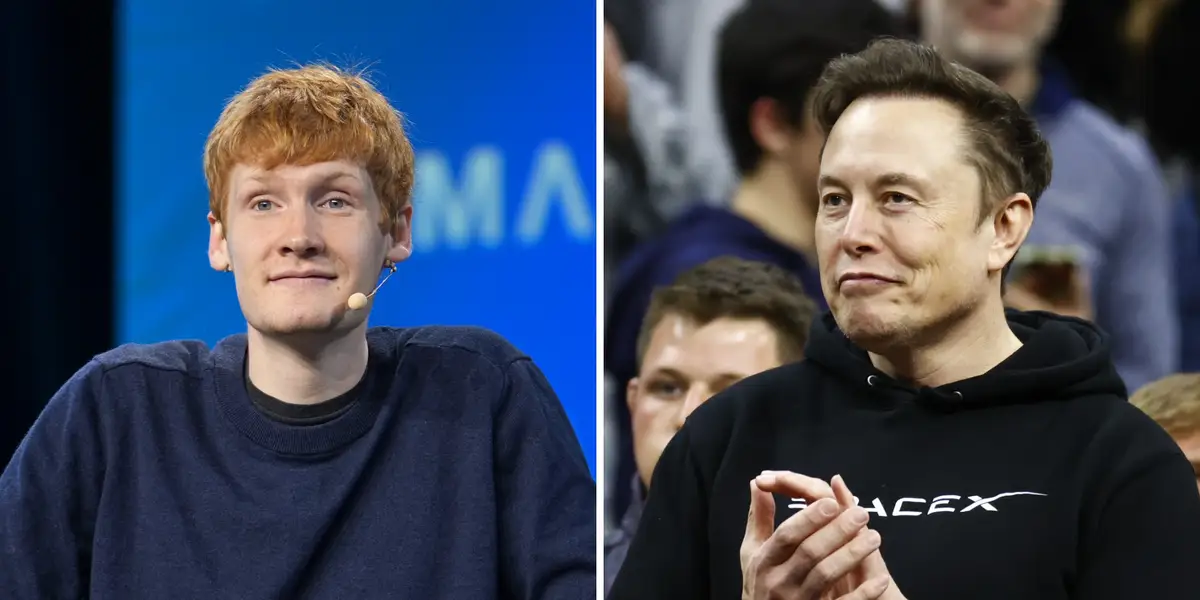
OpenAI has confirmed it will end its contract supplying AI models to Cursor, setting a shutoff date of November 12, 2026, in a decision the company says was forced by SpaceX’s completed acquisition of the popular coding assistant. The announcement lands as one of the most consequential developments yet in the increasingly public feud between OpenAI and Elon Musk, and it puts a firm deadline on something thousands of software developers have quietly depended on for years, seamless access to OpenAI’s models directly inside their coding environment.
SpaceX finalized its $60 billion all-stock purchase of Cursor on August 14, 2026, according to regulatory filings, closing out a deal that had been building since earlier in the year. The two companies first connected in April, when Cursor announced a partnership with SpaceX’s AI operations to help accelerate its model training work, an arrangement that quickly evolved into a full acquisition once SpaceX completed its own record-breaking public offering in June. Cursor, which started life in 2022 under the legal name Anysphere, had grown rapidly into one of the most widely adopted AI coding tools on the market, surpassing $1 billion in annualized revenue by November and landing a spot at number 37 on CNBC’s 2026 Disruptor 50 list, a track record that made the company an attractive acquisition target well before SpaceX entered the picture.
OpenAI’s explanation for cutting Cursor off centers almost entirely on trust rather than competitive positioning. In its official statement, the company said it could not be confident that SpaceX would continue using OpenAI’s technology within the boundaries of its terms of service, pointing directly to prior experience with Musk-controlled companies. OpenAI specifically cited Twitter, now absorbed into SpaceX, breaking the terms of an earlier agreement following Musk’s takeover of that platform, and referenced Musk’s own acknowledgment that xAI, which merged into SpaceX earlier this year, had previously violated OpenAI’s usage terms as well. That history, OpenAI argued, left it unwilling to extend the same level of trust to a company now under identical ownership.
The mechanics behind the November 12 deadline trace back to a specific contractual provision. OpenAI’s custom agreement with Cursor included a limited window allowing either party to cancel the arrangement following a change of ownership, and SpaceX’s acquisition triggered exactly that clause. Rather than pulling access immediately, OpenAI opted to hold the cancellation to the furthest date its contract permitted, giving developers as much runway as possible to adjust before losing access. The company also confirmed that Cursor will not be granted access to its forthcoming model, referred to internally as Astra, once that system becomes available, closing the door on future integration even as the current relationship winds down gracefully rather than abruptly.
Notably, OpenAI’s announcement avoided framing this as a hostile move against Cursor itself. The company described nearly four years of collaboration with Cursor and expressed genuine respect for what the team had built for the developer community, explicitly acknowledging that the people most affected by this decision are ordinary developers who have come to rely on OpenAI models through Cursor’s interface, not Cursor’s leadership or SpaceX’s broader ambitions.
Cursor’s own public response to becoming part of SpaceX has focused almost entirely on computing capacity rather than any specific product roadmap. In a company blog post, Cursor described the acquisition as granting access to the largest fleet of GPUs in the world, framing the deal primarily around infrastructure rather than a strategic realignment toward any particular model provider. The post was notably light on specifics, offering no financial detail beyond figures already public, no announced leadership changes, and only a passing reference to Grok 4.6, xAI’s newest model, as an early glimpse of what the combined companies might eventually produce together. Interestingly, Cursor continues to operate under its own brand, maintaining its own blog and business operations under the Anysphere legal entity even as a SpaceX subsidiary, and the company was still actively acquiring smaller businesses of its own right up until the deal closed, having purchased a company called Firetiger just one day before the acquisition became official.
Musk’s reaction to OpenAI’s decision was characteristically blunt. Responding on his social platform X, he wrote that he couldn’t care less, a comment that fits squarely within the long-running and often bitter rivalry between Musk and OpenAI’s leadership, particularly CEO Sam Altman and President Greg Brockman. That feud has played out across numerous fronts over recent years, including lawsuits, dueling product announcements and repeated public disagreements over AI safety practices and the broader direction of frontier model development, making this latest clash feel like another chapter in an already extensive conflict rather than an isolated dispute.
For developers currently building on Cursor with OpenAI’s models, the practical reality is a defined but manageable transition window. Access continues uninterrupted until November 12, after which anyone whose workflows depend specifically on OpenAI’s models within Cursor will need to shift toward whichever alternative providers remain available on the platform, likely including Anthropic’s Claude models and xAI’s own Grok lineup, both of which Cursor has supported alongside OpenAI in the past. Given how deeply model choice can shape coding workflows, from response style to specific technical strengths, this transition period gives affected teams a real but finite opportunity to test alternatives before the cutoff arrives.
The broader significance of this episode extends well beyond one company’s contract dispute. It illustrates how directly ownership changes can now ripple through the AI development tooling landscape, particularly as major AI labs increasingly treat model access agreements as strategic assets rather than straightforward commercial arrangements. With SpaceX’s AI operations, built around the merged xAI business, positioned as a direct competitor to OpenAI and Anthropic, OpenAI’s willingness to sever an existing four-year relationship the moment ownership shifted to a rival signals just how seriously access control has become in an industry where the underlying model often matters as much as the tool built around it.
Full details on OpenAI’s decision are available through the company’s official announcement. For more coverage of AI industry consolidation and developer tooling, visit Business Tech.