|
Getting your Trinity Audio player ready...
|
Samsung Unveils New Odyssey OLED Gaming Monitor Lineup and 1,100Hz G6 at Gamescom 2026
Samsung used its stage at Gamescom 2026 in Cologne to lay out where gaming displays are headed over the next year, unveiling a refreshed Odyssey lineup that pushes both OLED picture quality and raw refresh rates further than the company has gone before. The announcement covers four new monitors, the Odyssey OLED G9, OLED G7, OLED G8, and the headline act of the group, the Odyssey G6, which now claims the title of the world’s first gaming monitor capable of hitting 1,100Hz.
The reveal happened at the world’s largest gaming event, running in Cologne, Germany from August 26 through 30, and Samsung framed the announcement around giving players more flexibility across speed, screen size, and picture quality rather than pushing a single spec in every direction. Hun Lee, Executive Vice President of Samsung’s Visual Display business, said players attend Gamescom looking for what comes next, and that framing shaped how the company positioned each monitor toward a distinct type of gamer rather than treating the lineup as one undifferentiated upgrade.
The Odyssey G6, model number G60H, is the one most likely to dominate conversation among competitive players. The 27-inch monitor uses a Fast IPS panel and reaches 1,100Hz at HD resolution, an increase over the 1,040Hz figure Samsung had previously teased for the same display. Samsung hasn’t explained exactly what changed between the earlier tease and this final specification, but the jump signals the company continued refining the panel right up until launch. That extreme number comes with an obvious tradeoff. Running the G6 at its native QHD resolution drops the maximum refresh rate down to 600Hz, still an enormous number by any conventional standard, but a reminder that squeezing four-digit refresh rates out of a display currently requires giving up resolution. With a 1ms response time, the monitor is clearly built for competitive first-person shooter players chasing every possible reduction in motion blur, while more casual buyers may find the 600Hz QHD mode the more practical everyday setting. Samsung confirmed the G6 will roll out globally during the second half of 2026.
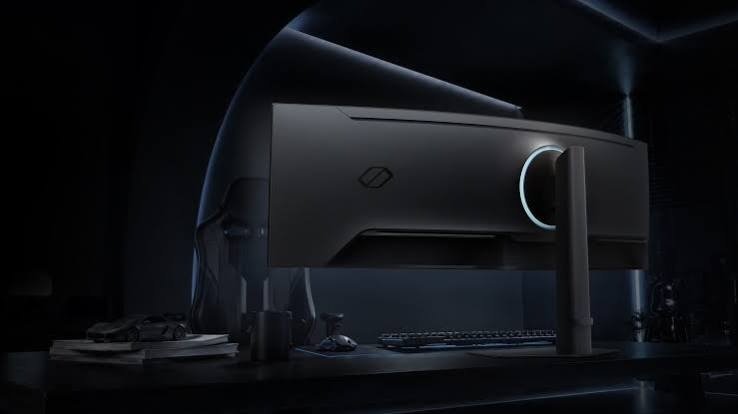
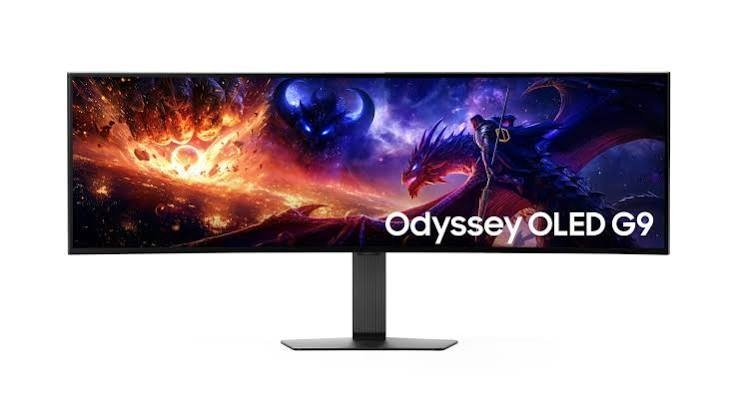
For gamers who prioritize immersion over raw speed, the Odyssey OLED G9 targets a different niche entirely. The 49-inch ultrawide carries model number G95SJ and uses Samsung’s fifth generation Penta Tandem QD-OLED panel paired with RGB stripe subpixels for sharper text and finer graphic detail, something OLED gaming monitors have historically struggled with compared to traditional LCD panels. It runs at a Dual QHD resolution of 5120 by 1440, hits a 360Hz refresh rate, and reaches peak brightness of 1300 nits. A dual mode setting lets players switch to a narrower 2560 by 720 resolution in exchange for a refresh rate that climbs to 720Hz, giving competitive players a way to prioritize speed on the same physical panel used for slower, more visually driven games. Samsung says the underlying panel is up to 1.3 times more efficient and roughly doubles the lifespan of the previous generation Odyssey G9.
The Odyssey OLED G8, model G80SJ, sticks with a more conventional 32-inch form factor but pairs that size with 4K resolution and the same fifth generation QD-OLED panel technology found in the G9. It supports what Samsung calls triple mode, letting users choose between 4K at 360Hz, a step down to 1440p for 520Hz, or a full drop to 1080p for a 680Hz ceiling. Connectivity on the G8 includes DisplayPort 2.1 with UHBR20 bandwidth, two HDMI 2.1 ports, and USB-C delivering up to 98 watts of power, enough to charge a laptop through the same cable handling video output.
Rounding out the lineup, the Odyssey OLED G7, model G75SJ, introduces something genuinely new to Samsung’s gaming display catalog: a 42-inch curved OLED panel, which the company describes as the first of its size and shape in its Odyssey range. Curved at a 1000R radius with a 16:9 aspect ratio, the G7 runs at 4K resolution with a 165Hz refresh rate and includes Samsung’s Glare Free coating. According to Samsung, the screen offers roughly 72 percent more viewing area than a typical 32-inch curved monitor in its existing range, aimed squarely at players who want a more theater-like field of view without sacrificing OLED contrast and color accuracy.
Alongside the hardware, Samsung used the Gamescom stage to expand on its software partnerships. The company detailed an HDR10+ Gaming collaboration with Activision Blizzard that brings richer high dynamic range support into the development pipeline for Call of Duty: Modern Warfare 4, allowing compatible Odyssey monitors to display color and contrast that more closely match what developers intended when building each scene. Samsung said it plans to expand HDR10+ Gaming support to more than 20 AAA titles by the first half of 2027, a meaningful expansion for a format that has historically lagged behind Dolby Vision in mainstream adoption. Samsung also showcased its Odyssey 3D initiative, its glasses free stereoscopic gaming effort, with new supported titles including Cyberpunk 2077 and Cronos: The New Dawn demonstrated on stage to show how the technology adds depth perception to detailed game environments.
Pricing for the new Odyssey OLED G9, G8, and G7 models has not been announced, and availability is expected to vary by region once each display moves from launch reveal to retail shelves. That’s consistent with how Samsung has historically staggered its high end monitor releases, often revealing specifications well ahead of firm pricing and ship dates. The Odyssey G6 remains the exception, with its second half 2026 global rollout already confirmed.
Taken together, the four new displays show Samsung spreading its gaming monitor strategy across very different priorities rather than chasing a single spec sheet. The G6 exists purely to win the refresh rate arms race, the G9 and G7 chase immersion through size and curvature, and the G8 tries to strike a practical balance between resolution, speed, and everyday usability. For competitive players and cinematic gamers alike, Samsung’s newest lineup gives a clearer sense of where premium gaming displays are heading as the industry pushes toward its next generation of hardware.