
|
Getting your Trinity Audio player ready...
|
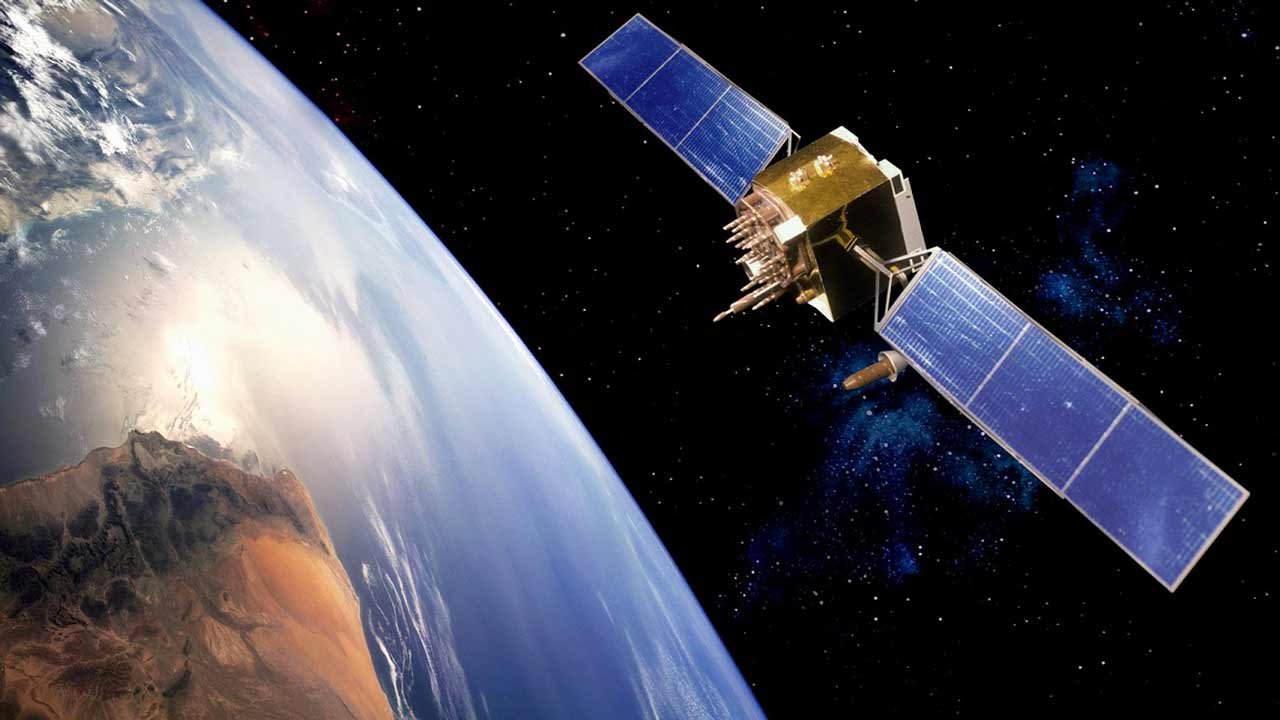
Nigeria has taken the first concrete step toward replacing its aging communications satellite, and the choice of partners says as much about shifting global alliances as it does about the country’s connectivity ambitions. The Federal Executive Council approved a satellite program worth more than $2 billion on August 22, formally clearing the way for France’s Thales Alenia Space and Israel Aerospace Industries to build NIGCOMSAT-2A and NIGCOMSAT-2B, a pair of next-generation geostationary satellites that will eventually take over from the country’s sole active spacecraft.
The urgency behind the decision comes down to a fuel gauge in orbit. NIGCOMSAT-1R, Nigeria’s current communications satellite, launched on December 19, 2011, with a fifteen-year design life that technically runs out this year. NIGCOMSAT, the state-owned company that operates it, says careful management of the satellite’s onboard propellant should keep it functional until 2028, but that window is now the hard deadline against which the entire replacement program is being measured. Miss it, and Nigeria risks a gap in satellite capacity that would ripple through broadcasting, government communications, banking networks and the rural broadband services that depend on it.
What makes this deal notable beyond the timeline is who Nigeria picked to build the replacements. NIGCOMSAT-1R was manufactured in China by the China Great Wall Industry Corporation, and for years that partnership defined Nigeria’s approach to space infrastructure. This time, the government split the work between a French-Italian joint venture and an Israeli state-owned defence and aerospace firm, a pairing that industry observers have read as a deliberate diversification of Nigeria’s strategic technology relationships rather than a simple procurement decision. Thales Alenia Space brings decades of experience building high-throughput satellites for operators around the world, while Israel Aerospace Industries has built a reputation in both commercial and defence-grade satellite systems.
The two satellites are being built as High-Throughput Satellites, a design that uses spot-beam technology instead of the wide, blanket coverage older satellites relied on. That distinction matters more than it might sound. Spot beams let a satellite concentrate bandwidth over specific regions rather than spreading capacity thinly across an entire coverage area, which translates into faster, more reliable connections for users on the ground and makes the satellites commercially viable for both civilian broadband and government or military communications from a single platform. That dual-use flexibility appears to be a deliberate part of Nigeria’s specification, not an incidental feature.
NIGCOMSAT’s managing director and chief executive, Jane Nkechi Egerton-Idehen, described the Federal Executive Council’s approval as a major milestone for the company, and said the new satellites are meant to strengthen Nigeria’s national satellite capacity while expanding connectivity and supporting critical communications nationwide. Her stated priority, as she put it to local press, is translating the investment into measurable value for Nigerians rather than simply adding capacity for its own sake. That distinction is worth sitting with, because it points to the real risk running underneath this program. Nigeria already has satellite infrastructure that hasn’t closed its digital divide. Large parts of the country, particularly rural areas far from fibre networks and cellular towers, remain poorly served despite NIGCOMSAT-1R’s decade and a half in orbit. Unless NIGCOMSAT-2A and 2B are paired with a distribution strategy that actually reaches underserved communities, Nigeria could end up with more satellite bandwidth without meaningfully improving access for the people who need it most.
The financing side of the deal is still being worked out. Although the Federal Executive Council has formally approved the contract, NIGCOMSAT has not disclosed the project’s final cost, saying that figure will only be made public once financing arrangements are closed. Independent estimates put the program north of $2 billion, a substantial commitment for a country that has also been investing heavily elsewhere in its digital economy. Just weeks before the satellite approval, Nigeria’s Minister of Communications, Innovation and Digital Economy, Dr Bosun Tijani, unveiled a National Digital Cloud Policy targeting $750 million in cloud infrastructure investment, explicitly framed as a shift from being a technology consumer toward becoming a technology producer. Taken together, the two initiatives suggest a government trying to build sovereign digital infrastructure on multiple fronts at once, rather than treating satellite capacity as an isolated procurement exercise.
Timing-wise, NIGCOMSAT has laid out a phased rollout rather than a single launch event. According to Stephen Kwande, the acting head of NIGCOMSAT’s corporate affairs division, the two satellites will go up in separate phases, with the first expected by the end of 2028 and the second following in 2029 or 2030. That schedule leaves little room for delay given that NIGCOMSAT-1R’s extended fuel reserves are only expected to last until 2028 as well, meaning the first replacement satellite needs to reach orbit close to the exact moment the current one runs dry. Any slippage in the Thales Alenia Space or Israel Aerospace Industries build timelines, or in the still-unresolved financing, would tighten that margin considerably.
The broader context here is a continent increasingly treating satellite connectivity as core infrastructure rather than a luxury add-on. Africa’s rural and remote regions have long struggled with the economics of laying fibre or building cell towers across sparsely populated terrain, which has made satellite broadband, from state-run programs like NIGCOMSAT to commercial low-earth-orbit constellations, an increasingly central part of how governments plan to close connectivity gaps. Nigeria’s decision to award this contract to a diversified pair of Western and Israeli manufacturers, rather than returning to its previous Chinese supplier, also fits into a wider pattern across African nations of spreading strategic technology partnerships across multiple global powers instead of concentrating dependency on one.
For now, the approval marks the start of a long runway rather than a finished project. NIGCOMSAT still needs to finalise financing, lock in contracts with both manufacturers, and manage a build-and-launch schedule with almost no slack before its current satellite’s fuel runs out. If it pulls that off, NIGCOMSAT-2A and 2B could become genuinely important pieces of Nigeria’s broadband backbone, particularly for the rural and underserved areas that have waited longest for reliable connectivity.