|
Getting your Trinity Audio player ready...
|
A brief pause in one of the most economically disruptive conflicts of the decade appears to be over, and the timing could not be worse for global energy markets already strained by months of disrupted shipping through one of the world’s most important oil corridors. The United States and Iran exchanged direct military strikes this week, ending a lull that had held since July and reigniting fears that the Strait of Hormuz, the narrow waterway through which roughly a fifth of the world’s oil once flowed, will remain effectively closed for business well into the autumn.
US Central Command said American forces carried out a wave of strikes against Islamic Revolutionary Guard Corps targets, hitting air defense sites, radar systems, maritime assets, mine-laying equipment and communications infrastructure. Iran responded on multiple fronts. Jordan’s military said it intercepted 10 of 13 ballistic missiles that entered its airspace, with three landing in remote areas. Bahrain reported destroying incoming Iranian drones. Iranian forces also claimed missile and drone strikes on US positions in Erbil, in northern Iraq, though neither Washington nor Baghdad had confirmed casualties at the time of writing. Iran’s foreign ministry additionally said a strike near Sirik, a coastal town close to the Strait, killed five people and wounded dozens at a wedding, a claim that has not been independently verified.
For anyone tracking the business side of this conflict rather than the military one, the renewed exchange matters most for what it signals about the Strait of Hormuz, the 33-kilometer chokepoint separating Iran from Oman that has functioned as the connective tissue of global energy trade for decades. Before this war began in late February, roughly 25 percent of the world’s seaborne crude oil and petroleum products, along with close to 19 percent of global liquefied natural gas, passed through that narrow channel every day, according to figures compiled by the Congressional Research Service. That volume of traffic made the Strait, in effect, one of the most important pieces of infrastructure in the global economy, and it has been in crisis since the day the shooting started.
The scale of that crisis is difficult to overstate. Daily vessel transits through the Strait, which historically ran above 100 a day, collapsed by more than 90 percent once Iran began threatening and attacking ships it deemed noncompliant with its demands. Ship-tracking data from platforms including MarineTraffic and Kpler showed traffic falling to single digits on some days in August, a fraction of pre-war norms. Crude exports out of the wider Gulf region have fallen by roughly 47 percent, from about 17 million barrels a day in 2025 to around 9 million barrels a day as of August 2026, with direct crude flows through the Strait itself dropping to an average of just 2.2 million barrels a day. Analysts cited by Reuters estimate that somewhere between five and seven million barrels a day of Gulf oil supply is currently disrupted in one form or another, a figure large enough to reshape global fuel pricing and, in parts of Asia that depend heavily on Gulf crude, to trigger actual rationing and shortages.
There had been reason for cautious optimism before this week. Iran and Oman reportedly reached an understanding on a temporary joint maritime corridor intended to let some commercial shipping resume through the Strait, part of a broader diplomatic track that included an April ceasefire and a June memorandum of understanding between Washington and Tehran. That framework broke down in July when Iranian forces resumed attacks on shipping, and this week’s exchange of direct military fire suggests any near-term prospect of the corridor materializing at meaningful scale has receded further. Iranian officials have also linked any full reopening of the Strait to conditions Washington has so far declined to meet, including sanctions relief and war reparations, which leaves shippers, insurers and energy traders with little visibility into when normal transit volumes might return.
The business implications extend well beyond crude oil benchmarks. Shipping companies rerouting away from both the Strait of Hormuz and the Red Sea have absorbed substantially longer voyage times and higher insurance premiums for months now, costs that eventually work their way into freight rates and consumer prices for everything moved by sea. Natural gas markets face a parallel squeeze given how much LNG historically transited the same waterway, and the reduced flow has already pushed international gas futures higher through the summer. For governments and companies that had begun cautiously planning around a post-conflict normalization of Gulf shipping, this week’s escalation is a reminder that the underlying dispute, control over one of the world’s most strategically vital channels, remains fundamentally unresolved.
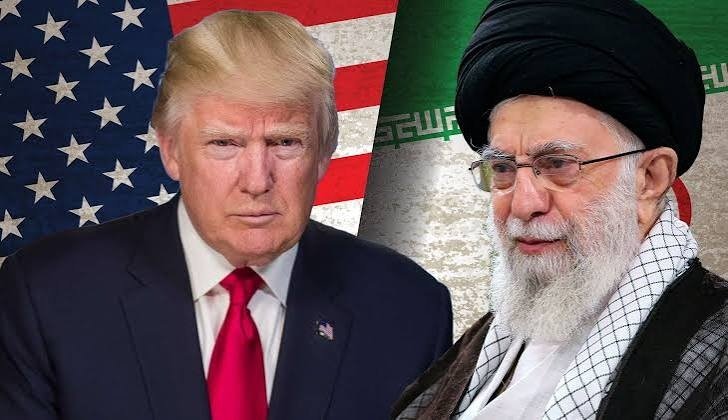
There is also a domestic political dimension shaping how far this goes. President Trump has publicly ruled out the use of nuclear weapons against Iran even as he has threatened further conventional strikes, and rising fuel costs at home have added pressure on an administration that came into this conflict already facing scrutiny over energy prices. Iran, for its part, is fighting from a weakened position, with its conventional military forces degraded by months of strikes and its economy battered by sanctions and the collapse of oil exports that once funded much of its state budget. Neither side appears to have an obvious offramp that doesn’t involve conceding ground it has spent months refusing to give up, which is precisely why analysts had described the July-to-September lull as a pause driven by exhaustion rather than genuine progress toward peace.
For businesses with exposure to Gulf energy supply chains, shipping logistics or fuel-price-sensitive operations, the practical takeaway is that planning around a quick resolution remains premature. The US Energy Information Administration continues to track daily flow estimates through the Strait as part of its broader monitoring of global energy chokepoints, data that has become essential reading for traders and corporate risk teams alike since the crisis began. Until Washington and Tehran find a framework that survives more than a few weeks at a time, the world’s most important oil corridor is likely to remain a source of volatility rather than the reliable artery of global trade it was before February. More background on Hormuz shipping volumes and energy chokepoint monitoring is available through the U.S. Energy Information Administration, while updates on US military operations in the region are published by U.S. Central Command.