|
Getting your Trinity Audio player ready...
|
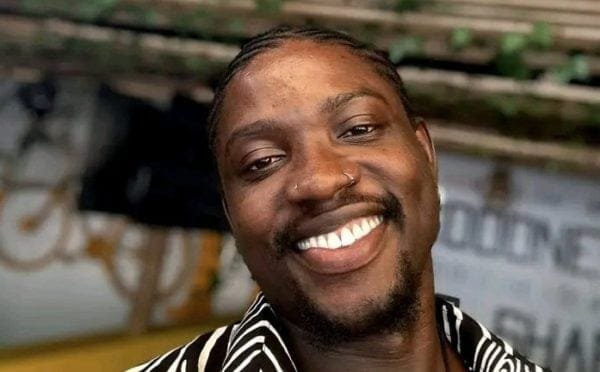
A fresh wave of allegations over illegal kidney harvesting in Abuja has reignited one of Nigeria’s most persistent and disturbing public health controversies, after the lawyer representing activist Martins Vincent Otse, popularly known as VeryDarkMan or VDM, claimed that doctors at a private hospital in the Federal Capital Territory unlawfully removed kidneys from more than ten young Nigerians. The claim, made in a video statement circulated widely this week, adds new momentum to a story that has simmered in various forms across Abuja’s Karu and Mararaba axis for years without ever producing a definitive resolution from law enforcement or medical regulators.
The latest allegations surfaced after a young man approached VeryDarkMan claiming he discovered, following a hospital visit, that one of his kidneys had been removed without his informed consent. Medical checks reportedly confirmed the organ was indeed missing. When VDM and those assisting him traced the friend who had originally accompanied the young man to the hospital, that individual was also found to be missing a kidney, which he allegedly agreed to sell for seven million naira. Those two cases, according to people following the unfolding story, became the thread that led VDM’s team to claim a broader pattern involving more than ten victims, a figure his lawyer has since repeated publicly while pressing for formal investigation.
It’s important to note that neither the police nor Nigeria’s medical regulatory bodies have officially confirmed the existence of an organized kidney harvesting syndicate tied to this specific new round of allegations, and the claims currently rest primarily on testimony gathered by VDM’s team rather than an independent forensic or law enforcement investigation. That distinction matters given how contentious and legally fraught similar allegations against hospitals in the same part of Abuja have proven in the past, but it does not diminish the seriousness of what’s being alleged or the pattern it appears to fit within.
This controversy did not emerge from nowhere. Abuja’s Karu and Mararaba communities, satellite towns stretching along the Keffi-Abuja highway and home to a large population of economically vulnerable young people, have been repeatedly linked to allegations of illegal kidney trading over the past several years. A December 2023 investigation by Daily Trust newspaper, titled “Inside Abuja’s Kidney Market, Where the Rich Prey on the Poor,” documented how brokers operating under pseudonyms recruited young men from the area, luring them with promises of cash payments in exchange for donating a kidney to patients suffering from renal failure. That investigation identified two minors, Oluwatobi Adedoyin and Yahaya Musa, whose kidneys were surgically removed at Alliance Hospital in Abuja, and named a specific consultant urologist as having performed the procedures.
Alliance Hospital has consistently and firmly denied wrongdoing across multiple rounds of similar allegations stretching back to at least 2022. The hospital’s medical director, Dr. Christopher Otabor, has repeatedly stated that the facility follows what he describes as standard international protocol, under which kidney recipients are responsible for sourcing their own donors, who are then screened by the hospital for compatibility, required to be at least 18 years old, and made to sign consent documents in the presence of two adult witnesses along with a sworn affidavit affirming the decision was made freely and without financial inducement. Otabor has argued that Nigeria’s legal framework governing organ transplants remains notably thin, requiring little beyond donor age verification and an absence of direct financial payment, a gap he suggests leaves hospitals following the letter of a weak law even when public perception of individual cases turns hostile. The hospital went as far as filing a defamation lawsuit against Media Trust, publishers of Daily Trust, in February 2024, seeking billions of naira in damages over the December 2023 investigation, a case that reportedly remains active before the FCT High Court in Abuja.
The broader pattern extends beyond any single hospital. Just days before this latest allegation surfaced, police in Nasarawa State arrested a recruiter allegedly working for an organ trafficking network operating between Lafia and Abuja, rescuing four intended kidney donors who had been lured with promised payments of two million naira each. That case was notable for being interrupted at the hospital screening stage rather than uncovered after the fact, giving investigators a rare opportunity to trace the transaction chain from recruitment through to the medical facility involved, an opportunity that has been largely absent in earlier cases where victims came forward only after their surgeries had already taken place.
Nigeria’s underlying kidney disease burden helps explain why this black market persists despite years of periodic exposure. Medical experts estimate more than 20 million Nigerians live with some stage of chronic kidney disease, with roughly one million potentially requiring some form of kidney replacement therapy, according to figures previously cited by a consultant nephrologist at Aminu Kano Teaching Hospital. That enormous unmet medical need, combined with widespread poverty among young people in satellite communities around Abuja and a thin regulatory framework governing organ donation, has created conditions that brokers and, allegedly, some medical professionals have exploited repeatedly over the years, often with limited consequence given how difficult these cases have proven to prosecute successfully.
VeryDarkMan’s involvement adds a familiar dynamic to this latest chapter. The activist and social media personality has built a substantial public following through his willingness to publicly confront hospitals, businesses and public figures over alleged wrongdoing, a pattern that has occasionally drawn scrutiny of its own, including reported police requests for evidence in unrelated matters. Whether this latest round of allegations, now amplified through his lawyer’s public statements, leads to the kind of formal investigation and prosecution that previous exposés involving Alliance Hospital and similar facilities have failed to produce remains to be seen. For the young men reportedly affected, and for a regulatory system that critics argue has repeatedly failed to close obvious gaps in Nigeria’s organ transplant oversight, the coming weeks will likely determine whether this becomes another cycle of allegation and denial, or the case that finally forces sustained institutional accountability.
For more coverage of public health and accountability issues in Nigeria, visit Business Tech.