|
Getting your Trinity Audio player ready...
|
If you’ve ever shopped for a portable speaker and gotten stuck staring at a string of letters and numbers like IP67 or IPX7, you’re not alone. Bluetooth speakers advertise their durability through something called an Ingress Protection rating, and while the code looks intimidating at first glance, understanding what it actually means can save you from either overpaying for protection you don’t need or underbuying a speaker that can’t survive the beach trip you bought it for in the first place.
An IP rating is a standardized way of measuring how resistant a piece of hardware is to dust and water, and it breaks down into two separate numbers you’ll always see paired together. The first digit represents dust resistance on a scale of 0 to 6, while the second digit represents water resistance on a scale of 0 to 9. Sometimes you’ll see an X in place of the first digit, as in IPX7, which simply means the manufacturer didn’t formally test the product for dust protection rather than indicating it offers none. Both numbers matter independently of each other, and it’s worth understanding that a higher dust rating does nothing to change how much water a speaker can survive, and vice versa.
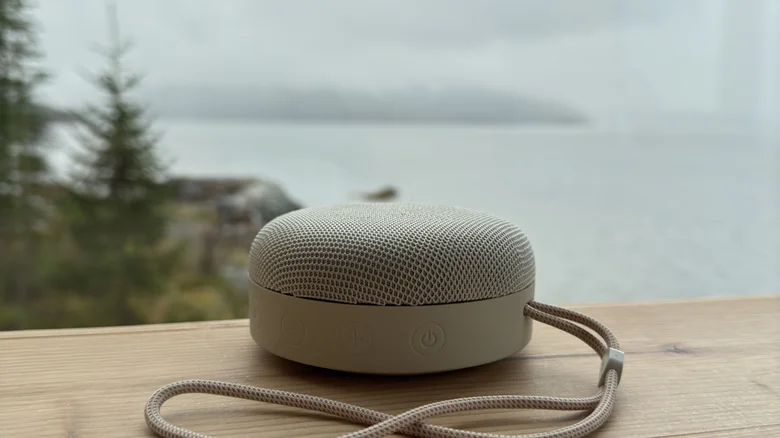
Which IP ratings to look for in Bluetooth speakers really comes down to how you actually plan to use the thing. For most people shopping for a speaker they’ll bring to the beach, the pool, or the shower, IP67 or IPX7 represents the genuine sweet spot rather than the bare minimum. This is by far the most common rating among big-name, high-quality speakers, and it means the device can survive not just splashes or direct jets of water, but full submersion for a limited window as well. Popular models carrying this rating include the JBL Clip 5, the Ultimate Ears Wonderboom 4, the Bose SoundLink Flex, and the Sony SRS-XB100, spanning everything from ultra-compact clip-on speakers to larger party-style units.
Stepping up from there, IP68 has become increasingly common among flagship portable speakers over the past couple of product generations. JBL’s current Charge 6 carries this rating, an upgrade from the Charge 5’s IP67 certification, and the Flip 7 similarly moved up from IP67 to IP68 in its most recent iteration. IP68 is essentially a more capable version of IP67, meaning the speaker can survive submersion under harsher conditions, whether that’s greater depth or longer duration, though manufacturers don’t always specify the exact tested depth clearly on their spec sheets, something worth double-checking before assuming an IP68 speaker can handle serious depth or extended time underwater.
What different IP ratings can survive gets more specific once you look at the actual testing standards behind each number. An IP67 rating technically means a device is dust-tight and can withstand full immersion for 30 minutes in water up to one meter deep. IP68 raises that bar, though the exact depth and duration depend on what the individual manufacturer specifies during testing, since the “8” rating itself doesn’t come with one universally fixed benchmark the way IP67’s one-meter, 30-minute standard does. At the very top of the scale sits IP69, the highest feasible rating for a waterproof Bluetooth speaker, capable of surviving even high-pressure, high-temperature water jets. It’s worth noting upfront that IP69 remains genuinely rare outside a handful of highly specialized products, so most shoppers browsing mainstream Bluetooth speakers simply won’t encounter it as a realistic option, and that’s perfectly fine given how much protection IP67 and IP68 already provide for typical everyday use.
There’s an important caveat that applies regardless of which rating a speaker carries. IP testing is conducted using clean, fresh water under controlled laboratory conditions, meaning saltwater, sunscreen, chlorine, and sand are not actually covered by any official IP rating at all. Even a speaker rated IP67 or IP68 should get a quick rinse with fresh water after a day at the beach or pool, since accumulated sand and residue can clog passive radiators and grilles over time regardless of how the device performed in its original certification testing. Several manufacturer guides and independent reviewers specifically flag this distinction, since it’s easy to assume a high IP rating means total invincibility against anything wet, when in reality it only guarantees performance against the specific test conditions the rating was designed around.
For anyone weighing whether to pay extra for an IP68-rated speaker over a more affordable IP67 option, the honest answer depends heavily on realistic usage rather than chasing the highest number available. If your speaker’s biggest water-related risk is an accidental splash by the pool, a stray rain shower, or being dropped in shallow water for a few seconds, IP67 already covers those scenarios comfortably and represents better value in most cases. IP68 becomes genuinely worthwhile if you’re regularly taking a speaker somewhere with a realistic chance of deeper or more prolonged submersion, say, actually using it while swimming or leaving it exposed to sustained heavy rain for extended periods outdoors.
Floating design is another feature worth considering alongside the IP rating itself, since a speaker that survives submersion but sinks to the bottom of a pool still leaves you without your music until you fish it out. Models like the Ultimate Ears Boom 3, the Anker Soundcore Boom 2, and the Wonderboom 4 are specifically built to float if dropped in water, a practical addition that complements a strong IP rating rather than replacing the need for one.
Ultimately, the best waterproof rating for your next Bluetooth speaker isn’t necessarily the highest number on the shelf, it’s the rating that actually matches how and where you plan to use the speaker day to day. For the vast majority of casual outdoor listening, IP67 delivers more than enough protection at a typically lower price point, while IP68 earns its premium primarily for people whose speakers genuinely see more demanding water exposure on a regular basis.
For more coverage of audio gear and consumer electronics buying guides, visit Business Tech.