|
Getting your Trinity Audio player ready...
|
iPhone Duo: Price, Release Date, Specs, and Features
Apple’s first foldable iPhone is finally official
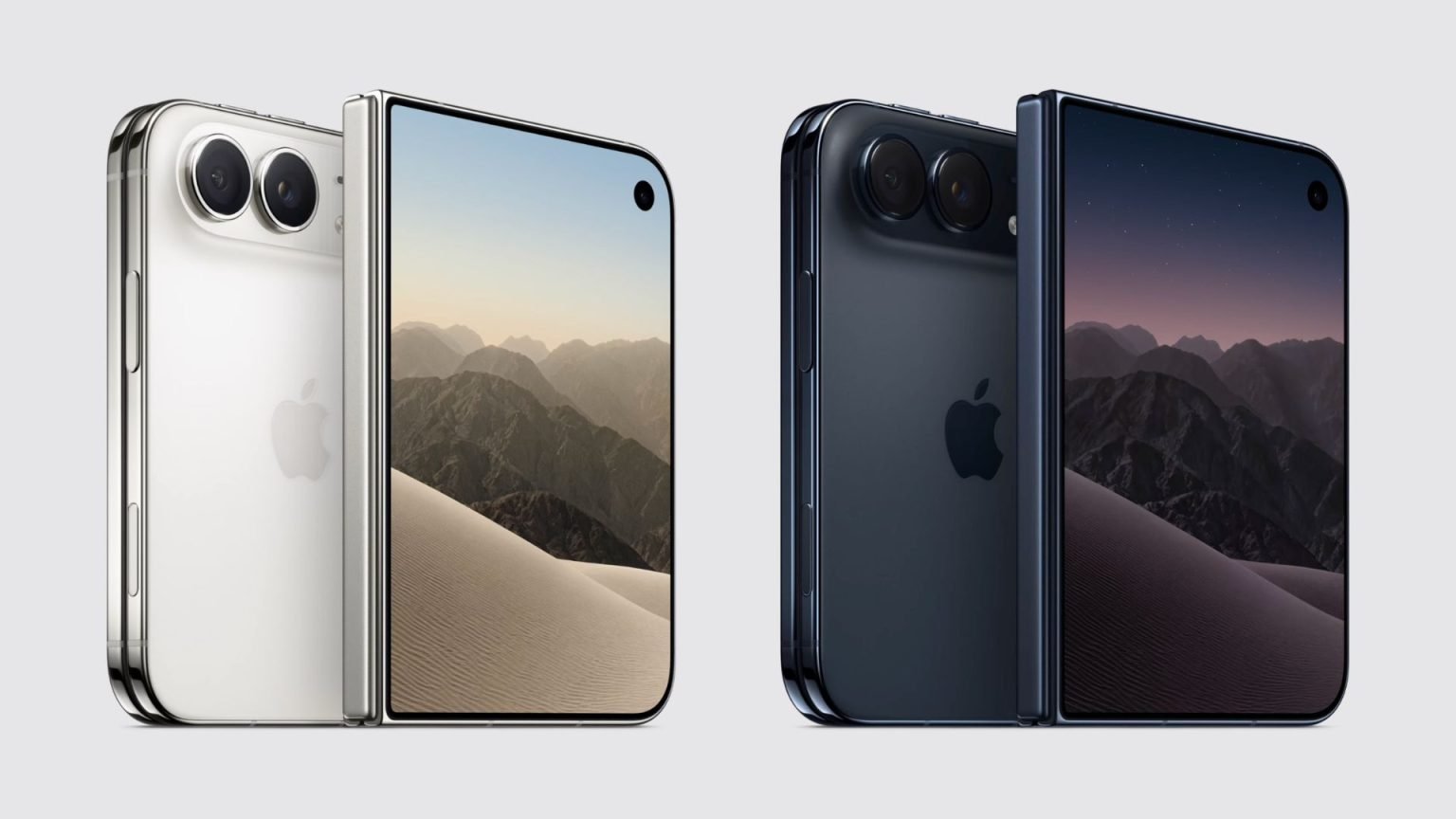
Apple has officially confirmed its long-rumored foldable iPhone, and it’s called the iPhone Duo. Announced at the company’s “Surprise and Shine” event alongside the iPhone 18 Pro Max and the new Apple Watch 12, the Duo marks Apple’s first real departure from the traditional iPhone form factor since the original iPhone launched nearly two decades ago. After years of leaks under names like iPhone Fold and iPhone Ultra, Apple settled on Duo, a name that leans into the device’s dual-screen, dual-purpose identity as both a phone and a small tablet in one folding body.
Display and design
The iPhone Duo opens to reveal a 7.6-inch inner display, which Apple says is roughly 50 percent larger than the screen on the iPhone 18 Pro Max. That inner panel uses a nano-texture finish specifically designed to reduce glare and minimize the visibility of the fold crease running down the middle, a detail that has been one of the biggest complaints about competing foldables since the category first emerged. When closed, users interact with a 5.4-inch outer display that Apple says covers more than 90 percent of the screen area found on the standard iPhone 18 Pro. Both displays support ProMotion, Always-On functionality, and peak brightness reaching up to 3,000 nits.
The hinge holding the whole thing together is built from around 100 individual parts, reflecting the mechanical complexity involved in making a folding phone feel durable enough for daily use. The exterior frame uses grade 5 titanium with a mirror-polished finish, and Apple says the enclosure is made using 85 percent recycled titanium, continuing the company’s recent push toward more sustainable materials sourcing across its product lineup.
Touch ID makes a comeback, and Face ID sits this one out
One of the more surprising design decisions on the Duo is the return of Touch ID, built directly into the side button, rather than Face ID. This is the first flagship iPhone in years to lead with a fingerprint sensor instead of facial recognition, and it strongly suggests Apple simply couldn’t fit the TrueDepth camera array needed for Face ID into a body this thin while also housing an under-display front camera. Whether that’s viewed as a step backward or a welcome, faster way to unlock a $1,999 phone will likely depend on individual preference, but it’s a genuine departure from how Apple has designed its premium iPhones since 2017.
Performance and connectivity
Powering the Duo is Apple’s A20 Pro chip, the same processor found in the standard iPhone 18 Pro lineup, built on a new 2-nanometer manufacturing process. Apple says the chip delivers up to 35 percent higher sustained performance compared to the iPhone 17 Pro’s chip, with a 6-core CPU, a 7-core GPU featuring Neural Accelerators, and a dual 16-core Neural Engine handling on-device AI tasks. Apple has also introduced custom chip packaging inspired by its M-series Mac processors, connecting the A20 Pro directly to a dedicated vapor chamber to manage heat more effectively inside such a slim folding chassis.
On the connectivity side, the Duo uses Apple’s in-house C2 modem, which the company claims is 50 percent faster and 15 percent more power efficient than the previous C1X modem, and adds 5G mmWave support, though that particular feature remains limited to the United States given how mmWave infrastructure has been deployed elsewhere. One detail that matters for buyers everywhere: the iPhone Duo is eSIM-only worldwide, with no physical SIM tray available in any country, including markets like the UK where physical SIMs have remained more common.
Battery life and charging
Rather than a single battery, the Duo uses a dual-battery architecture, with one cell built into each half of the folding body, operating together as a unified power system. Apple rates the device for up to 24 hours of typical mixed use, and says a five-minute charge can deliver up to five hours of video playback on the outer display alone. A 60W USB-C charger can bring the battery to 50 percent in around 20 minutes, while both MagSafe and Qi2 wireless charging top out at 25W. Notably, that 24-hour battery estimate sits below the 36 hours Apple quotes for the standard iPhone 18 Pro, a reasonable tradeoff given how much thinner and more mechanically complex the folding design is by comparison.
Cameras built around the fold
The Duo’s rear camera system uses what Apple calls a 48MP Dual Fusion setup, pairing a 48-megapixel main sensor at f/1.6 with a 48-megapixel ultra-wide lens at f/2.2. There’s no dedicated telephoto lens on this model, which caps zoom at 4x optical range and 10x digital, and the variable aperture feature found on the standard iPhone 18 Pro doesn’t carry over to the Duo. What the Duo does offer instead are four camera features built specifically around its second screen: Smart Take, which automatically captures a shot once everyone in frame is posed and ready; Duo Preview, which shows subjects a live preview of the shot on the outer display; Kid Cue, which plays animations on the outer screen to help capture children’s attention; and Duo FaceTime, which lets someone standing nearby join a FaceTime call using the outer display. The Duo also supports Apple Pencil, making it one of the only foldable phones on the market with stylus support.
Price, release date, and where it’s launching first
The iPhone Duo starts at $1,999 for the 256GB model in the US, roughly $800 more than the standard iPhone 18 Pro and $700 more than the Pro Max. Higher storage configurations climb from there, with the 2TB variant reportedly becoming the most expensive iPhone Apple has ever sold. Apple is also offering financing through Apple Card Monthly Installments at $83.29 a month over 24 months with 0% interest, as well as a separate Apple Upgrade lease option run through Klarna, ranging from roughly $58 to $93 a month on a 24-month term or higher on a 12-month term, both financing options limited to US customers for now.
Pre-orders open Friday, October 16, at 5 a.m. Pacific Time, with the device officially going on sale Friday, October 23, roughly five weeks after the iPhone 18 Pro and Pro Max, which launched September 18. Reports suggest production challenges contributed to that staggered release timeline. The Duo will launch in more than 70 countries and regions in its first wave, including the US, UK, Canada, Australia, Germany, France, and Japan, with a second wave covering 28 additional countries and regions following on October 30.
Should you buy it
For anyone who genuinely wants a phone and a small tablet combined into a single device, the Duo’s larger screen, multitasking capabilities, and A20 Pro performance offer real capabilities no other iPhone currently provides. But the tradeoffs are real too: a significantly higher price, shorter battery life than the standard Pro models, no telephoto camera, and the loss of Face ID in favor of a side-button Touch ID sensor. For most users, the standard iPhone 18 Pro or Pro Max will likely remain the more practical choice, while the Duo carves out its own space for buyers specifically drawn to the folding form factor and willing to pay a substantial premium for it.