|
Getting your Trinity Audio player ready...
|
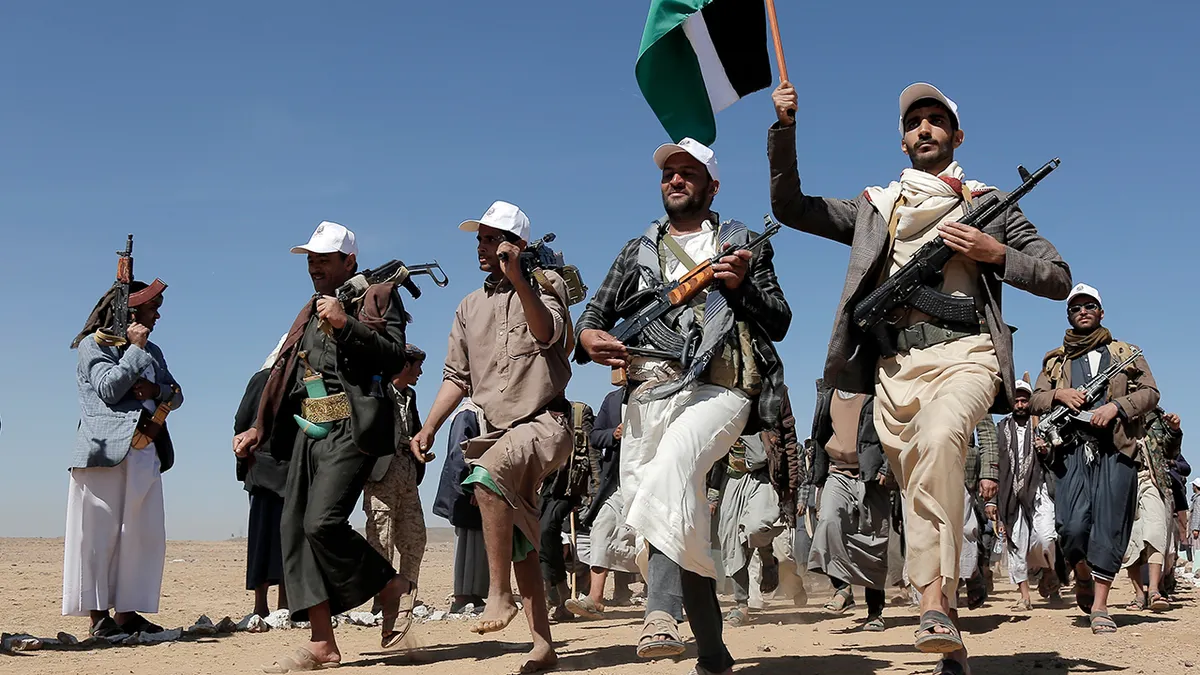
Fighting in Yemen has escalated sharply this week as Houthi forces push toward Marib and Taiz, two of the last significant strongholds still held by Yemen’s internationally recognized, Saudi-backed government. The advance marks one of the most consequential shifts in the country’s long-running civil war in years, and analysts following the conflict say a Houthi breakthrough in either location could decisively tip the balance of the war in the group’s favor.
Marib matters enormously because of what sits underneath it. The province is home to the bulk of Yemen’s oil and gas production, and whoever controls that territory controls one of the country’s few remaining sources of meaningful revenue. It also functions as the government’s last real stronghold in northern Yemen, meaning a Houthi takeover there wouldn’t just be a battlefield loss, it would effectively eliminate the government’s presence across the entire north of the country and severely weaken its negotiating position in any future peace process. Taiz carries its own strategic weight as a critical gateway connecting Yemen’s inland regions to its coast, and control over the city and its surrounding mountainous terrain shapes access to several other active front lines simultaneously.
According to reporting from Al Jazeera, Yemen’s internationally recognized government said Sunday that its warplanes had struck Houthi positions across Hodeidah, Marib, and al-Jawf as fighting spread across multiple fronts at once. Government-aligned forces followed with a ground push toward the al-Labanat mountains in al-Jawf on Monday, alongside reported rocket attacks on Yatma and what officials described as intensive battles against Houthi fighters throughout the province. The Houthis, for their part, claimed to have repelled that specific advance and said they had fired ballistic missiles at government reinforcements moving into al-Jawf, while separately claiming to have shot down Saudi reconnaissance drones operating over the area. Neither side’s individual battlefield claims have been independently verified.
The human cost of this renewed fighting has already grown significant. The International Organization for Migration reported that more than 85,000 people have been forced to flee their homes since the beginning of September alone, with more than 2,000 of those displaced crossing into Djibouti’s northern shores seeking safety. Civilians caught between advancing and retreating forces have borne the brunt of an escalation that’s unfolded with little warning, and humanitarian organizations operating in the country have warned that displacement figures are likely to keep climbing if fighting around Marib and Taiz continues at its current pace.
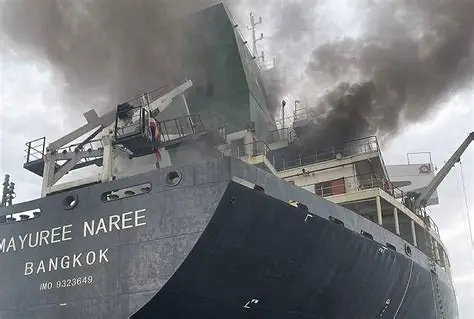
This latest surge in violence traces back to a broader regional conflict that reignited at the end of February, when the United States and Israel launched military action against Iran, a development that rippled outward and reactivated dormant front lines across Yemen almost immediately. Houthi forces have used the resulting chaos to concentrate pressure specifically on strategic coastal points along the Red Sea, including the port cities of Mokha and Hodeidah, positioning themselves to threaten shipping through the Bab el-Mandeb Strait, one of the world’s most important oil transit corridors. Analysts at the Soufan Center have noted that the Houthis have deliberately struck first in several of these areas, recognizing the outsized strategic value the Red Sea coastline holds compared to less consequential inland territory.
Casualties tied to the fighting around Marib and neighboring Hadramout have climbed steadily since early August, with death tolls among Yemeni government-aligned forces reported as high as 60 in that stretch alone. A senior Saudi official told Reuters in early August that intelligence suggested the Houthis, potentially working alongside Iraqi armed groups under the supervision of Iran’s Islamic Revolutionary Guard Corps, could be preparing further attacks targeting energy infrastructure, ports, and airports, a warning that’s proven at least partially accurate given the subsequent strikes on Saudi energy facilities and military installations in the weeks since.
Yemen’s fractured government coalition adds another layer of complexity to how this fighting could ultimately play out. The Presidential Leadership Council, backed by Saudi Arabia and the broader coalition Riyadh has led since 2015, includes several distinct factions with their own histories and loyalties. The Yemeni Congregation for Reform, a Sunni Islamist movement with historic ties to the Muslim Brotherhood, has long held Marib as its core stronghold and stands to lose the most territorially if the province falls. The National Resistance Forces, a separate government-aligned faction led by Tareq Saleh, nephew of the late former president Ali Abdullah Saleh, maintains its own ties to Saudi Arabia while positioning itself as a counterweight to both the Houthis and southern secessionist movements operating elsewhere in the country. That internal fragmentation within the anti-Houthi coalition has repeatedly complicated efforts to mount a unified, coordinated defense of contested territory throughout the war’s various escalation cycles.
Whether Saudi Arabia moves to reinforce government positions around Marib and Taiz with additional ground support, as it has done at previous critical junctures in the conflict, will likely determine how this current offensive plays out over the coming weeks. For now, the fighting represents one of the most serious tests the Saudi-backed government has faced in years, with the outcome carrying consequences that extend well beyond Yemen’s own borders given how directly the country’s Red Sea coastline and Bab el-Mandeb access affect broader regional shipping and energy security.
For more coverage of Middle East conflict developments and regional security, visit Business Tech.