|
Getting your Trinity Audio player ready...
|
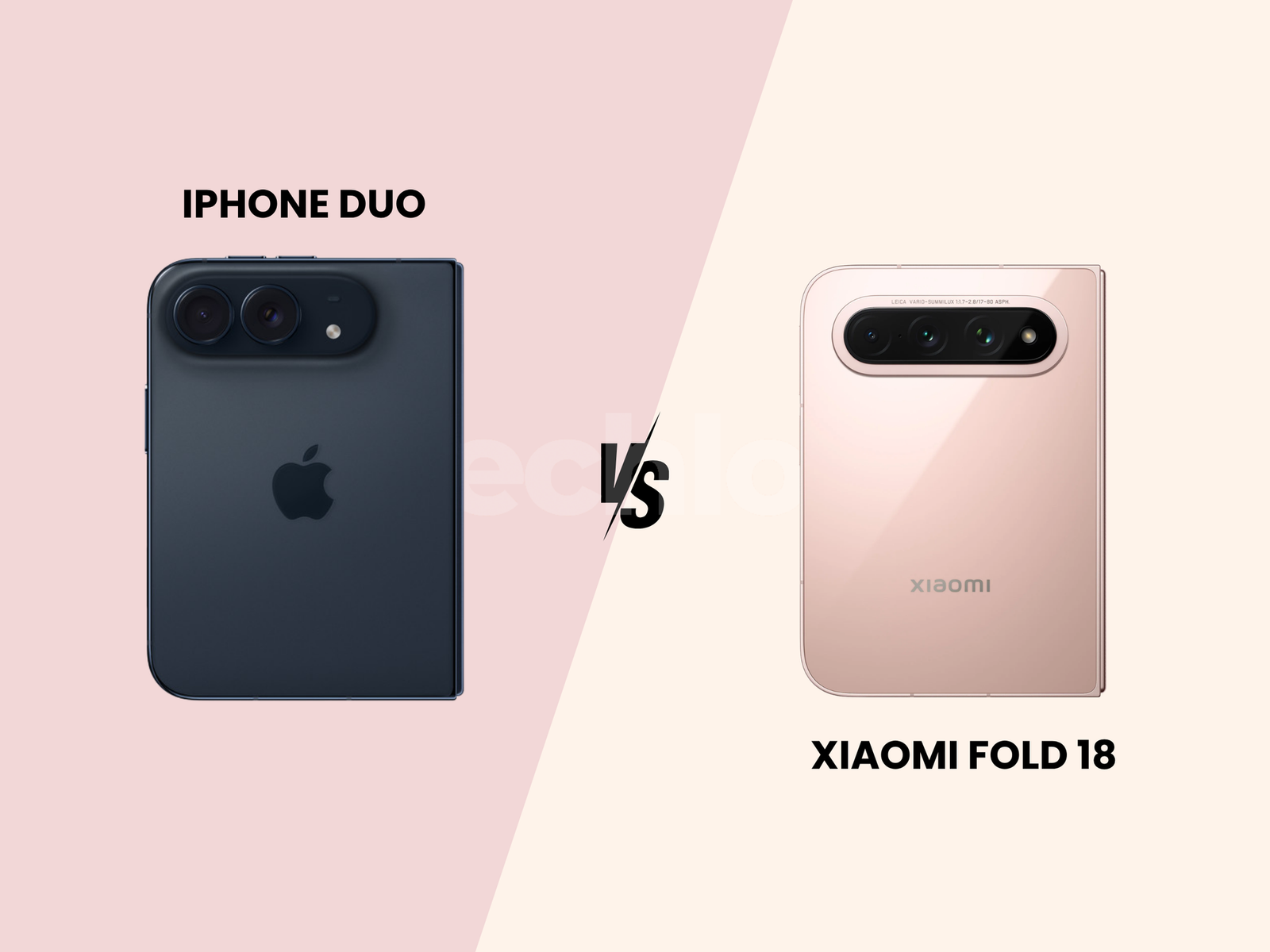
iPhone Duo vs Xiaomi 18 Fold: The Multitasking Battle Redefining Foldable Phones
Apple’s first foldable iPhone is finally real, and it landed in the same stretch of weeks as Xiaomi’s most ambitious foldable yet, setting up one of the more interesting head-to-head comparisons the phone industry has seen in a while. Both companies are chasing the same basic idea, a phone that unfolds into something closer to a small tablet, but they’ve taken almost opposite approaches to the one feature that actually matters most once you own a foldable: what you can actually do with all that extra screen.
Start with Xiaomi, because the numbers alone make the case for why this phone is generating buzz. The 18 Fold, Xiaomi’s first entry in an entirely new numbered series, opens into a 7.58-inch inner display and closes down to a 5.38-inch cover screen, both running at 120Hz with peak brightness Xiaomi claims reaches 4,000 nits. Rather than copying Samsung’s tall, narrow Z Fold layout, Xiaomi built both screens around a 1.41:1 aspect ratio, matching a sheet of A4 paper, which gives the unfolded display a shorter, wider shape that behaves more like a small tablet than an elongated phone. Folded, the device is roughly passport-sized, small enough to use comfortably in one hand despite the larger screen waiting inside.
The headline feature, though, is what HyperOS 4 lets you do with that inner screen once it’s open. Xiaomi built a multitasking mode that can display up to six apps at once on the main display, plus an additional floating window layered on top for good measure. Navigating between all of that is handled through gestures rather than buttons: a three-finger sideways swipe switches between open windows, a four-finger pinch pulls up a full task overview, and a small gray divider bar between windows lets you resize them on the fly. Xiaomi says it has adapted more than 200 apps specifically for the wider foldable layout, and it’s gone as far as bundling desktop-class productivity apps like WPS and CapCut, clearly aiming this device at people who want their phone to double as a lightweight laptop replacement rather than just a bigger screen for scrolling.
Powering all of that is Xiaomi’s own XRING O3 chip, a 3-nanometer in-house processor rather than a Qualcomm Snapdragon, paired with up to 16GB of the newer, faster LPDDR6 memory, which Xiaomi is the first company globally to ship in a commercial phone. That memory bump matters specifically for a device juggling six live app windows simultaneously, since running that many apps in the background without slowdown or apps reloading from scratch is exactly the kind of task extra memory bandwidth is built to handle. Xiaomi is also holding back one of its bigger software tricks for later: a feature called the Super XiaoAi Inspiration Ball, an AI tool you drag onto anything on screen to translate it, look up pricing, or pull up directions, isn’t shipping active at launch and is instead arriving through a software update in late September.
Apple’s approach with the iPhone Duo looks almost restrained by comparison, and that appears to be entirely intentional. Rather than chasing a headline number of simultaneous apps, Apple rebuilt iOS 27 around the physical act of folding and unfolding the device itself. The Dynamic Island rotates 90 degrees and shifts to run down the edge of the display when the phone is open, the status bar collapses into a small circular indicator in the corner, and navigation controls, the Home Screen dock, and app buttons all move toward the side of the screen so your thumb naturally lands on them regardless of how you’re holding the device. Apple has described the experience in its own materials as content that reacts as the phone folds, reorients when turned sideways, and switches to the correct display automatically when the phone is flipped closed, and reviewers who’ve spent time with the opening animation, which visually carries the cover screen’s content through into the inner display as you unfold it, have singled that moment out as the detail that makes the whole form factor click.
On the actual multitasking side, the Duo’s Split View feature allows exactly two apps, or two separate windows from the same app, to run side by side, a far more modest ceiling than Xiaomi’s six-window approach. Apple does let you save specific app pairings so you can reopen two frequently-used apps together instantly, and it’s the first time Split View-style side-by-side multitasking has appeared on an iPhone at all, which is a meaningful shift for Apple’s software even if the underlying window count looks conservative next to what Xiaomi is offering.
That difference sums up the whole comparison fairly cleanly. Xiaomi is betting that foldable buyers, particularly the productivity-focused, power-user crowd this device is clearly built for, want raw multitasking capacity above almost everything else, and it’s willing to lean on gesture-heavy controls and a genuinely complex six-window interface to deliver that. Apple is betting that most people don’t actually want to manage six overlapping windows on a phone-sized screen, foldable or not, and that a more disciplined two-app system, wrapped in an operating system rebuilt from the ground up around the physical folding mechanism itself, will feel more usable day to day even if it caps out at a lower number.
Camera hardware tells a similar story about differing priorities. The Xiaomi 18 Fold ships with a 200-megapixel main sensor, a 50-megapixel ultrawide, and a 50-megapixel telephoto lens offering 3.5x optical zoom, a notably more ambitious setup than most foldables have historically carried, largely because the format has traditionally forced camera compromises to keep the hinge mechanism and dual-screen hardware manageable.
Which phone actually wins probably comes down to what kind of user is asking the question. Someone who wants to genuinely replace a laptop with a phone, juggling documents, spreadsheets, chat apps and a browser all visible at once, is going to find Xiaomi’s six-window approach hard to argue with on paper. Someone who wants Apple’s usual polish, an operating system that feels genuinely rebuilt around the hardware rather than stretched to fit it, and doesn’t mind capping out at two apps at a time, is likely to find the Duo the more comfortable long-term daily driver. Both phones are shipping into a market that’s clearly decided foldables are no longer a novelty, they’re just becoming a more demanding, more capable category of phone that happens to fold in half.