|
Getting your Trinity Audio player ready...
|
US Sends Third Aircraft Carrier and Thousands More Troops to Middle East as Iran Tensions Flare Again
The Pentagon is moving additional warships and thousands of personnel toward the Persian Gulf, a buildup that could put three separate aircraft carrier strike groups in or around the Middle East by the end of October, according to US officials who described the deployment to Bloomberg and the Associated Press this week.
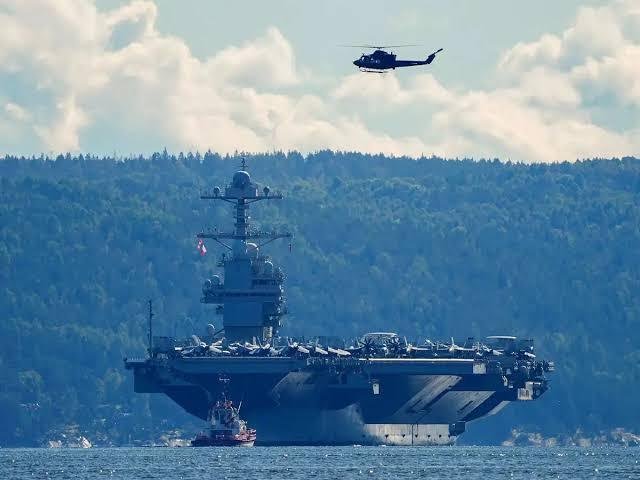
The USS Theodore Roosevelt Carrier Strike Group left its home port in San Diego on Sunday and is now heading toward the region, carrying roughly 10,000 additional sailors and Marines according to a US official who spoke on condition of anonymity given the sensitivity of ongoing military operations. A separate group of three ships, carrying more than 7,000 sailors and 2,000 Marines, including the Theodore Roosevelt’s strike group and the USS Makin Island amphibious readiness group, is also en route. If deployment schedules overlap as officials expect, that would place the Theodore Roosevelt alongside the USS George H.W. Bush and USS George Washington, both already operating in the region, giving the US an unusually dense concentration of three carrier strike groups near Iran at once. Combined with the USS Boxer amphibious readiness group already on station, the total American naval presence could reach more than 20,000 sailors and Marines along with hundreds of aircraft, a scale of force that officials describe as giving commanders considerably more options should President Donald Trump decide to escalate military action against Iran.
US Central Command underscored the posture publicly this week, releasing video showing the USS George Washington conducting flight operations in the region, a visible signal of American naval activity as tensions with Iran remain unresolved. Separately, a US official told reporters that an earlier tranche of roughly 9,000 additional troops had already been dispatched to the Middle East via a fleet of ships, a deployment that followed Trump’s suggestion of a possible Iranian connection to a recent attack aboard a flydubai flight bound for Israel.
This latest round of reinforcements builds on what the US military has already described as its largest buildup in the Middle East since the 2003 invasion of Iraq, a mobilization of air, naval and missile defense assets that preceded the joint US-Israeli strikes on Iran that began on February 28 and triggered the broader conflict now commonly referred to as the 2026 Iran war. At the height of the war’s early weeks, roughly 40,000 American troops were already stationed across the region under Central Command, supported by Terminal High Altitude Area Defense interceptor systems and Patriot missile batteries positioned in Iraq. This week’s additional deployments stack on top of that already elevated baseline rather than representing the first wave of American forces sent to the region.
Trump’s own public comments this week point to a conflict that may be intensifying rather than winding down. Speaking to reporters, he said the US military is knocking the hell out of Iran and vowed that the war would end very soon, language that suggests active strikes are continuing even as diplomatic channels between Washington and Tehran remain open. Asked whether he would order new strikes on Iran once the November midterm elections have passed, Trump said it was possible, adding that the US has a lot of weapons, a comment that echoed a similar threat he had made over the weekend. He also said separately that he doesn’t believe peace with Iran may ever truly be achievable, a notably pessimistic framing from a president who has repeatedly predicted the conflict’s imminent end since it began in late February.
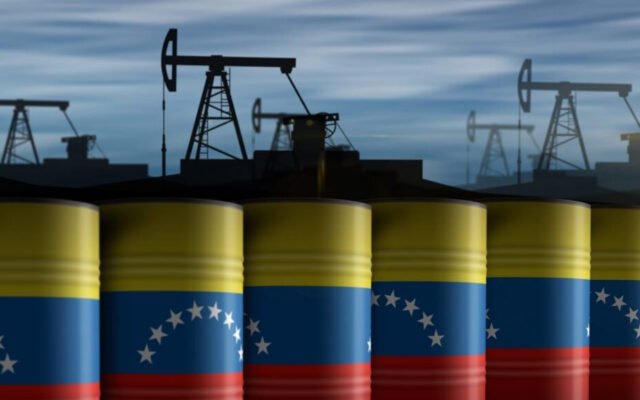
The military buildup has rippled directly into global energy markets. Oil prices jumped as news of the expanded naval presence spread, compounding fears that a wider or more sustained conflict could further disrupt crude and fuel supplies already strained by seven months of fighting, damaged Middle East refining infrastructure, and disrupted shipping through the Strait of Hormuz. That market reaction fits a pattern that has defined nearly every stage of this conflict, where announcements of military escalation or diplomatic breakdown have consistently pushed crude and diesel prices higher, even as separate reports of recovering export volumes and tentative negotiation progress have occasionally pulled prices back down in the same stretch of days.
Separately, US authorities disclosed this week that an Energy Department employee has been charged with attempting to aid Iran-backed Houthi forces in Yemen, a case that adds another dimension of concern inside Washington about the conflict’s reach extending into domestic institutions, even as the military buildup focuses primarily on deterrence and potential offensive operations abroad.
Whether this latest wave of carriers and troops signals an imminent new phase of direct military action against Iran, or functions primarily as a show of force meant to pressure Tehran back toward serious negotiation, remains to be seen. US officials themselves have described the coming weeks, stretching from mid-October onward, as the window in which diplomatic, military and economic developments will determine whether the buildup serves mainly as deterrence or precedes a genuine escalation. For now, what’s confirmed is a Middle East military presence growing to a scale not seen since the opening weeks of the war itself, with American warships, aircraft and tens of thousands of personnel converging on a region still searching for a way out of a conflict now well into its eighth month.