|
Getting your Trinity Audio player ready...
|
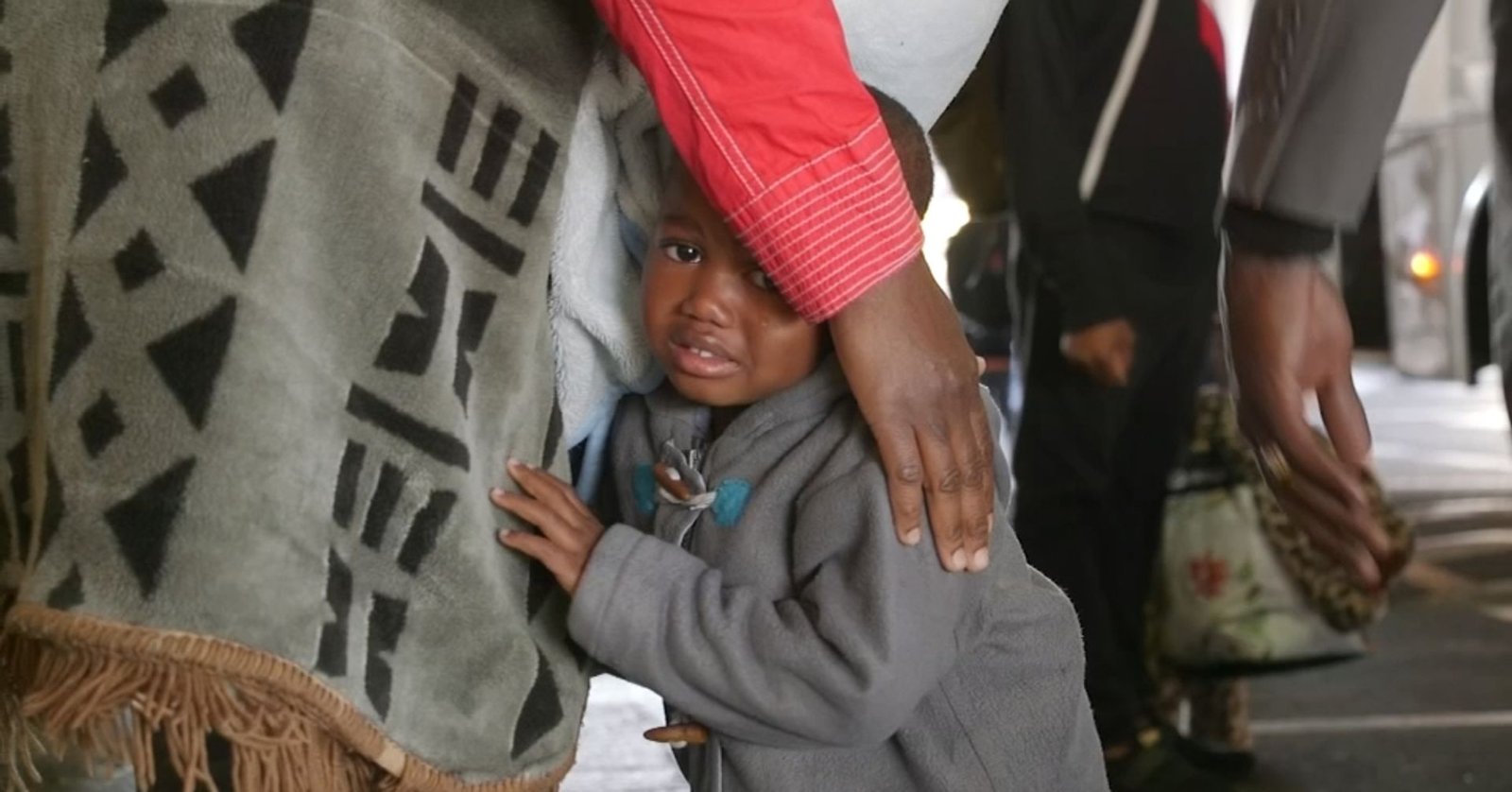
A fresh group of 105 Nigerians has been flown home from South Africa, arriving in Lagos six days before an unofficial anti-migrant deadline set by South African protest groups. The evacuation is the latest in a long series organised by Abuja since June, and it comes as relations between Africa’s two largest economies are being tested again by protests, deaths and sharp disagreements over who is to blame. Nigeria’s Ministry of Foreign Affairs says the returnees arrived safely, and it has promised more flights for others still waiting.
The group landed at the Murtala Muhammed International Airport in Lagos at about 8:30 p.m. on Thursday, September 24, aboard South African Airways flight SA060, according to a ministry statement reported by Voice of Nigeria, Tribune and other outlets. The returnees included 82 adults and 23 children. Officials from the Ministry of Foreign Affairs, the Nigerians in Diaspora Commission (NiDCOM), the National Agency for the Prohibition of Trafficking in Persons (NAPTIP), the National Emergency Management Agency (NEMA) and other agencies met them on arrival. The ministry said the latest flight was the 13th consular evacuation since the exercise began on June 10, 2026, bringing the total number of Nigerians evacuated from South Africa to 1,821.
The way this flight was paid for is a story in itself. The ministry said 100 of the returnees travelled with money from a donation of $265,854 made by the Redeemed Christian Church of God (RCCG) to buy one-way tickets for 500 distressed Nigerians, and that five others were flown home with funding from a private Nigerian citizen. The ministry added that the federal government has fully funded the evacuation of 1,388 people so far, which means a growing share of the programme has relied on private and church support. Abuja’s diplomats in South Africa are continuing to work with RCCG leadership and other philanthropic groups, the ministry said, and other Nigerians are undergoing preliminary clearance with the consulate in Johannesburg and the relevant South African authorities. They will be flown out once that process is complete.
To understand why the flights keep coming, it helps to go back to the source of the pressure. A South African movement called March and March, based in Durban, gave undocumented foreigners until June 30 to leave the country, and later named September 30 as a second deadline. The date has no legal force and Pretoria rejected the first one, yet tens of thousands of foreign nationals left anyway, according to reporting that cited migrant groups and officials. As the June deadline approached, two Nigerians were killed, according to CNN, and Nigerian officials said nearly 1,700 of their citizens left voluntarily in that period. A tally by The Africana Voice, based on statements from Mozambique, Nigeria and South African police, counted at least 17 African nationals killed across the wider unrest, though that figure is the outlet’s own count.
By the time September 30 arrived, the day had taken on a broader shape. March and March confirmed a national day of action for Wednesday, September 30, combining a men’s march against gender-based violence and crime with protests against illegal immigration, with marches planned in Pretoria, Johannesburg, Durban, Cape Town and other cities, according to The Citizen and BusinessTech South Africa. The group’s leader, Jacinta Ngobese-Zuma, has pushed back against describing the marches as xenophobic. President Cyril Ramaphosa called for calm and unity in his weekly letter to the nation and warned against violence, while saying that migration must happen within the law. South African police said the date would not change their approach and that they would continue normal policing. The coverage reviewed for this article does not yet give a full, verified account of what happened on the day itself, so readers should look for updates from police and the two governments.
What is clear is that Nigerians have felt the pressure acutely. Nigerian authorities say nearly 100 of their nationals have died in mob attacks and other incidents linked to anti-migrant violence in South Africa since 2022, a figure reported by Politics Today and attributed to Nigeria. South African officials have often disputed such tallies in the past, arguing that many violent deaths in the country stem from ordinary crime rather than anti-foreigner sentiment. Pretoria has also said that negative perceptions of Nigerians are fuelled by the alleged involvement of some Nigerian nationals in organised crime, drug trafficking and financial fraud, as CNN reported. Nigerian officials and community leaders reject the idea that a whole community should be held responsible for the acts of a few, and the dispute over those perceptions remains a sore point between the two capitals.
The diplomatic side of the story is more delicate than the evacuation flights suggest. CNN reported in mid-September that Nigeria and South Africa had tried to ease tensions after the earlier protests but that the rift had returned as the new deadline approached. South African authorities, for their part, said they helped process and facilitate the voluntary repatriation of foreign nationals who wanted to leave, and one report said South Africa deported more than 100,000 foreigners and spent about $35 million on security operations during the earlier episode, though the exact scope of those figures is not clear from the coverage. Both countries have strong economic ties, with South African companies operating widely in Nigeria and Nigerians forming one of the most visible migrant communities in South Africa, so neither side has an interest in a lasting breakdown.
For the families who have returned, the immediate challenge is practical. Many left jobs, businesses and homes at short notice, often with little more than a few bags. NiDCOM has previously announced support packages for earlier returnees, and the receiving agencies on September 24 included those responsible for emergency management and for protecting vulnerable people, which suggests that welfare and reintegration remain part of the plan. The reports reviewed here do not describe what support the latest group received beyond the reception at the airport, and it is not yet clear how many of the 1,821 have been able to restart their lives in Nigeria.
The ministry also urged Nigerians still in South Africa to stay vigilant, obey local laws and keep in touch with the nearest Nigerian mission. That advice reflects a basic reality for people on the ground. Documented migrants have also reported feeling unsafe, according to community leaders quoted by CNN, who spoke of significant anxiety and fear. A valid permit does not always protect someone from being singled out by a crowd, and consular officials can help most when they know who needs assistance and where.
Looking ahead, three things are worth watching. The first is whether the evacuation flights continue and how they are funded, since private donations such as the RCCG gift are now carrying a meaningful share of the cost. The second is whether the two governments can agree on a durable framework for protecting citizens and handling immigration disputes, rather than relying on ad hoc talks after each flare-up. The third is whether the protest movement’s latest day of action leads to violence or fades without incident, because the answer will shape how many more Nigerians decide to leave.
Readers who follow Nigeria’s diaspora, business and regional developments can find more coverage at BusinessTech Nigeria. Further details on the funding of the latest flight are available from Vanguard, and background on the wider diplomatic strain is in CNN’s reporting.