
|
Getting your Trinity Audio player ready...
|
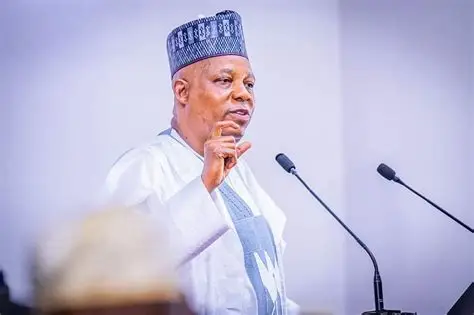
Nigeria’s vice president has returned from an Ethiopian farm tour with a clear message: the country wants to copy what Ethiopia has done with large-scale, machine-driven agriculture. Kashim Shettima led a Nigerian delegation through farms and agricultural facilities in Ethiopia’s Oromia Regional State on Thursday, October 8, as part of the Ethiopia-Nigeria Leadership Exchange. He described the region’s model as a potential blueprint not only for Nigeria but for other African countries trying to grow more food, cut import bills and strengthen food security.
The details come from a statement by Stanley Nkwocha, Shettima’s senior special assistant on media and communications, which was reported by Leadership, The Guardian and Nairametrics. According to the statement, the delegation visited wheat, banana and papaya farms to see how Ethiopia raises output. Shettima said Nigeria intends to draw lessons from the country’s use of improved seeds, mechanisation and climate-smart farming practices, and that the aim is food sovereignty, which he defined as more than simply producing more crops. In his words, food dependency compromises a country’s sovereignty, and a nation without independence in food production remains incomplete.
The most concrete claim concerned wheat. Shettima said Ethiopia has moved from importing about $1 billion worth of wheat each year to producing enough for domestic needs and exporting to neighbors including Djibouti and Kenya, as Leadership reported. That figure is the vice president’s own account, and the reports reviewed do not include independent data confirming it. Still, wheat is a sensible example for Nigeria to study. The country is one of Africa’s largest importers of the grain, and the cost of that import bill rises and falls with the naira and global prices. A model that replaces imports with local production would save foreign exchange and reduce exposure to price swings.
What is the Oromia model? As described in the government’s own statements, it is a large-scale agribusiness approach that turns food deficits into export-driven self-sufficiency by using expansive arable land and varied climate zones. The Federal Ministry of Information’s account of the visit says Shettima cited Oromia as the benchmark for a farming rebirth across Africa and described its agribusiness hub as a template for farming communities on and off the continent. The reports do not set out the programme’s design in technical detail, such as how land is allocated, how machinery is financed, or how smallholders are linked to commercial farms, so the specifics of what Nigeria would copy remain unclear.
The visit is also linked to a broader domestic push. A statement from the same ministry said Nigeria is pursuing a major infrastructure drive to resolve supply chain gaps and logistics bottlenecks, with the stated aim of de-risking agribusiness, attracting significant investment and securing long-term food and nutrition security. That matters because mechanised farming only works when the surrounding system does: roads to move produce, storage to prevent spoilage, power for processing, and reliable access to fuel and spare parts. The Guardian’s report on the visit carried a headline referring to a target of 20 billion trees, and allAfrica quoted the vice president as saying the programme would support environmental restoration while creating jobs, though the other reports reviewed did not explain what programme he meant, so that point should be treated as unconfirmed.
Shettima also pointed to the scale of the two countries. Ethiopia has about 100 million people, he said, and together with Nigeria the population exceeds 400 million, so success in one place could ripple across East and Southern Africa. The argument is that two of the continent’s most populous nations could anchor regional food supply if they deepen cooperation on modern agriculture and large-scale production. It is a persuasive pitch, but it also raises expectations that will have to be met with delivery.
Delivery is where Nigeria’s own record needs honest examination. Mechanisation has been promised many times, and the obstacles are well known. Most Nigerian farmers work small plots, which makes it hard to use large machines economically unless land is consolidated or shared equipment services exist. Machinery is expensive, and many farmers cannot access credit to buy or hire it. Insecurity in some farming regions keeps people from their fields, and diesel and fertilizer costs have risen sharply with the removal of subsidies and global price swings. Land tenure rules can also discourage investment, since farmers who lack secure title are less willing to invest in equipment and irrigation. None of these problems is mentioned in the visit statements, which focus on potential rather than constraints.
It is also fair to note that Ethiopia is not a flawless example. Its strategy relies on strong state coordination and large public programmes, and the country has faced conflict and drought that have left parts of its population food insecure. Copying a model from one context to another rarely works without adapting it, and Nigeria’s federal structure, in which states control land and much of agricultural policy, is very different from Ethiopia’s arrangement. The visit’s value may lie less in direct replication than in borrowed ideas, such as the focus on seeds and extension services, that Nigeria can adjust to local conditions.
There are signs that Nigerian states are already investing in the sector. The World Bank’s latest Nigeria Development Update, published this week, found that state governments increased capital spending to 61 percent of their budgets, with agriculture among the sectors receiving substantial investment alongside transport and housing. If states channel part of their larger revenues into irrigation, storage and machinery, the federal government’s ambitions would have a better chance of succeeding. Coordination between the two levels will be crucial, since agricultural land and extension services are largely a state responsibility.
For consumers, the stakes are immediate. Food prices have been a leading driver of the cost-of-living pressure Nigerians describe, and the government is under political pressure to show results as the 2027 election approaches, a point that opposition parties have been quick to make on other issues this week. Greater local production could ease prices over time, but that depends on a growing season, investment and infrastructure that cannot be delivered overnight. A statement of intent made in Oromia does not change what is on the market shelf today.
What to watch next is whether the visit produces specifics: agreements with Ethiopian institutions, pilot farms in Nigeria, financing for machinery, or targets for wheat and other staple crops. The statement mentions a deepening of cooperation but not a timetable, a budget or named projects. The Federal Ministry of Information has published its own account of the visit on the Federal Ministry of Information and National Orientation website, and Leadership has a fuller report on the vice president’s remarks in its coverage of the Oromia tour.
Readers who follow Nigeria’s economy, agriculture and technology stories can find more coverage at BusinessTech Nigeria. For now, the vice president has named his model and his goal, and the test will be whether the plan that follows is as concrete as the speeches.