|
Getting your Trinity Audio player ready...
|
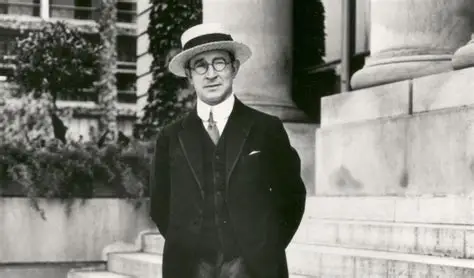
B. C. Forbes, the Scottish-born journalist who founded Forbes magazine in 1917, spent his career studying why some businesses succeed. Born in 1880 as the sixth of ten children, he began writing in South Africa before moving to the United States and building a publication devoted to business leaders and their work. In his 1917 book Keys to Success, he wrote a sentence that sums up his view of founders: “Search and you will find that at the base and birth of every great business organization was an enthusiast, a man consumed with earnestness of purpose, with confidence in his powers, with faith in the worthwhileness of his endeavors.” Just before it, he wrote that enthusiasm is the parent of enterprise.
The sentence works because it makes a claim anyone can test. Forbes invites readers to look at any large company, trace it back to the beginning and see who started it. He argues that they will find a person who cared deeply, believed in their own ability and thought the work was worth doing. In the same essay he points to Standard Oil and to Thomas Edison as examples of enthusiasm carrying people through difficulty.
“At the Base and Birth of Every Great Business Organization Was an Enthusiast” – B. C. Forbes
Forbes lists three qualities, and each carries a different meaning. Earnestness of purpose means the founder takes the work seriously and knows what the business is for. Confidence in one’s powers means the founder believes they can actually do what they set out to do. Faith in the worthwhileness of the endeavour means the founder believes the effort matters beyond personal gain. Together, the three describe someone who is not merely excited but committed.
The word “enthusiast” deserves attention. Many people hear it as a mood, a burst of energy that fades by midweek. Forbes uses it as a driving force. His enthusiast keeps working when the first customers say no, when money runs short and when friends doubt the plan. Forbes knew this from his own experience. He funded his young magazine through his freelance writing, refused to draw a salary for himself and asked staff to accept a pay cut to keep it alive during hard times.
Consider two people who each decide to open a small food business. The first loves the idea but loses interest when the permits drag on and the first month brings few sales. The second treats each obstacle as a problem to solve. She changes her menu after listening to customers, finds a cheaper supplier and returns the next day with the same energy. Both started with excitement. Only the second kept the enthusiasm that Forbes describes, the kind that comes with purpose and belief in the work.
Enthusiasm needs a clear purpose
The first half of the sentence matters as much as the word “enthusiast.” Forbes ties enthusiasm to earnestness of purpose. Energy without direction scatters, and a founder who chases every new idea wears out the team. A clear purpose gives the energy a target. Founders can test their own purpose by asking what problem the business solves and for whom. If the answer is vague, enthusiasm tends to drift.
Confidence works best when it is earned
Forbes praises confidence in one’s powers, but confidence differs from arrogance. The strongest founders build confidence from evidence: skills they have practised, small wins they have recorded and lessons they have learned from failure. They also listen to feedback. Confidence that ignores reality leads to bad decisions, while confidence grounded in preparation helps a leader act when others hesitate.
Belief in the worthwhileness of the work sustains effort
The last quality may be the most useful for long projects. Many businesses face years of slow progress before they break through. A founder who believes the work is worthwhile keeps going, and the belief spreads to employees, investors and customers. Teams follow a leader who clearly cares about what they are building.
Enthusiasm becomes valuable when leaders pair it with execution
The quote describes how businesses begin, not how they survive. Enthusiasm starts the work, but sound decisions, consistent execution and careful management keep it going. A founder who leaves out those parts risks burning out the original spark. The practical approach is to channel enthusiasm into habits: regular reviews of results, honest conversations about what works and steady attention to customers. Forbes himself spent decades writing about the discipline behind success as well as its excitement.
Why this advice still holds true today
Modern founders have more tools than Forbes imagined, from online stores to artificial intelligence, yet the starting point has not changed. Someone has to care enough to begin and to keep going. This sentence, written more than a century ago, still offers a useful check for any new venture. Ask whether you take the purpose seriously, whether you believe you can deliver and whether you think the effort is worth it. If the answer to all three is yes, you have the foundation Forbes saw at the base of every great business.