|
Getting your Trinity Audio player ready...
|
Dangote Raises Diesel Gantry Price to ₦1,840 a Litre as Lagos Depots Adjust Their Rates
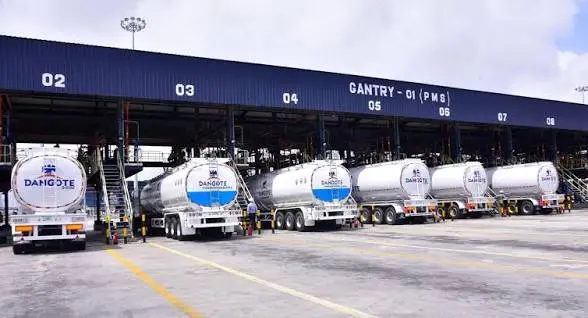
Dangote Petroleum Refinery has lifted its diesel gantry price by ₦40, to ₦1,840 a litre from ₦1,800, effective Wednesday, October 28. The change, a 2.2 percent rise, puts diesel at its highest gantry level since early September, apart from a brief ₦1,850 spell.
According to BusinessDay, the refinery’s commercial team sent customers a circular announcing the new rate and asked buyers to return their existing Authority to Collect documents so they can be repriced. The company said it would issue new volume contracts so loading can resume immediately at the revised price. In Lagos, depots including T.Time, Menj and Ibachem were quoting ₦1,840 a litre, matching the refinery. Marketers told the paper the increase will raise procurement costs for them and for bulk buyers, which could affect distribution margins and pump prices.
The price has moved sharply in a month. On October 1, the refinery cut diesel from ₦1,850 to ₦1,780. On October 7 it cut again, by ₦80, to ₦1,700. Three days later it raised the price by ₦100 to ₦1,800, and now it has added another ₦40. Across those moves the gantry price has swung by as much as ₦150 within a week, which makes planning hard for businesses that depend on diesel to run generators, trucks and machinery.
The latest rise followed a nervous few days. Legit.ng reported that the refinery stopped loading diesel at its gantry at 3 am around the end of last week, with no official reason or price announcement, while petrol loading continued. Depots in Lagos and Warri then raised their prices to as high as ₦1,900 a litre, with Wosbab and Prudent in Lagos at that level, as international crude climbed toward $116 a barrel. A gantry increase of ₦40 therefore came in well below those depot quotes.
What do depots do when the refinery changes its price? Past episodes show the answer can differ. In early September, after Dangote lifted diesel to ₦1,850, some depots cut their rates within a day and sold about ₦60 below the new benchmark, according to Legit.ng, citing weak demand and competition. In early August, after the refinery cut its price to ₦1,570, four Lagos depots undercut it by ₦5 within 24 hours. When supply is tight, the reverse happens, and depots charge more than the refinery. Without a published survey for October 28 showing depot prices below ₦1,840, it would be premature to say a price war has resumed.
Who feels the change first? Manufacturers, which buy at or near the gantry and rely on diesel for power, as BusinessDay noted in its report on the manufacturing squeeze. Transporters and generator owners come next, as retail stations adjust prices over days. Earlier this month, Abuja stations were selling diesel between ₦1,960 and ₦1,980, well above gantry levels because of transport and handling costs.
For buyers, the practical steps are simple. Compare depot quotes on the day, because the spread between the lowest and highest depot has often exceeded ₦100. Ask whether a price is for immediate loading or a future contract. And watch crude oil and import costs: the Major Energies Marketers Association of Nigeria put diesel landing costs at ₦1,775 to ₦1,785 on October 5, so Dangote’s ₦1,840 is now above that benchmark, which can attract imports and pressure local prices. The next signal will be whether depots hold at ₦1,840 or undercut it, and whether the refinery adjusts again.