|
Getting your Trinity Audio player ready...
|
What Did AMN Announce?
Africa Mobile Networks (AMN) announced on October 28, 2026 that it activated its 2,000th base station in Nigeria. The company issued the statement from Milton Keynes in the United Kingdom through GlobeNewswire. AMN says the network now gives 2G, 3G, and 4G access to more than 4.7 million people who had no coverage or poor coverage.
AMN also says it now represents 10% of the active telecom site estate of Africa’s largest mobile operator in Nigeria. The statement does not name the operator.
Was the 2,000th Site Built at Yebu?
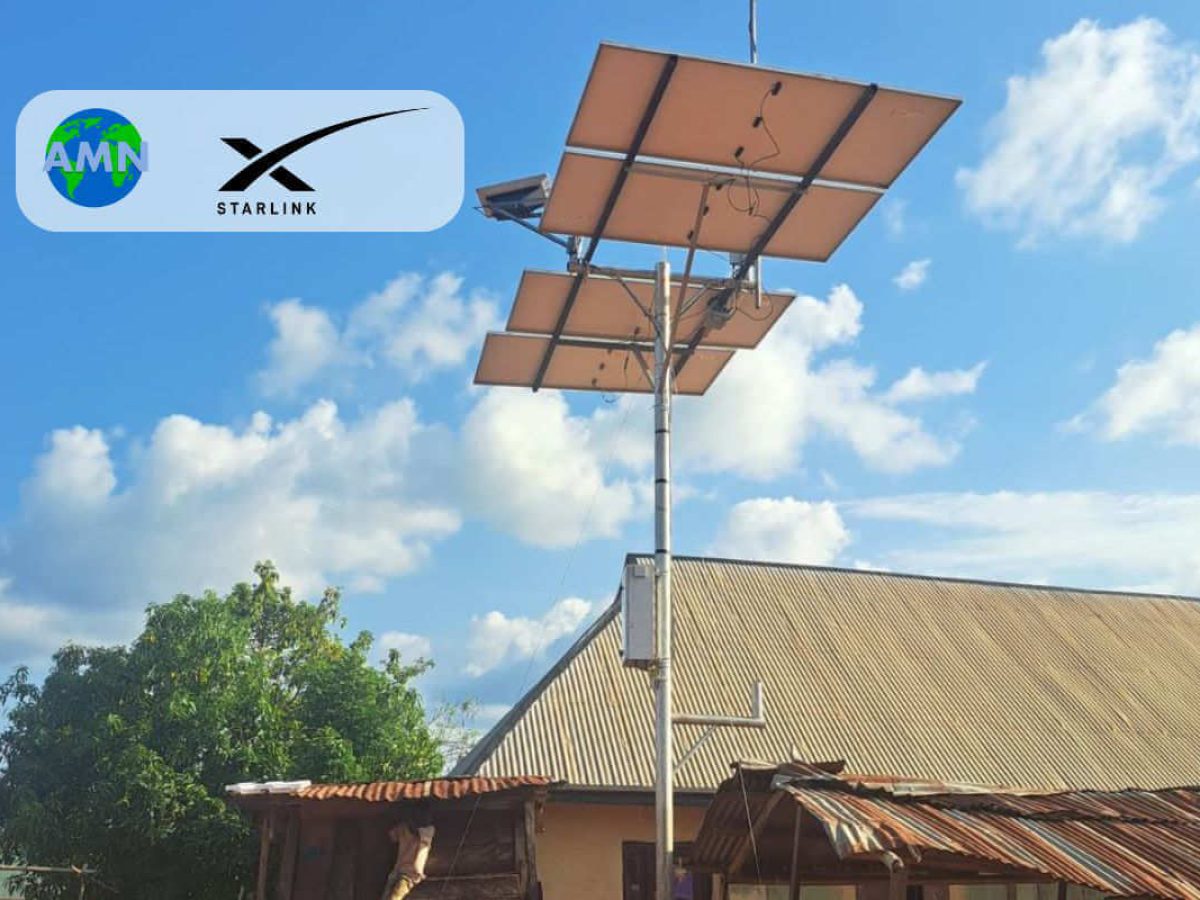
The release does not say the 2,000th base station is at Yebu. It says Yebu is AMN’s first site that combines its own radio technology with Starlink satellite connectivity. The two facts sit in the same announcement, which is why some headlines merge them. This article keeps them separate.
Yebu is a farming community about 80 kilometres from Abuja. It was the first rural community AMN connected, in November 2018, using a solar-powered base station. AMN reported more than 9 million voice minutes at the site by 2024, and traffic in 2023 was almost three times its 2020 level.
What Is AMN’s Radio Technology?
AMN builds its own radio equipment, called the AMN Radio Node (ARN), which supports 2G, 3G, and 4G for several mobile operators on one site. AMN became a radio-equipment maker in 2020 after acquiring Range Networks. It has deployed ARN on its towers since 2024, according to the October release.
Two terms need defining:
- Multi-operator design: One tower and radio unit serves more than one mobile network operator, which lowers the cost of covering sparse areas.
- Dual-band configuration: One radio unit transmits on two frequency bands, so an operator can run services across more than one band.
Earlier coverage from 2024 adds that ARN supports up to five simultaneous carriers. In radio terms a carrier is a frequency channel, so the figure describes capacity, not five separate companies.
AMN reports that recent trials at a dual-band site recorded 4G download speeds above 81 Mbps. The release describes this as a trial result and does not say how many sites achieved it.
How Does Starlink Backhaul Work for a Rural Mast?
Backhaul is the link that carries a base station’s traffic to the core network, and AMN uses Starlink’s low-Earth-orbit (LEO) satellites for it at remote sites. Phones connect to the mast by radio as usual. The mast then sends its combined traffic to the internet through a Starlink terminal.
Starlink does not connect directly to the user’s phone in this setup. That differs from direct-to-cell services, where phones link to satellites without a tower. Satellites in low Earth orbit sit much closer to the planet than geostationary ones, which shortens signal travel time and supports voice and data on a busy rural mast.
What Results Has Starlink Backhaul Delivered?
AMN reported a 45% traffic increase on more than 100 Nigerian sites connected through Starlink as of September 2024. The company said the upgrade raised capacity without changes to the base station software on site. The 2024 figure is the latest Starlink-specific data in the sources reviewed, so 2026 results remain unpublished.
How Did the Starlink Partnership Develop?
AMN and SpaceX signed a commercial agreement in July 2023, and the first Starlink-backhauled AMN site went live at Yebu in April 2024. The timeline below combines company releases and trade-press reports.
| Date | Event | Detail |
|---|---|---|
| 2018 | AMN begins rural rollout in Nigeria | Yebu connected in November 2018 |
| 2020 | AMN becomes a radio equipment maker | Acquires Range Networks |
| July 2023 | Commercial deal with SpaceX | Starlink backhaul for remote base stations |
| April 2024 | First Starlink-backhauled site | Live at Yebu |
| September 2024 | Scale-up reported | More than 100 sites; 45% traffic rise |
| October 28, 2026 | 2,000th Nigerian base station | 4.7 million people served |
What Are the Key Figures?
The October 2026 release gives seven headline numbers.
| Metric | Figure | Context |
|---|---|---|
| Nigerian base stations | 2,000 | Milestone activation |
| People covered in Nigeria | More than 4.7 million | Previously unserved or underserved |
| Share of a major operator’s active sites | 10% | Operator not named |
| Dual-band trial download speed | Above 81 Mbps | 4G, recent trial |
| Record monthly build | 114 new sites | Single month in Nigeria |
| Group sites across Africa | More than 5,350 | Company-wide |
| Group population reached | More than 15 million | Company-wide |
What Are AMN’s Targets?
AMN plans more than 2,100 Nigerian sites by the end of 2026 and a build rate above 60 new sites a month in 2027. Nigeria is one of 10 countries where the group operates. Reaching 2,100 by December requires about 100 more sites in roughly two months, which sits within the company’s stated record pace of 114 in one month.
How Does AMN Make Money?
AMN uses a revenue-share model that asks operators for no capital or operating spending on the sites. AMN develops, owns, operates, and maintains the networks, including solar power at remote sites. The operator’s mobile customers then generate revenue that the parties share. This model suits areas where traffic is too low to justify a tower under normal commercial terms.
What Social Effects Does AMN Claim?
AMN says the sites support telemedicine, small business activity, remote education, and a narrower gender gap in digital access. CEO Michael Darcy said the milestone shows what purpose-built infrastructure can do for communities without mobile access, and that AMN is building more than towers. A Yebu community representative said in 2024 that the 2018 arrival of AMN helped bring a police division station, 24-hour solar lighting, and steady communication. These are company and community statements, not independent studies.
What Details Remain Unclear?
Five points are not settled in the coverage reviewed.
- The location of the 2,000th site.
- The identity of the operator that AMN’s 10% share refers to.
- A 2026 count of Starlink-connected Nigerian sites.
- How many sites match the 81 Mbps trial result.
- Why 2024 reports cited about 1,600 Nigerian sites in April 2024 and a target of 2,000 by June 2024, while the 2026 release marks 2,000 as a new milestone. The sources do not explain the gap, which may reflect different counting methods.
Does Starlink Make AMN’s Sites Independent of Terrestrial Networks?
Not entirely, because Starlink covers backhaul only, and AMN sites still depend on the host operator’s network for services. The release links AMN’s masts to a large Nigerian operator.
Who Owns the Towers?
AMN owns and operates its sites and shares revenue with its operator partners.
What Does the Milestone Signal for Rural Coverage in Nigeria?
The milestone signals that shared rural infrastructure with satellite backhaul has reached scale in Nigeria, with 4.7 million people covered. The combination of owned radio equipment, revenue-share contracts, and LEO backhaul addresses the three costs that keep remote masts uneconomic: equipment, financing, and transport links. The next measurable steps are the 2,100-site target for December 2026, the 60-sites-a-month pace in 2027, and published Starlink traffic data. Those figures will show whether Yebu’s pairing of ARN radios and satellite links becomes the standard design for the next 1,000 sites.