|
Getting your Trinity Audio player ready...
|
LAGOS In most of the world, the most-searched iPhone questions revolve around software tweaks, new features, or which case to buy. In Nigeria, a new research analysis suggests the picture looks almost entirely different, dominated not by curiosity, but by verification.
A newly published research report from HowToShareTips.com, a Nigeria-focused technology help site, analyzed patterns behind the 50 most common iPhone-related Google searches originating from Nigerian users in 2026. The findings point to a consumer electronics market shaped less by product features than by the mechanics of buying a secondhand device sight-unseen, and hoping it works.
Top 10 Most Searched iPhone Problems in Nigeria (2026)
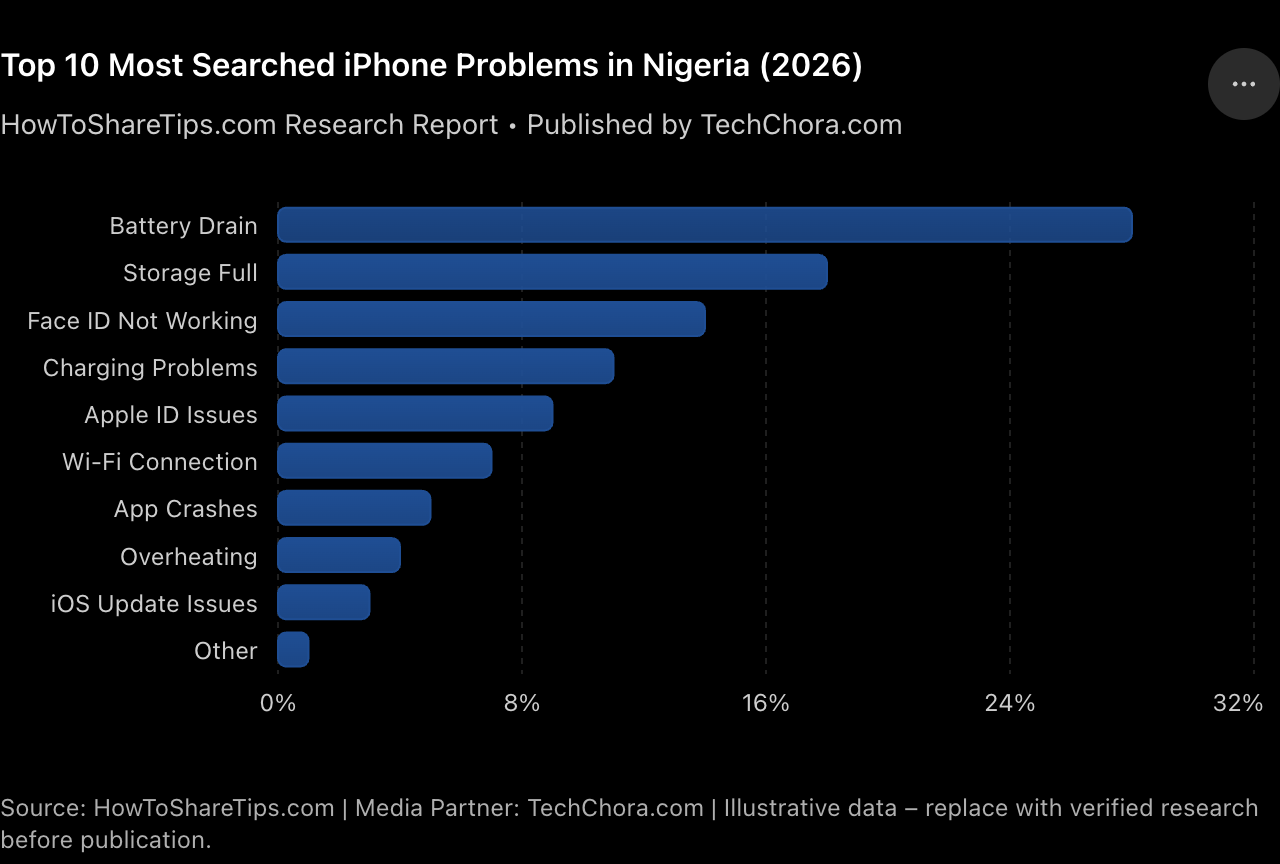
Link to: Top 50 Most Common iPhone Problems Nigerians Search on Google in 2026
The report attributes this to three overlapping forces unique to Nigeria’s smartphone economy: a large import trade in “UK-used” and “US-used” iPhones, a national eSIM compatibility gap caused by newer US-spec models shipping without physical SIM trays, and cost pressure from Naira volatility that pushes buyers toward secondhand units and independent repair shops rather than authorized service centers.
“What we found wasn’t really a list of iPhone glitches, it was a map of where trust breaks down in a secondhand transaction,” a spokesperson for HowToShareTips.com said. “Nigerian buyers are searching for ways to protect themselves before they hand over cash, not after something goes wrong.”
That framing helps explain why iCloud Activation Lock, IMEI blacklist checks, and questions like “how to know if an iPhone is clean before buying” rank among the report’s most prominent search categories, clustering alongside, and in some cases outpacing, more universal complaints like battery drain or cracked screens.
Repair hubs such as Lagos’s Computer Village, Abuja’s Wuse market, and comparable markets in Port Harcourt and Kano serve as both the backbone and the bottleneck of this ecosystem. They supply affordable devices and parts to a growing middle class, but they also fuel search demand around counterfeit chargers, aftermarket screens, and “how to spot a fake or heavily refurbished iPhone”, a phrase the report lists explicitly among its top 50.
For everyday consumers, the stakes are tangible. A locked or blacklisted iPhone bought in good faith can become an expensive paperweight with no straightforward recourse. The report’s authors argue that understanding these search patterns isn’t just an academic exercise, it’s a warning system for what to check before money changes hands.
“Verify iCloud status, IMEI status, and network-band compatibility before you buy, not after,” the HowToShareTips.com spokesperson added. “Those three checks alone would prevent most of the expensive surprises we see reflected in the search data.”
The report also flags a rising theme it expects to keep growing: confusion among buyers of newer US-market iPhones, which since the iPhone 14 generation have shipped without a physical SIM slot in favor of eSIM-only activation. As more of these units flow into Nigeria’s resale pipeline, users accustomed to swapping a physical MTN, Glo, Airtel, or 9mobile SIM card are increasingly caught off guard.
Nigeria is one of Africa’s largest smartphone markets, and analysts have long pointed to it as a bellwether for how emerging-market consumers engage with premium devices they can’t always afford new. This research adds texture to that picture, suggesting that the country’s tech-support conversation is fundamentally about risk management in a secondhand economy, not brand loyalty or feature envy.
The complete findings, including a full category breakdown and search-trend charts, are detailed in the 2026 iPhone Search Trends Report, published by HowToShareTips.com. The report’s authors describe their figures as directional estimates modeled from repair-shop patterns, consumer forums, and troubleshooting coverage rather than a raw export from Google’s internal keyword tools, a distinction they say matters for anyone citing the data.
Read More: Apple earnings report 2026 signals strong global demand
For consumers navigating Nigeria’s iPhone market, the takeaway is straightforward, if not always easy to act on: the phone itself is rarely the problem. What buyers are really searching for is a way to know, before it’s too late, whether the device in front of them is exactly what it claims to be.