|
Getting your Trinity Audio player ready...
|
De-Googled GrapheneOS is coming to Motorola’s foldables next year, marking one of the biggest hardware expansions in the history of the privacy focused Android operating system and giving GrapheneOS Motorola support a real timeline for the first time.
For nearly a decade, GrapheneOS has been synonymous with a single brand of hardware. The open source, security hardened Android alternative built its reputation entirely on Google Pixel devices, offering privacy conscious users a way to strip Google services out of their phones while keeping the strong hardware backed security guarantees that Pixel silicon provides. That exclusivity is now ending. GrapheneOS has laid out detailed plans to support Motorola devices starting in 2027, and the roadmap includes something the project has never offered before: official support for foldable phones, specifically the Razr Fold and Razr Ultra lines.
The partnership was first announced at MWC 2026, when Motorola and the GrapheneOS Foundation confirmed they were working together on future devices engineered from the ground up to meet GrapheneOS’s strict hardware requirements. At the time, details were thin. Motorola hadn’t named specific models, hadn’t confirmed pricing, and GrapheneOS itself was cautious about overpromising a firm release window. In the months since, the picture has sharpened considerably. GrapheneOS has now confirmed that its initial focus will be a conventional, non-folding flagship expected to arrive in 2027, built around Qualcomm’s Snapdragon 8 Elite Gen 5 platform, with foldable support following as the second phase of the rollout.
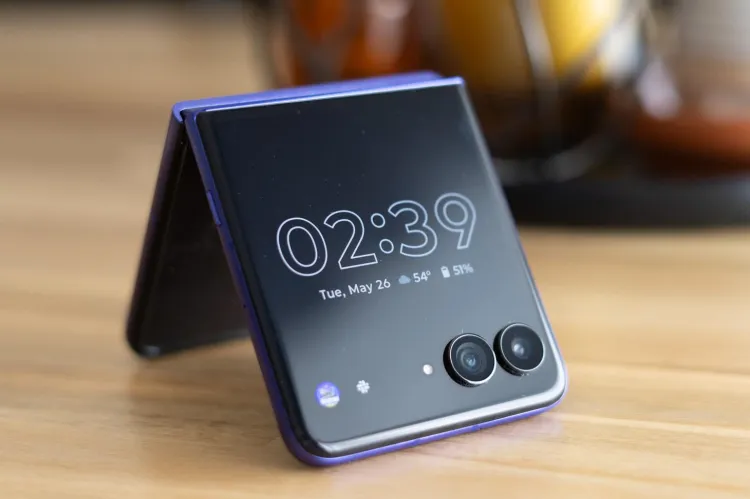
That sequencing makes sense from an engineering standpoint. Bringing a completely new form factor into a security focused operating system introduces complications that don’t exist with a standard slab phone, from how verified boot and hardware attestation interact with a folding display to how the operating system handles multitasking across a device that physically changes shape. GrapheneOS has been candid about the challenge, noting that the Razr Ultra’s vertically folding design in particular represents an entirely new form factor for the project. The team has described it as a genuinely useful case, offering the convenience of a small, pocketable device when closed and a larger usable screen when open, which is exactly the kind of flexibility that has made flip style foldables popular among mainstream buyers over the past couple of years.
None of this means current Motorola foldables are getting GrapheneOS anytime soon. The company just released its 2026 lineup, including the Razr 2026 series and the Razr Fold, and GrapheneOS has been explicit that those devices are not part of the plan. Instead, the project has described the 2026 hardware as representative of what it’s working toward, essentially a preview of the specifications Motorola needs to hit rather than devices that will actually receive official support. The phones that do get GrapheneOS will be built specifically to satisfy the project’s requirements, which include seven years of guaranteed software updates, robust hardware based security isolation, and protected boot modes that prevent tampering at a level most Android manufacturers don’t currently offer outside of Google’s own Pixel line.
Motorola is reportedly dedicating real engineering resources to this effort rather than treating it as a marketing partnership. According to reporting on the collaboration, Motorola is handling porting and maintenance work on its end while GrapheneOS contributes directly to firmware and software support, an arrangement that mirrors how tightly integrated the project’s relationship with Pixel hardware has historically been. That level of direct involvement is notable because GrapheneOS has a reputation for being uncompromising about security requirements, and past attempts by other Android manufacturers to court privacy focused communities have often fallen short of the bar the project sets for official support.
The hardware itself is expected to sit above Pixel pricing. GrapheneOS said in a recent post that the initial Motorola devices will offer higher end hardware than current Pixel phones running the operating system, at a correspondingly higher price, with lower end devices taking longer to meet the project’s update and security requirements. That positioning has generated mixed reactions inside the GrapheneOS community. Some users have welcomed the move away from Pixel exclusivity as an overdue diversification for a project that has always been vulnerable to Google changing Pixel hardware or software in ways that complicate GrapheneOS’s work. Others have raised concerns rooted in Motorola’s ownership by Lenovo and the company’s uneven history with software support and update consistency on past devices, arguing that trust will depend entirely on whether Motorola actually delivers on the seven year update commitment in practice rather than just at launch.
There’s a strategic logic to why GrapheneOS wanted a second hardware partner in the first place. Relying on a single manufacturer for every supported device creates obvious risk. If Google were to change Pixel’s bootloader policies, restrict access to firmware, or shift its hardware security architecture in a way that’s incompatible with GrapheneOS’s approach, the entire project’s viability would be threatened. Bringing Motorola into the fold, and specifically a brand that ranks among the top ten smartphone makers globally, gives GrapheneOS a genuine alternative and signals to the broader Android ecosystem that hardened, degoogled software isn’t a niche curiosity limited to one manufacturer’s flagship line.
It’s also a meaningful moment for Motorola. The company’s foldable strategy has leaned heavily into the Razr family over the past few years, competing directly against Samsung’s Galaxy Z Flip and Fold lines, and associating that hardware with one of the most respected names in mobile privacy and security software gives Motorola a differentiation angle that’s hard for competitors to copy quickly. Samsung, Google and other major Android manufacturers have all leaned into privacy messaging to varying degrees, but none of them have handed over the kind of low level engineering access that official GrapheneOS support requires.
Buyers hoping to get a GrapheneOS powered Motorola foldable in hand shouldn’t expect it before 2027, and even that window covers the standard flagship first, with the Razr Fold and Razr Ultra expected to follow later in the rollout. Anyone who wants the GrapheneOS experience today still needs to buy a supported Pixel model and install the software themselves, since Motorola’s compatible hardware doesn’t exist as a shipping product yet. But the roadmap itself marks a genuine inflection point for a project that spent its first decade tied to a single manufacturer’s silicon, and it gives privacy focused Android users their clearest look yet at what life beyond Pixel exclusivity might actually look like. For more coverage on how privacy focused software is reshaping mainstream hardware choices, check Techchora’s ongoing mobile technology coverage, and readers wanting technical specifics can follow updates directly from the GrapheneOS project.