Skip to content

Akeem Lawal Biography: Career, Interswitch and Contributions to Fintech

Akeem Lawal Biography Career, Interswitch and Contributions to Fintech

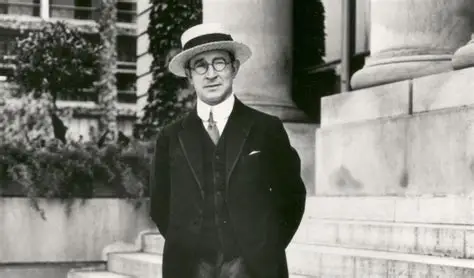
Every time a Nigerian taps a card, sends a transfer or pays a bill from a phone, a payment switch decides where that transaction goes. Few people know the engineers who built such systems, and fewer know that one of them helped launch Africa’s first fintech unicorn. This Akeem Lawal biography follows a first-class engineer … Read more
Quote of the Day: “Just Because You Are CEO, Don’t Think You Have Landed” Indra Nooyi

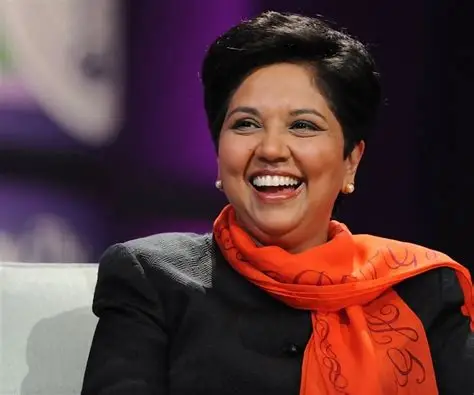
Indra Nooyi

Indra Nooyi, born in India in 1955, joined PepsiCo in 1994 as head of strategic planning, became president and chief financial officer in 2001 and took over as chief executive in 2006, the first woman to hold the job. She led the company until 2018, and she often explained what the top job taught her. … Read more

Ifeoma Uddoh Biography: Education, Career and Shecluded’s Mission for Women Entrepreneurs

Ifeoma Uddoh Biography: Education, Career and Shecluded’s Mission for Women Entrepreneurs

Women start more than half of Nigeria’s small businesses, yet very few receive investment to grow them. Ifeoma Uddoh noticed that gap from the inside, while working at a seed fund where hardly any women applied for money. She left a comfortable career to build a company that fixes it. This Ifeoma Uddoh biography follows … Read more

Sarah Diouf Biography: Education, Career and the Tongoro Story

Sarah Diouf Biography: Education, Career and the Tongoro Story Few African fashion founders have started by launching magazines, and fewer still have dressed Beyoncé within two years of opening a brand. This Sarah Diouf biography follows a Paris-born, Abidjan-raised entrepreneur who left a career in publishing to build Tongoro, a label designed and produced entirely in Dakar, Senegal. She trained in marketing and communication, not fashion design, and she built the brand on a business idea: make premium African clothing that people can afford, and make it where the craftspeople live. Her story offers a practical case study in fashion entrepreneurship, brand building and international visibility. This article covers her education, career and the strategy behind her company. Who Is Sarah Diouf? Sarah Diouf is a Senegalese entrepreneur, designer and storyteller, and the founder and creative director of Tongoro. She was born in Paris to a Senegalese-Congolese father and a mother of Senegalese and Central African origin, and she grew up in Abidjan, Côte d’Ivoire. Her parents’ work let the family travel, and she describes that exposure as an education in its own right. She now lives and works in Dakar. Early Life Between Paris and Abidjan Diouf spent her childhood in Abidjan until the Christmas 1999 coup d’état in Côte d’Ivoire, which pushed her back toward France. She went to live with an aunt and continued her schooling there, an experience she calls a new beginning. A serious accident later confined her to bed in a neck brace for a long recovery, and she says it changed how she saw her life and fed her interest in creativity and storytelling. Sarah Diouf’s Education Diouf earned a master’s degree in marketing and communication management from INSEEC in Paris, studying there from 2007 to 2011. She did not attend a fashion school, and she says so plainly: “I didn’t attend fashion school, but I went to business school.” That background shaped everything she built later. A marketing and communication degree teaches positioning, branding and storytelling, which are skills that many talented designers struggle to learn after launch. First Ventures: Ghubar and NOIR Diouf began her career in media. In 2009, while still a student, she founded Ghubar, a quarterly digital publication that promoted African and Arab fashion and arts. The magazine won her the Online Fashion and Style Initiative award at the Cosmopolitan Style Awards in 2010. In 2015, she followed it with NOIR, a bi-annual lifestyle magazine connecting Black women around the world. Both publications taught her how to build an audience, work with designers and photographers, and tell visual stories, and they gave her a network inside the fashion industry before she made a single garment. Launching Tongoro in Dakar In 2016, Diouf moved to Dakar and launched Tongoro. The name means “star” in Sango, the national language of the Central African Republic. She started with an online retail platform and an apparel brand that promoted Senegalese craftsmanship and the Made in Africa label, and she aimed to position it as a premium brand that people could still afford. Her early identity was cautious. She did not want to call herself a designer, out of respect for people who had studied fashion formally, and she described herself as a creative who loves telling stories. Today she calls herself a fashion entrepreneur. How Tongoro Works Tongoro designs and produces its clothing in Dakar. The brand sources materials on the African continent and works with local artisans and tailors, which supports local jobs and keeps the supply chain close to its customers. Diouf frames this as ethical, sustainable fashion and as proof that African production can meet international standards. The brand’s look is distinctive. Diouf drew on the black-and-white photography of 1960s African photographers to create a monochrome palette that people now associate with Tongoro. She says that working only in black and white was something she thought no African fashion label had done. International Visibility The brand’s breakthrough came in 2018, when Beyoncé wore Tongoro and introduced it to a global audience. Since then, Alicia Keys, Naomi Campbell and Burna Boy have also worn its pieces, and Fast Company listed Tongoro among its most innovative companies in 2020. The brand also launched an exclusive capsule collection with the online retailer Industrie Africa in December 2020. This visibility matters as a business strategy. Celebrity wear created demand that a young label could not afford to buy through advertising, and it brought attention to the Made in Africa claim. Expanding Into Menswear Tongoro has also moved beyond womenswear. Diouf launched Môgô, a menswear collection whose name means “guy” in Ivorian Nouchi, and it includes clothing for Burna Boy. The expansion widens the brand’s customer base and shows that the label can design for different audiences while keeping its identity. Defending African Design In January 2024, Diouf publicly accused the French fashion house Balmain of plagiarism, a claim that drew international attention. The episode highlighted a problem that African designers face: strong ideas can be copied by larger houses that have more money and reach. By speaking out, Diouf positioned Tongoro as a brand that protects its creative work. Building a Recognisable African Brand Three elements stand out in how Diouf built Tongoro. The first is a clear point of view. Black-and-white prints, bold silhouettes and a focus on everyday glamour make the brand easy to recognise. The second is a place-based identity. Dakar production and Senegalese craft give the Made in Africa label substance beyond a slogan. The third is storytelling, a skill she developed through years in publishing. Each collection carries a narrative, and she communicates it through photography and social media. She also treats affordability as part of the brand’s promise. Her aim has been premium quality that a young professional can buy, and not luxury that only a few can reach. Why Sarah Diouf Draws Attention Her profile blends several unusual features: a founder who started in media, a brand that grew from an online platform into a label worn by global stars, and a production model rooted in Dakar. Readers who search for a Sarah Diouf biography want to understand how someone without fashion school training built an internationally recognised African label. What Her Journey Teaches Three lessons stand out. First, skills from one field can launch a business in another. Her marketing training and years in publishing gave her tools that many designers lack. Second, a clear identity makes a brand memorable. Tongoro’s black-and-white palette and Made in Africa focus help customers recognise it instantly. Third, local production creates both authenticity and impact. Working with Dakar artisans strengthens the product and supports the community that makes it.

Few African fashion founders have started by launching magazines, and fewer still have dressed Beyoncé within two years of opening a brand. This Sarah Diouf biography follows a Paris-born, Abidjan-raised entrepreneur who left a career in publishing to build Tongoro, a label designed and produced entirely in Dakar, Senegal. She trained in marketing and communication, … Read more

Quote of the Day: “It Is Not Enough to Be Industrious; So Are the Ants. What Are You Industrious About?” Henry David Thoreau

Henry David Thoreau

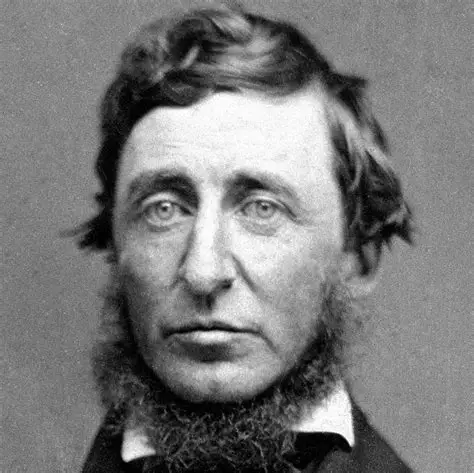
Writer and naturalist Henry David Thoreau, who lived from 1817 to 1862, is best known for Walden, his account of living simply beside a pond near Concord, Massachusetts. He also wrote long, frank letters to friends, and one of them, sent to Harrison Blake on November 16, 1857, contains this challenge: “It is not enough … Read more

Aisha Pandor Biography: Age, Education, Career, SweepSouth and Pandora Health

Aisha Pandor Biography: Age, Education, Career, SweepSouth and Pandora Health

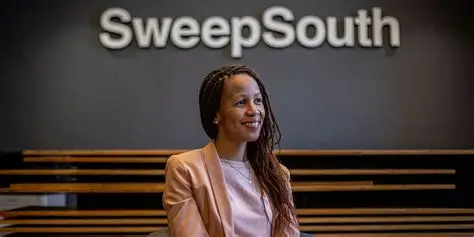
Most founders pick a lane early and stay in it. Dr Aisha Pandor has worked in three very different ones: scientific research, home services technology and women’s healthcare. This Aisha Pandor biography follows a South African geneticist who co-founded SweepSouth, Africa’s first online platform for booking and managing home services, and later co-founded Pandora Health, … Read more

Tayo Oviosu Biography: Age, Education, Career, Paga and the Mission to Serve Everyday Nigerians

Tayo Oviosu Biography: Age, Education, Career, Paga and the Mission to Serve Everyday Nigerians

For most of the 2000s, Nigerians who wanted to send money had two choices: carry cash across the country or queue at a bank that many of them did not use. Tayo Oviosu saw that gap while working in Silicon Valley and then in Lagos, and he decided to build a company around it. That … Read more

Onyeka Akumah Biography: Career, Businesses, Treepz and Entrepreneurial Journey

Onyeka Akumah Biography: Career, Businesses, Treepz and Entrepreneurial Journey

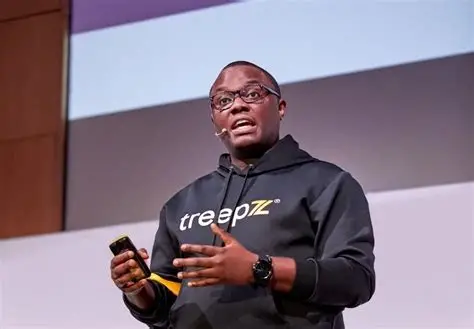
Some founders start with a technology and look for a use. Onyeka Akumah does the opposite. He spots something broken in a traditional industry, such as a clumsy bus ride or a farmer who cannot raise money, and builds a business around fixing it. Over two decades, that habit produced ventures in agriculture, transportation, property … Read more

Quote of the Day: “At the Base and Birth of Every Great Business Organization Was an Enthusiast” B. C. Forbes

B. C. Forbes

B. C. Forbes, the Scottish-born journalist who founded Forbes magazine in 1917, spent his career studying why some businesses succeed. Born in 1880 as the sixth of ten children, he began writing in South Africa before moving to the United States and building a publication devoted to business leaders and their work. In his 1917 … Read more

John Alamu Biography: Age, Education, Career, CapitalSage Holdings and Business Ventures

John Alamu Biography: Age, Education, Career, CapitalSage Holdings and Business Ventures

Plenty of Nigerian conglomerates started with inherited capital or a government contract. John Alamu started with ₦100,000 and a small lending experiment among farmers and market women in Ibadan. Over a decade, that experiment grew into CapitalSage Holdings, a group with interests in fintech, agribusiness, manufacturing and healthcare, operating across Africa, Asia, Europe and the … Read more