|
Getting your Trinity Audio player ready...
|
Honda, Nissan Target Fiscal 2029 Rollout of Joint Software-Defined Vehicle (SDV) Technology for EVs
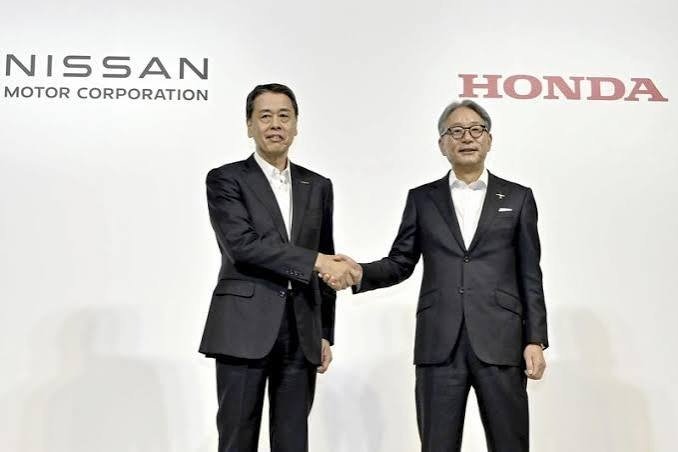
Honda and Nissan have taken a significant step toward reshaping how their vehicles are built, announcing plans to jointly develop standardized electronic control units and software for next-generation cars. The two Japanese automakers said they plan to introduce an architecture incorporating jointly developed ECUs and software in next-generation vehicles starting from the 2029 financial year. The announcement, made in Tokyo on Monday, marks one of the clearest signals yet that the rivalry between legacy automakers is shifting from horsepower and design toward code and computing power.
Under the agreement, Nissan, headquartered in Yokohama, and Honda, based in Tokyo, will share standardized parts in what are known as core ECUs, along with the software that runs on them. These electronic control units function as the brains of a modern vehicle, managing everything from battery performance to driver assistance features. By standardizing this hardware and the software layered on top of it, both companies expect to cut costs and shorten development timelines, something that has become increasingly urgent as vehicles evolve into rolling computers.
The concept driving this partnership is the software-defined vehicle, an industry term for cars whose features and performance can be updated, expanded, or fine-tuned primarily through software rather than physical hardware changes. These vehicles have functions and features that can be updated and controlled by software, rather than the mechanics of hardware. Think of it as the difference between buying a phone that gets meaningfully better with each update versus one that’s frozen in time the moment it leaves the factory. Tesla popularized this approach years ago, and now traditional automakers are racing to catch up.
Software has become a key battleground for automakers as vehicles take on more autonomous-driving and connected functions, with carmakers investing heavily in operating systems that support features ranging from driver assistance and entertainment to over-the-air updates, increasing development costs. That cost pressure is precisely why Honda and Nissan are pooling resources instead of building competing systems independently. Neither company has the scale of Toyota, and going it alone in software development, an area where specialized engineering talent is scarce and expensive, would put both at a lasting disadvantage.
The move also reflects growing competitive pressure from Chinese automakers such as BYD, which have gained ground in markets including Europe and Southeast Asia with electric and hybrid cars packed with advanced software features. Chinese manufacturers have been shipping vehicles with sophisticated infotainment systems, smart driver assistance, and frequent software updates at price points that undercut established brands. For Japanese automakers already facing slower EV adoption at home and stiffer competition abroad, falling behind on software could prove more damaging than falling behind on styling or even range.
Notably, Monday’s agreement stopped short of naming specific models or explicitly tying the collaboration to electric vehicles. The agreement did not specifically mention EVs or any model names, and was focused on software-defined vehicles, which could include EVs. That framing gives both companies flexibility, since the shared architecture could theoretically underpin hybrids and combustion vehicles equipped with advanced connectivity, not just battery-electric models. Nissan’s lineup includes the Leaf hatchback and Infiniti luxury vehicles, while Honda continues to sell high-volume models such as the Accord, Civic, and Odyssey, meaning the eventual reach of this shared platform could span a wide swath of each brand’s catalog.
This isn’t a sudden pivot. Nissan and Honda started talks in 2024 to work together in developing electric vehicles and auto intelligence technology. That earlier memorandum of understanding laid the groundwork for a broader strategic partnership covering electrification and vehicle intelligence, and Monday’s announcement effectively formalizes one concrete outcome of those discussions. It also comes at a time when both companies have faced pressure to prove that scale efficiencies from cooperation can translate into real product and cost benefits, something that has been slower to materialize than some investors had hoped when the alliance talks first became public.
Sharing components and collaborating on research is expected to help cut costs and speed up development, while adding efficiency through economies of scale once the vehicles reach production. This is a familiar playbook in the auto industry, where platform sharing has long been used to spread the enormous fixed costs of engineering across higher production volumes. What’s different now is that the shared component isn’t a chassis or an engine, it’s the digital nervous system of the car.
Japan’s two smaller mass-market automakers aren’t alone in pursuing this strategy. European manufacturers Volkswagen, BMW, Mercedes-Benz, and Stellantis are working together on software development so they can share the same operating system. That parallel effort in Europe underscores just how widely the industry has accepted that no single automaker, however large, can efficiently build a full software stack alone anymore. The complexity of modern vehicle software, spanning cybersecurity, cloud connectivity, autonomous driving algorithms, and constant regulatory compliance across markets, has simply outgrown what most individual carmakers can justify funding solo.
There’s also a competitive subtext specific to Japan. Both Nissan and Honda are overshadowed by Toyota Motor Corporation, the country’s top automaker, and working together could give them an edge in competing against Toyota. Toyota has pursued its own software collaborations, notably with Subaru, part of the Toyota group, and Waymo, the American autonomous driving company. Toyota had previously been mentioned as engaging in software talks with Nissan and Honda, though it was not part of Monday’s announcement. Whether Toyota eventually joins a rival software ecosystem or continues building its own remains one of the more interesting open questions in the Japanese auto industry. ABC News
There’s also room for the partnership to grow. Mitsubishi Motors, which is Nissan’s alliance partner, is reportedly considering joining the collaboration and is currently in discussions with the two companies about potential areas of partnership. Adding Mitsubishi would further expand the production volume over which shared software and hardware costs could be spread, strengthening the economic case for the entire venture.
Beyond the shared ECUs and software platform, the companies indicated their cooperation won’t stop there. As part of their strategic partnership, Nissan and Honda will continue to explore other opportunities for collaboration across a range of areas, including zero-emissions technology and reducing traffic fatalities. Those goals point toward deeper cooperation on safety systems and emissions-reducing technologies that could extend well beyond the 2029 timeline set for the initial software architecture rollout.
For consumers, the practical impact likely won’t be visible for several years, since the earliest vehicles built on this shared architecture aren’t expected until fiscal 2029. But the groundwork being laid now, standardized control units, shared software platforms, and a broader web of potential partners, will shape how quickly Honda and Nissan can respond to the next wave of automotive technology, from more capable driver assistance systems to the kind of continuous software improvements that buyers have come to expect from their smartphones. In an industry where falling behind on software increasingly means falling behind altogether, this partnership looks less like an experiment and more like a necessity both companies concluded they couldn’t avoid.