|
Getting your Trinity Audio player ready...
|
Huawei Mate XT2 and Xiaomi 18 Fold Launch Ahead of Apple’s iPhone Event
China’s two biggest smartphone makers picked an unmistakably deliberate moment to show off their newest folding phones. Huawei and Xiaomi both launched flagship foldables this week, just days before Apple is expected to unveil its next iPhone lineup, and the timing reads less like coincidence and more like a calculated attempt to seize attention in China’s premium handset market before Apple’s event dominates the news cycle.
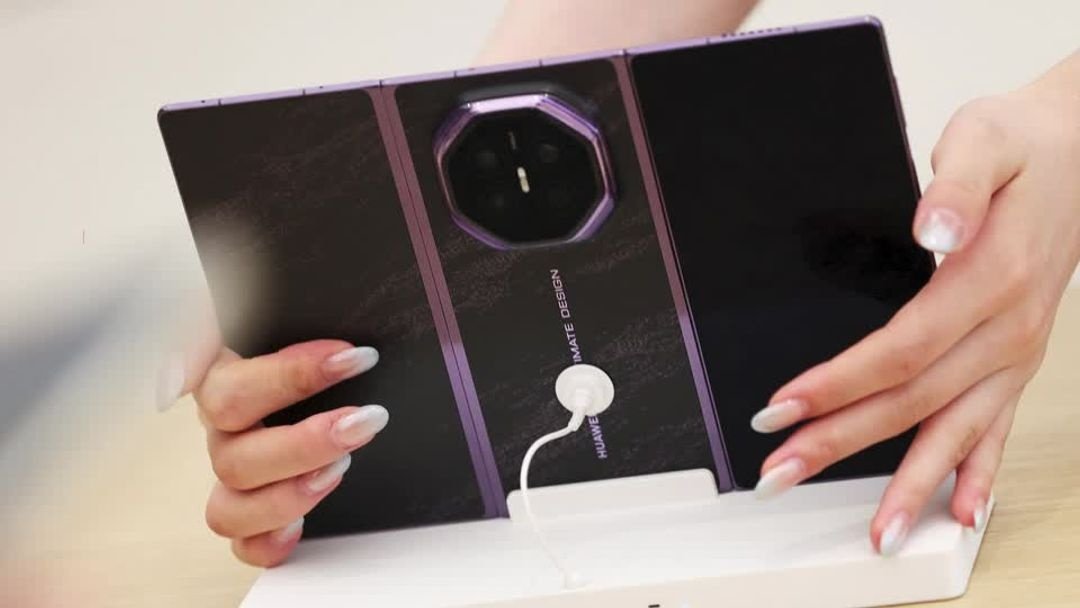
Huawei’s contribution is the Mate XT2, a tri-fold device that opens twice into a tablet-sized display. The phone runs on Huawei’s own Kirin 9050 Pro chip and comes with a redesigned hinge, improved water resistance, and a privacy screen feature designed to block people nearby from viewing the display, a practical touch for a device this large that is often used in public settings. Huawei is pricing the Mate XT2 starting at 19,999 yuan, or roughly $2,980, with the top-end configuration reaching 24,999 yuan, about $3,725. Sales begin September 12. At a press conference announcing the device, Huawei executive director Richard Yu acknowledged that rising memory costs have made pricing unusually difficult this generation, saying the company adopted a lot of new technology and that the resulting cost pressure has been enormous.
That comment about memory costs is not just a talking point. Huawei said the Mate XT2’s chip design delivers more computing power while using less electricity, built around an architecture the company calls LogicFolding, which is part of a broader “Tau Scaling Law” principle Huawei introduced in May as it works to offset the impact of continued U.S. export restrictions. Huawei has been barred from selling products in the United States since Washington classified the company as a national security risk, a restriction that has pushed Huawei to lean more heavily on domestically developed chips and alternative supply chains rather than components sourced from American or allied semiconductor firms.
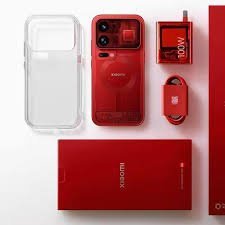
Xiaomi’s answer to the moment is the Xiaomi 18 Fold, a device its executives are positioning as a direct alternative to Apple’s premium lineup rather than just a competitor to Huawei or Samsung. Xiaomi CEO Lei Jun made that comparison explicit, noting the phone weighs 219 grams and measures 5.02mm thick when unfolded, which he said makes it lighter than Apple’s iPhone Pro Max. The device runs on Xiaomi’s in-house XRing O3 AI processor, which Lei claimed outperforms Apple’s A19 Pro in responsiveness, and it uses DRAM memory chips supplied by Chinese memory chipmaker CXMT rather than relying on established international suppliers like Samsung or SK Hynix. The Xiaomi 18 Fold is priced from 10,999 yuan, about $1,540, up to 14,999 yuan, roughly $2,100, positioning it well below Huawei’s tri-fold pricing while still targeting the premium segment. Addressing the same memory cost pressures Huawei mentioned, Lei said memory is very, very expensive right now, but maintained that the device still represents good value for money.
The backdrop to both launches is Apple’s own upcoming event, where the company is expected to unveil its latest iPhone series this week, with speculation running high that Apple could finally introduce its own foldable phone after years of rumors. If Apple does enter the foldable category, it would validate a segment that Chinese manufacturers have already been building out aggressively for several years, and it would immediately become the most closely watched foldable device on the market given Apple’s scale and brand reach in markets like the United States and Europe, where Huawei’s phones are largely absent.
Right now, Huawei holds a distinct advantage in one specific niche. It remains the only major smartphone brand actively selling a tri-fold device to consumers. Samsung, the world’s largest foldable smartphone vendor by volume, launched its own tri-fold phone in December but reportedly discontinued sales after just three months, an unusually quick retreat that suggests the tri-fold form factor still faces real durability or demand challenges even for a company with Samsung’s manufacturing scale. Samsung shifted its foldable strategy in July instead, expanding its lineup with a passport-sized foldable phone aimed at a different kind of compact-device demand rather than the larger tablet-style folding Huawei is pursuing.
The broader market numbers help explain why this week’s launches matter beyond just two new phones. Huawei led China’s overall smartphone market with a 22.6 percent share in the second quarter, ahead of Apple’s 18.1 percent, according to research firm IDC, while Xiaomi held a 12.4 percent share. Huawei’s dominance is even sharper within the folding phone category specifically, where it accounted for 68 percent of all foldable shipments in China during the same period. That level of concentration means Huawei’s move to reinforce its tri-fold lineup right before Apple’s event is not just a marketing flourish, it is a defense of a category the company has effectively built and controlled almost single-handedly within its home market.
For consumers, the more interesting story may be what happens after Apple’s event actually takes place. If Apple does launch a foldable iPhone, it will enter a market where Huawei and Xiaomi have already spent years refining hinge durability, display creasing, and software optimization for larger folding screens, giving Apple a template to react to rather than a blank category to define on its own terms. If Apple stays out of foldables for now, Huawei and Xiaomi’s early moves this week will likely be remembered as a deliberate attempt to own the premium handset conversation in China during a week when global tech media attention would otherwise have been entirely focused on Cupertino.