|
Getting your Trinity Audio player ready...
|
Top 6 African Billionaires Who Built Their Fortunes Outside Oil
By BusinessTech.ng Correspondent
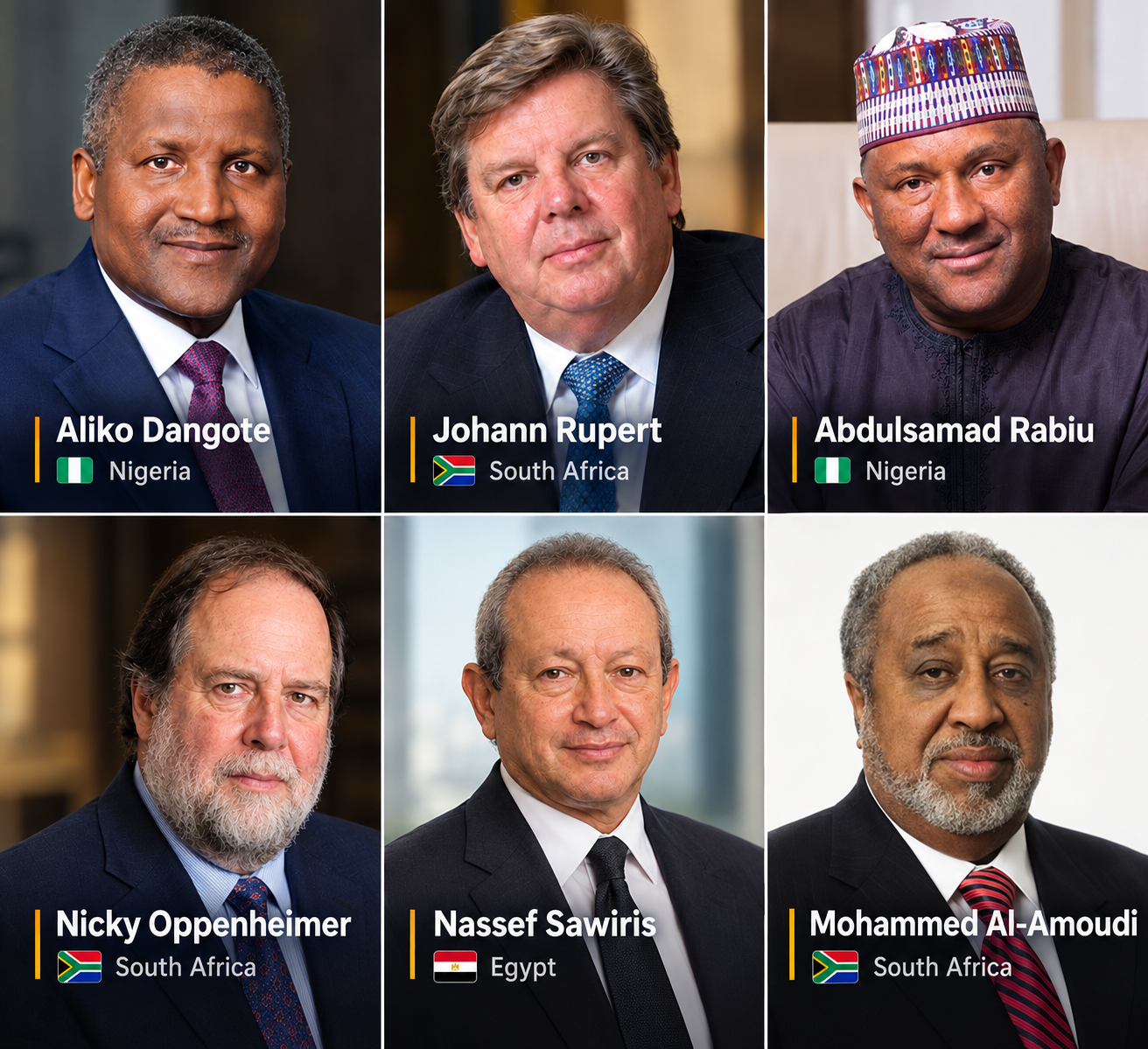
- Aliko Dangote, Nigeria, Cement and sugar
- Johann Rupert and family, South Africa, Luxury goods
- Abdulsamad Rabiu, Nigeria, Cement and sugar
- Nicky Oppenheimer and family, South Africa, Diamonds
- Nassef Sawiris, Egypt, Construction and investments
- Mohammed Al-Amoudi, Ethiopia and Saudi Arabia, Construction and energy
Africa’s billionaire class is often associated with the continent’s vast oil and natural-resource wealth, but some of its richest entrepreneurs built their fortunes in very different industries. From cement and sugar to luxury goods, diamonds, construction and global investments, these business empires demonstrate the diversity of Africa’s private sector.
In this article, we will look at six prominent African billionaires who built or expanded their fortunes outside the oil industry: Nigeria’s Aliko Dangote and Abdulsamad Rabiu, South Africa’s Johann Rupert and Nicky Oppenheimer, Egypt’s Nassef Sawiris, and Mohammed Al-Amoudi, whose business interests span several industries across Africa and beyond.
Africa’s wealthiest people are usually assumed to have made their money the way much of the continent’s economy is still described from the outside, through oil, gas or minerals pulled from the ground and shipped abroad. The reality, at least at the very top of the continent’s rich list, tells a different story. Cement bags, sugar sacks, diamond parcels, luxury watches and construction contracts have produced more African billionaire wealth in 2026 than any single crude concession, and the six names that follow are the clearest evidence of it. Aliko Dangote built his fortune on cement, sugar and salt long before his refinery entered the picture. Johann Rupert inherited and expanded a Swiss luxury house built around Cartier and Van Cleef and Arpels. Abdulsamad Rabiu turned commodity trading into a cement and food processing empire that became Africa’s fastest growing fortune this year. Nicky Oppenheimer converted three generations of diamond mining into a diversified private investment portfolio. Nassef Sawiris spread a construction and fertilizer fortune across continents and sports franchises. And Mohammed Al-Amoudi built a private empire spanning Ethiopia, Saudi Arabia and Sweden that even the major wealth indexes struggle to agree on. Together, their combined fortunes run into tens of billions of dollars, tracked in real time by Forbes and Bloomberg and moved daily by stock prices in Lagos, Johannesburg, Amsterdam and beyond. What unites them is not the industry they operate in, since their businesses range from cement to jewelry to diamonds to fertilizer, but the fact that none of them owes their position at the top of Africa’s wealth rankings to an oil well. This report profiles each of the six in detail, tracing how their fortunes were built, how they have moved through 2026 and what is likely to shape them next.
Aliko Dangote: How Africa’s Richest Man Built a $28 Billion Empire Without Relying on Oil Money, and Why His Refinery Now Complicates That Story
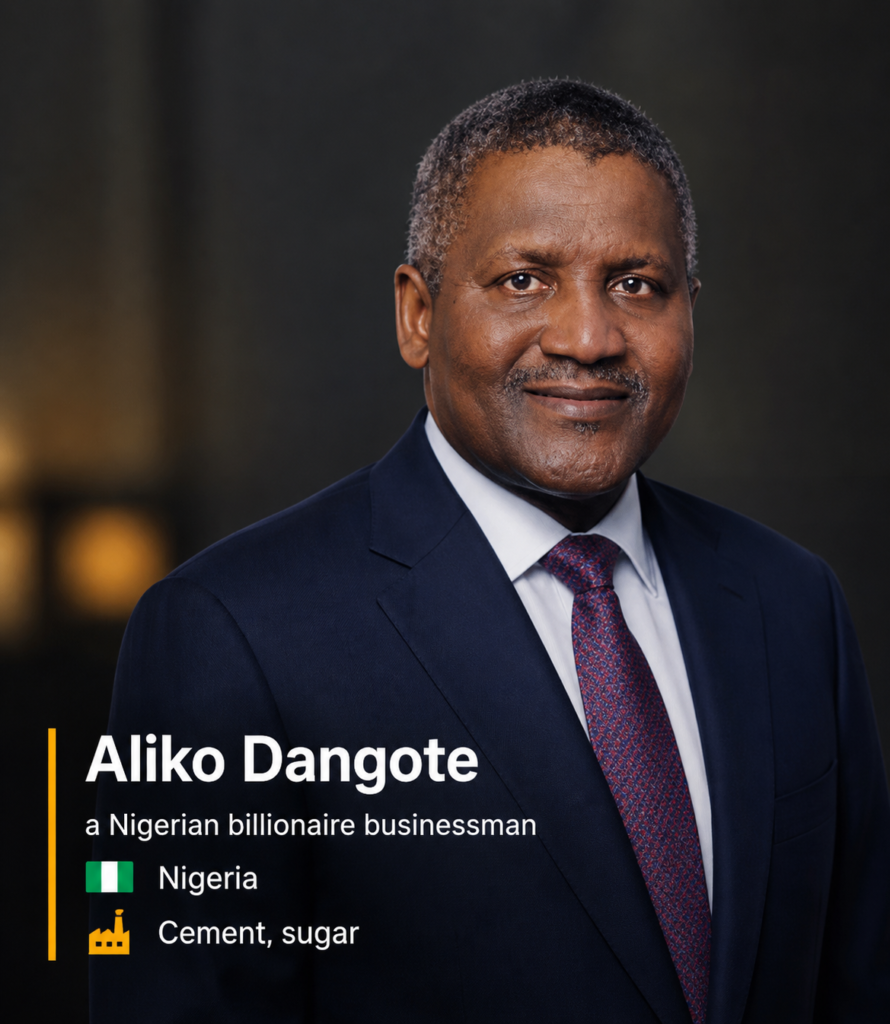
Aliko Dangote has spent the better part of four decades proving that industrial muscle, not access to crude oil concessions, can build the largest fortune on the African continent. At 69, the Nigerian industrialist remains Africa’s richest man, with Forbes placing his net worth at $28.5 billion in its 2026 Africa Billionaires list and Bloomberg’s more recent tracking putting the figure closer to $34 billion after a strong start to the year. Either way, the gap between Dangote and the rest of the continent’s wealthy elite remains wide, and it was built primarily on cement, sugar, salt and, more recently, a refinery that has begun to challenge the very “non-oil fortune” label that made him famous.
From a family trading loan to a continental industrial empire
Dangote’s origin story is well documented but still instructive. He started out with a loan of roughly $500,000 from his uncle, using it to import and trade commodities before pivoting into manufacturing. That early bet on local production, first in cement, later in sugar refining, salt and flour, became the template for what Dangote Group is today: a conglomerate whose core businesses are built around goods that Nigerians and other Africans consume daily rather than resources extracted and shipped abroad.
The centerpiece remains Dangote Cement, which he chairs and in which he holds roughly 85 to 86 percent through a holding company. The company is the largest cement producer on the continent, with an annual production capacity of about 48.6 million metric tons spread across operations in ten African countries. Dangote Cement is listed in Lagos and now carries a market capitalization north of $12 billion, having more than doubled in value over the past year as the stock rallied alongside a broader recovery in Nigerian equities and a stabilizing naira.
Sugar remains the other pillar most closely associated with the “outside oil” description of his wealth. Dangote Sugar Refinery, along with NASCON Allied Industries for salt, and stakes in businesses like United Bank for Africa, round out a portfolio that has historically depended on manufacturing scale and distribution reach across West and Central Africa rather than resource extraction.
The refinery that changed the calculation
The complication in Dangote’s story is the Dangote Petroleum Refinery, a $20 billion facility in the Lekki district of Lagos that was commissioned in May 2023 and began full operations through 2024. With a design capacity of 650,000 to 700,000 barrels per day, it is Africa’s largest refinery and, by some measures, one of the largest single-train refineries in the world. Dangote has already announced plans to expand capacity to 1.4 million barrels per day, a move that would make it the largest refinery on the planet based on current global capacity figures, and reporting this month points to a roughly $14 billion expansion program tied to that ambition.
The refinery has moved from being a drain on Dangote’s balance sheet to a major profit engine. According to figures contained in the company’s own share offer prospectus, the refinery swung from a $476 million loss for the whole of 2025 to an after tax profit of about $1.82 billion in just the first half of 2026. Utilisation climbed to 83.6 percent in the first half of the year, up from around 45 percent at the start of 2026, helped by upgrades to its residual fluid catalytic cracker and a shift away from lower value crude processing. Refining margins nearly doubled year on year, reaching about $24.50 a barrel, partly because the facility has been running near full tilt to supply diesel and jet fuel into Europe at a time when Middle Eastern refining capacity has been constrained.
That performance is arriving just as Dangote takes the refinery to the public markets. The company signed its IPO documents this week ahead of a planned share sale opening on September 14, seeking to raise close to 2.15 trillion naira, or roughly 1.5 billion dollars, through an offer of 4.1 billion ordinary shares priced at 525 naira each, with a greenshoe option that could expand the raise by up to 30 percent. Dangote has publicly framed it as a “people’s IPO,” structured to allow ordinary Nigerians, other Africans and members of the diaspora to buy in, with subscriptions available through banking apps, brokers and receiving agents. The refinery has also used part of its improved cash flow to pay down debt, cutting total secured borrowings to $5.67 billion by the end of June from $6.24 billion at the end of last year, according to the prospectus reviewed by Bloomberg.
What the refinery means for the “non-oil billionaire” label
There is an irony worth noting for a list built around African billionaires who made their money outside oil. Dangote’s core wealth for most of his career came from cement, sugar and related manufacturing, businesses built on domestic consumption rather than resource extraction. The refinery, however, is fundamentally an oil business, refining imported and increasingly Nigerian crude into fuel products for both local consumption and export. Its rapid rise in profitability this year, driven in part by favorable global refining margins tied to the conflicts in the Middle East and Ukraine, has become one of the single largest contributors to the recent jump in Dangote’s personal net worth.
That does not erase the underlying point about how Dangote built his fortune. The refinery was financed and constructed by an industrial group whose foundation, cement, sugar, salt and packaging, was built long before crude processing entered the picture, and whose founder made his first billions without an oil concession to his name. But it does mean that going forward, any assessment of Dangote’s wealth, and any comparison with other billionaires on this list who remain purely outside the petroleum sector, needs to account for a business that now sits squarely inside it.
The road ahead
Dangote’s ambitions have not stayed confined to Nigeria. He has discussed extending his refining model into East Africa, proposing a large scale refining complex during talks with regional leaders in Nairobi, and has met with Botswana’s president in Gaborone this month to explore further investment on the continent. Governments including South Africa, Ghana and Kenya have reportedly explored supply arrangements with the refinery amid global fuel market disruptions, and the United Arab Emirates’ state oil company ADNOC has been reported as a potential investor in the Lagos facility, though details remain undisclosed under non-disclosure agreements.
For now, Dangote’s position at the top of Africa’s wealth rankings looks secure. Dangote Cement doubled its profit in 2025 to a record one trillion naira, the refinery has turned a corner financially just as it heads into a landmark public offering, and the broader Dangote Group continues to expand its footprint across fertiliser, sugar and packaging. The question that will follow him for the next several years is less about whether he remains Africa’s richest man, and more about whether his fortune can still be described as built outside the oil industry once the refinery’s shares start trading on the Nigerian Exchange.
Johann Rupert: The Quiet South African Whose Cartier and Van Cleef Empire Keeps Adding Billions in 2026
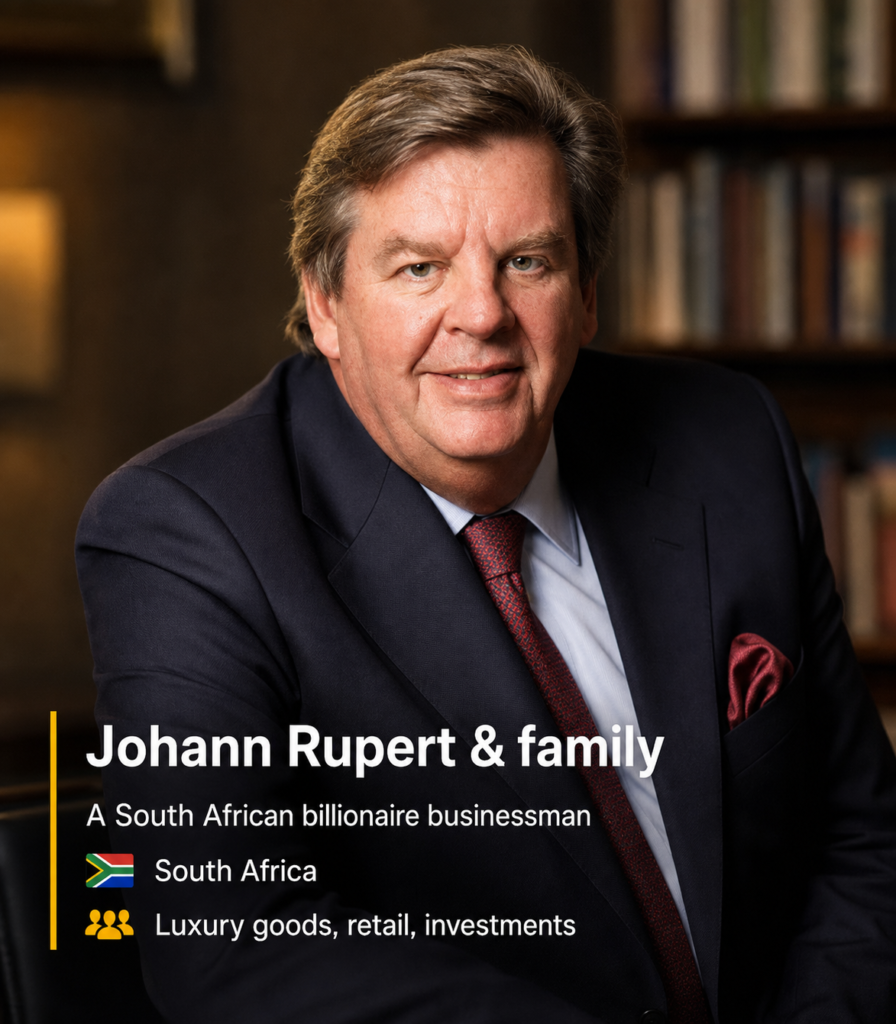
Johann Rupert does not court attention the way many billionaires do, yet the luxury empire he chairs has made him one of the fastest growing fortunes in Africa this year. The South African businessman, who turned 76 in June, sits second on the continent’s rich list behind Aliko Dangote, with his wealth swinging widely through 2026 as shares in Compagnie Financiere Richemont, the Swiss luxury group behind Cartier, Van Cleef and Arpels and Montblanc, have surged on strong jewelry sales. Forbes had his real time net worth at $17.4 billion as of late August, while the Bloomberg Billionaires Index tracked him as high as $19.9 billion in mid June, a level Bloomberg described as the highest his fortune had ever reached.
Cape Town roots, a global luxury house
Rupert was born in Stellenbosch in 1950, the eldest son of the industrialist Anton Rupert, and studied economics and company law at the University of Stellenbosch before a stint in investment banking in New York with what is now JPMorgan Chase and later Lazard. He returned to South Africa and eventually took charge of the family’s business interests, restructuring them into the entities that define his fortune today. Richemont, which he founded in 1988 out of the old Rembrandt Group, has grown into one of the world’s largest luxury conglomerates, housing not just Cartier and Van Cleef and Arpels but also Vacheron Constantin, Buccellati and a stable of specialist watchmakers. Rupert acquired Cartier in 1993, Vacheron Constantin in 1996 and Van Cleef and Arpels in 1999, building the acquisitions strategy that still underpins the group’s jewelry dominated portfolio.
He does not hold a majority economic stake in Richemont directly. Instead, his family’s holding vehicle, Compagnie Financiere Rupert, controls the group through a dual class share structure, owning a relatively small slice of the equity but a majority of the voting rights, a structure that has kept the Rupert family firmly in charge of strategy for decades while public shareholders own most of the economic upside.
A fortune bigger than Cartier alone
What separates Rupert’s wealth from a simple bet on watches and jewelry is the sprawling structure sitting behind it. Beyond Richemont, he chairs Remgro, the South African investment holding company his father founded, in which he holds close to seven percent, with interests spanning healthcare, financial services, infrastructure and consumer goods. He also holds a significant stake, reported at between 25 and 27 percent, in Reinet Investments, a Luxembourg based investment vehicle originally set up to hold Richemont’s stake in British American Tobacco. Reinet sold its remaining BAT position in 2025 and has since been redeploying capital, including restarting a share buyback program worth close to 600 million dollars after walking away from a major prospective investment it had spent months evaluating. Reinet alone reported a net asset value of roughly 127.8 billion rand as of the end of March 2026.
Richemont’s blockbuster year
The engine behind Rupert’s 2026 wealth surge has been Richemont’s own performance. The group reported fiscal 2026 results on May 22 showing revenue of 22.4 billion euros, up 11 percent at constant exchange rates, with net profit climbing 27 percent to 3.5 billion euros. The jewelry division, anchored by Cartier and Van Cleef and Arpels, grew 14 percent and remains by far the group’s most powerful business, helping it absorb pressures from tariffs, a stronger swiss franc and higher gold prices that have squeezed other luxury houses. Investors responded immediately, pushing Richemont shares up almost 11 percent in the month after the results were released and lifting the company’s market capitalization on the Johannesburg Stock Exchange toward two trillion rand, after the stock had already crossed the 100 billion Swiss franc mark on the Swiss exchange in January of last year.
The contrast with rivals has been notable. Richemont shares gained roughly 15 percent in 2025 even as larger competitor LVMH fell by about 17 percent over the same period, a gap analysts have largely attributed to Cartier’s resilience with wealthy consumers even as broader luxury spending in China cooled.
From 16 billion to nearly 20, and back
Rupert’s wealth trajectory through 2026 illustrates just how tightly his fortune tracks Richemont’s share price. He began the year with a net worth of roughly 16.1 billion dollars. By mid June, after the strong annual results, Bloomberg had him at 19.9 billion dollars, an increase of nearly four billion dollars in five and a half months that made him, for a period, the biggest gainer among Africa’s billionaires. His fortune has since cooled somewhat alongside a more subdued run in Richemont’s share price on the Johannesburg exchange, with Forbes placing him back around 17.4 billion dollars by late August, still up more than a billion dollars for the year.
A businessman known as much for opinions as for balance sheets
Rupert has cultivated a reputation as one of South Africa’s more outspoken business figures, despite keeping a relatively low personal profile compared with other billionaires of his stature. He has been a vocal opponent of fracking in the Karoo, the vast semi desert region in South Africa’s interior, and has periodically weighed in on the country’s economic policy debates. Unlike several names on this list, Rupert did not build his fortune from scratch. He inherited a business empire from his father and has spent his career expanding and internationalising it, a distinction that places him among Africa’s wealthy elite as an heir who scaled rather than a founder who started from nothing.
What comes next
With Richemont’s jewelry business continuing to outperform the wider luxury sector and Reinet actively redeploying capital after exiting its tobacco holding, Rupert’s fortune looks set to remain volatile but structurally strong heading into the rest of 2026. The bigger question for analysts tracking Africa’s billionaire rankings is whether Richemont’s momentum can hold through a period of currency swings and shifting consumer demand in China, the market that continues to determine the fate of almost every major luxury conglomerate, Rupert’s included.
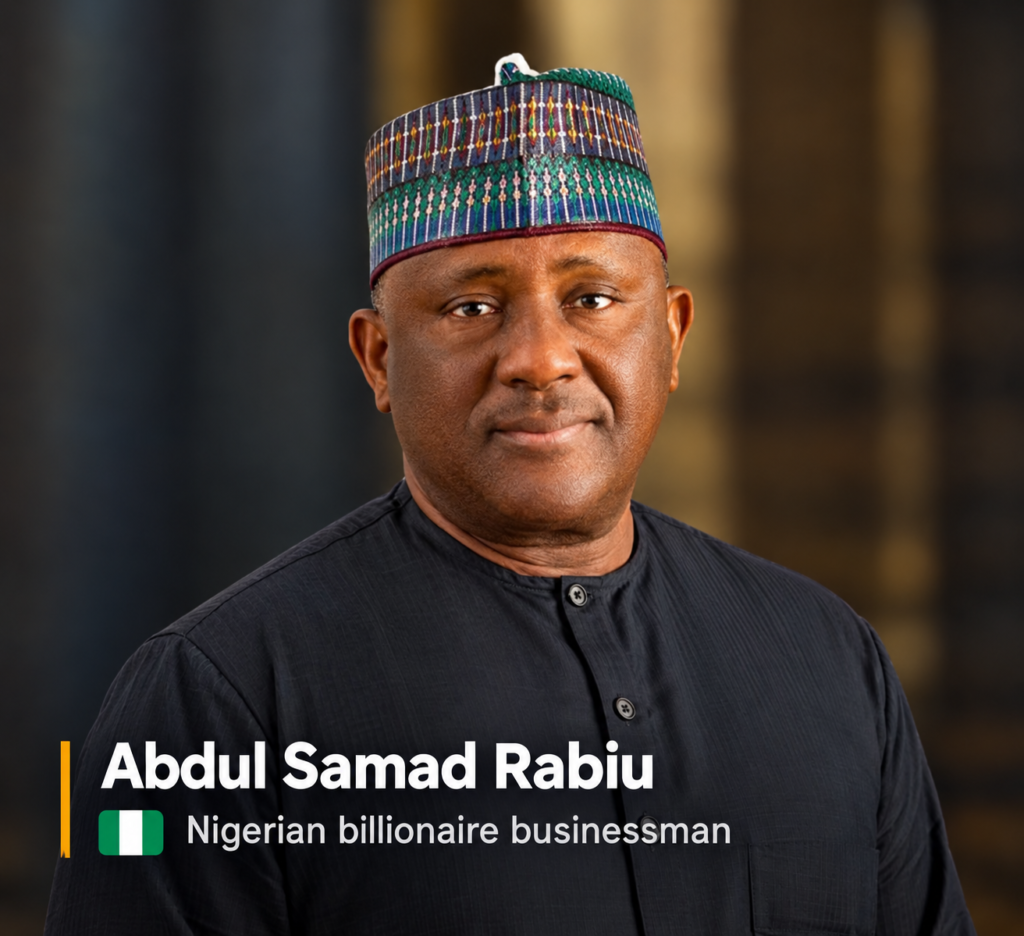
Abdulsamad Rabiu: The “Talk and Do” Billionaire Whose BUA Empire Has Been Africa’s Fastest Growing Fortune in 2026
No fortune on the African continent moved faster in 2026 than Abdulsamad Rabiu’s. The founder and chairman of BUA Group started the year with a net worth of about 10.4 billion dollars, according to the Bloomberg Billionaires Index, and by late May had added more than 9.5 billion dollars to reach 19.7 billion dollars, briefly closing in on the 20 billion dollar mark that only Aliko Dangote has crossed in Africa. His wealth has since eased from that peak, with Forbes placing him at 11.2 billion dollars on its official 2026 Africa Billionaires list and other trackers putting him anywhere between 12 and 15 billion dollars through the middle of the year, but the scale and speed of the swing made him, by most measures, the standout performer among African billionaires this year.
From commodity trading to industrial dominance
Rabiu, often nicknamed “Mr. Talk and Do” in Nigerian business circles for his reputation for following through on stated plans, founded BUA International Limited in 1988 after returning to Nigeria from the United States, initially importing rice, edible oil, flour, iron and steel. A 1990 supply contract with the state owned Delta Steel Company gave the young trading firm early momentum, and Rabiu used the proceeds to move into steel production and edible oil processing, eventually acquiring Nigerian Oil Mills Limited, at the time the country’s largest edible oil processor.
The business he built is the son of another prominent Nigerian industrialist. His late father, Isyaku Rabiu, was among the country’s most influential businessmen through the 1970s and 1980s, giving Abdulsamad an early grounding in trade and manufacturing before he built his own separate empire under the BUA name.
The turning point for the modern BUA Group came in cement. In January 2020, Rabiu merged his privately owned Obu Cement Company with the publicly listed Cement Company of Northern Nigeria, which he already controlled, creating BUA Cement Plc. The combined company began trading on the Nigerian Exchange that same month, with Rabiu retaining an extraordinarily concentrated ownership position of about 98.2 percent. Two years later, in January 2022, BUA Foods followed the same path onto the exchange, with Rabiu holding roughly 95 percent of that business as well. That concentrated ownership structure is central to understanding his wealth swings. Because he owns almost all of both listed companies directly, every rally or pullback in their share prices on the Nigerian Exchange flows almost entirely into his personal net worth, amplifying gains far more than a typical founder with a diluted stake would experience.
What drove the 2026 surge
The rally traces directly back to operational results. BUA Foods reported a 14 percent rise in profit after tax for the first quarter of 2026, reaching 142.32 billion naira, while BUA Cement’s first quarter profit more than doubled year on year, surging 117.4 percent to 176.4 billion naira. Those results, combined with a broader rally in Nigerian equities and a steadier naira, sent both stocks sharply higher on the exchange through the first half of the year, and because Rabiu’s stakes are so concentrated, his personal fortune tracked the moves almost one for one. Bloomberg data showed his wealth climbing from 10.4 billion dollars at the start of the year to 11.3 billion by February, 14.6 billion by March and 15.9 billion by late April, before the sharpest leg of the rally pushed him to within 300 million dollars of 20 billion dollars in late May, a level that briefly made him Africa’s second richest man ahead of Johann Rupert.
Rabiu has paired the rally with an active expansion strategy rather than sitting on the gains. In January 2026, BUA held talks with China’s CBMI Construction, a unit of Sinoma International Engineering, on a new cement production line in northern Nigeria that could push BUA Cement’s total capacity toward 20 million tonnes a year, building on an earlier 600 million dollar contract signed with Sinoma to double capacity at the group’s largest plant. On the food side, BUA Foods partnered with Swiss engineering firm Buhler in December 2025 to build a rice processing facility capable of handling 32 tonnes an hour, struck a deal with Turkish firm Viteral Integrated Milling Systems for a 40 tonne per hour animal feed mill in Kano State expected to finish by mid 2027, and signed an agreement with Italian firm FAVA to expand pasta production capacity.
A conglomerate built around Nigerian consumption
Like Dangote, whose businesses BUA competes with directly in cement and sugar, Rabiu’s fortune is rooted in industries that serve everyday Nigerian consumption rather than resource extraction. BUA Cement is the country’s second largest cement producer, reporting revenue of about 1.2 trillion naira, or roughly 776 million dollars, in 2025. BUA Foods has built a diversified position across sugar refining, flour milling and pasta production, and is described by Bloomberg as the country’s second largest pasta producer. The group’s activities extend further into infrastructure related manufacturing and real estate, and Rabiu has previously served as chairman of Nigeria’s Bank of Industry.
In December 2025, Rabiu distributed close to 20.7 million dollars in cash rewards to long serving BUA Group employees at a company event in Lagos, one of the largest employee reward programmes ever announced by a privately held Nigerian company, alongside signs of a generational transition in leadership, including the January 2026 appointment of his son Khalifa Rabiu to a senior global procurement role within BUA Foods.
The road ahead
Rabiu’s net worth remains, by design, one of the more volatile figures on Africa’s billionaire rankings, given how tightly it is tied to the daily performance of two Nigerian listed stocks in which he holds almost complete ownership. That structure delivered him extraordinary gains through the first half of 2026 and could just as easily reverse if Nigerian equities cool or if cement and food margins come under pressure. What is less in question is the underlying industrial base. With new cement capacity, food processing plants and infrastructure projects already under construction across Nigeria, BUA Group’s expansion plans suggest Rabiu intends to keep growing the operating businesses that produced this year’s rally, regardless of where the share price settles.
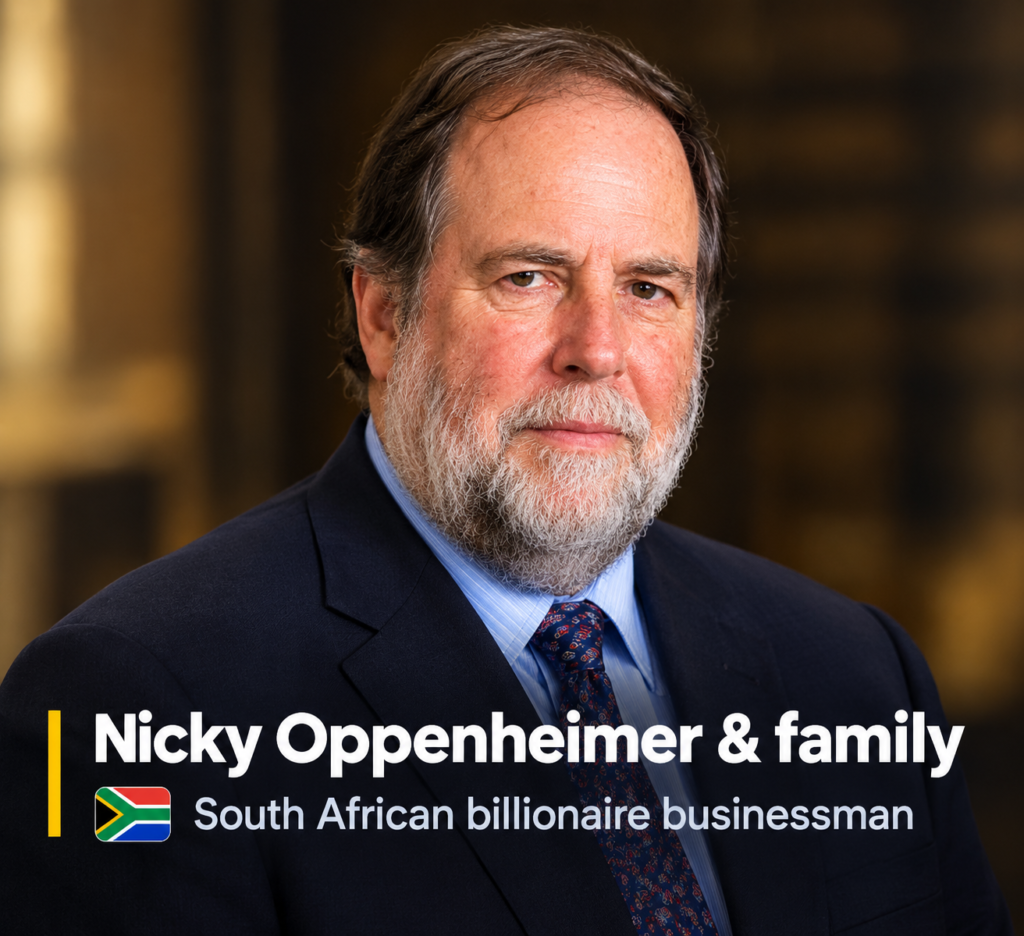
Nicky Oppenheimer: The Diamond Dynasty Heir Who Cashed Out of De Beers and Still Sits Among Africa’s Wealthiest
Fourteen years after he walked away from the diamond business his family built over three generations, Nicky Oppenheimer remains one of Africa’s wealthiest men, a reminder that in the world of old money, knowing when to sell can matter as much as knowing how to build. The 81 year old South African, whose net worth is tracked by Bloomberg at just over 15.5 billion dollars as of early September and by Forbes at closer to 10.6 billion dollars, now ranks around fourth on the continent’s rich list, behind Aliko Dangote, Johann Rupert and Abdulsamad Rabiu, and second among South Africans behind Rupert.
A dynasty built on diamonds
Oppenheimer was born in Johannesburg in 1945 into a family already synonymous with African mining. His grandfather, Ernest Oppenheimer, arrived in South Africa at 21 as the son of a German cigar merchant, learned the diamond trade and eventually took the chairmanship of De Beers in 1929, building it into the dominant force in the global diamond market. Nicky was educated in Britain, first at Harrow School and then at Christ Church, Oxford, where he read politics, philosophy and economics and later completed a master’s degree. Returning to South Africa for national service, he has recounted being assigned to check that vehicles at a Pretoria parking lot had four tires and two headlights, an unglamorous posting for an Oxford graduate destined to run one of the world’s great mining houses.
He joined the family business in 1968, became a director of Anglo American in 1974 and deputy chairman in 1983, before taking De Beers private in 2001 as the third generation of Oppenheimers to lead it. He chaired both De Beers and its subsidiary the Diamond Trading Company for years, cementing the family’s control over a global industry that had, for most of the twentieth century, run largely on Oppenheimer terms.
The 5.1 billion dollar exit
The defining transaction of Oppenheimer’s career came in 2012, when he sold the family’s 40 percent stake in De Beers to Anglo American for a reported 5.1 to 5.2 billion dollars in cash, ending 85 years of Oppenheimer family control over the world’s best known diamond company. It was a deliberate and unsentimental decision to convert an illiquid, generationally held industrial asset into cash and diversified investments, a move that has aged well given the diamond industry’s more turbulent years since, as lab grown stones and shifting consumer tastes have pressured natural diamond prices.
Rather than retire, Oppenheimer redeployed the proceeds into a private investment platform. He and his family now manage their wealth primarily through two vehicles, London based Stockdale Street and Johannesburg based Tana Africa Capital, which invest across private equity opportunities in Africa, Asia, the United States and Europe. Unlike Rupert’s Richemont stake or Dangote’s industrial holdings, most of Oppenheimer’s fortune today sits in cash and private assets rather than a single publicly traded flagship company, a structural difference that makes his wealth somewhat less exposed to the daily swings of any one stock market.
A quieter but still substantial 2026
Oppenheimer’s fortune has grown steadily rather than dramatically in 2026. Bloomberg tracked a year to date increase of about 1.68 billion dollars, or roughly 12 percent, as of early September, driven largely by the performance of the Stockdale Street and Tana Africa Capital portfolios rather than any single headline deal. Other trackers recorded similar momentum earlier in the year, with one South African outlet estimating that his fortune added close to 20 billion rand in the first five months of 2026 alone. Forbes’ official 2026 Africa Billionaires list, published in March, placed him fourth on the continent with a fortune of about 10.6 billion dollars, a notch behind where he had long sat in third place in previous years, reflecting how quickly Rabiu’s cement and food businesses rallied past him earlier this year rather than any decline in Oppenheimer’s own holdings.
Land, conservation and philanthropy
Beyond finance, Oppenheimer and his family have become known for directing significant resources toward conservation and cultural preservation in Southern Africa. The family controls extensive private game reserves and has funded projects tied to wildlife protection, education, health and the arts across the region, an emphasis that has shaped much of Nicky Oppenheimer’s public profile in the years since he left De Beers. His son, Jonathan Oppenheimer, has taken an increasingly prominent role in the family’s business and philanthropic affairs, positioning the next generation to carry the Oppenheimer name forward in South African business circles even without a stake in the diamond company that made the family famous.
Looking ahead
With no operating company to anchor his fortune the way Richemont anchors Rupert’s or BUA anchors Rabiu’s, Oppenheimer’s wealth trajectory going forward will likely depend on how well Stockdale Street and Tana Africa Capital perform across their diversified bets rather than on any single industry’s fortunes. That diversification has so far kept his fortune both substantial and comparatively stable, even as the specific diamond business that built the Oppenheimer name now belongs entirely to someone else.
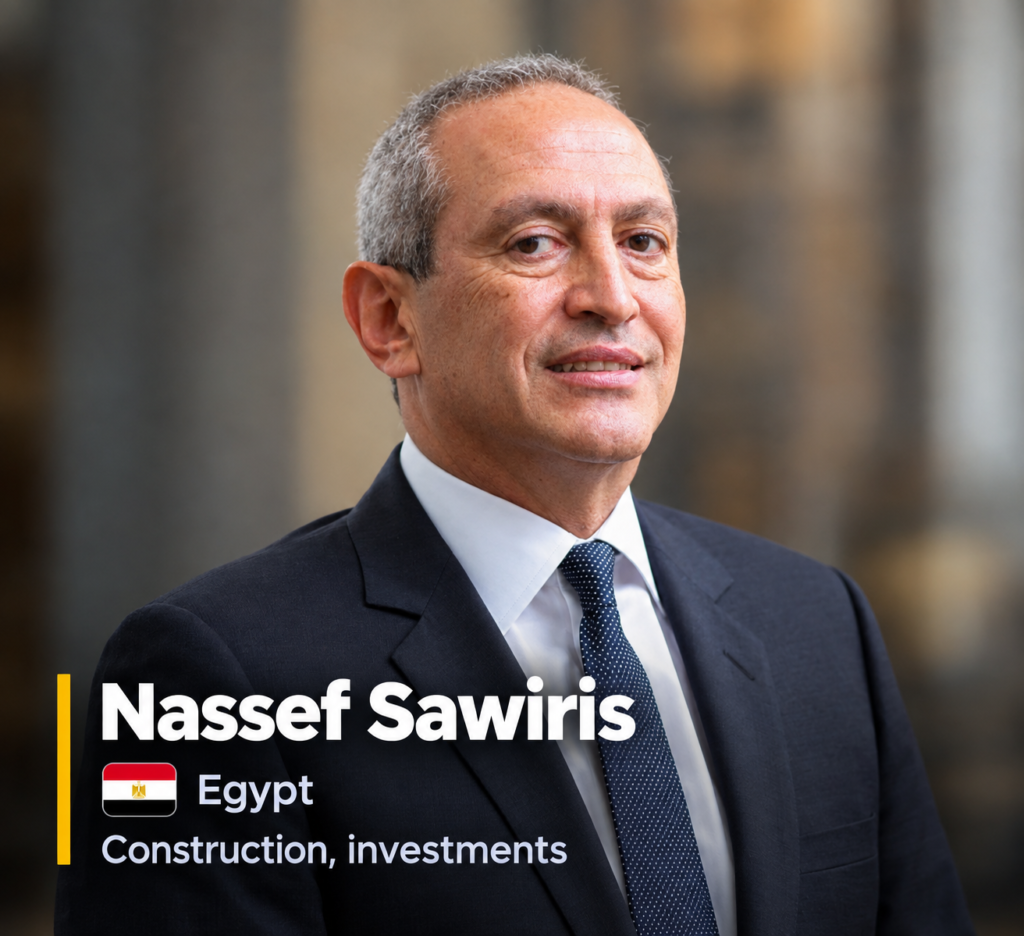
Nassef Sawiris: How Egypt’s Richest Man Built a Fortune in Construction and Fertilizer, and Why His Biggest Deal in Years Is Stuck in a Dutch Court
Nassef Sawiris has spent the past year trying to merge his two biggest companies into a single Abu Dhabi anchored giant, only to watch a Dutch court put the brakes on the deal at the last minute. The 65 year old Egyptian businessman remains his country’s richest person and one of Africa’s five wealthiest individuals, with a net worth that Forbes places at around 9.6 to 9.9 billion dollars in 2026, built across construction, fertilizer manufacturing and a growing portfolio of investments that stretches from European sportswear to English football.
The youngest of three billionaire brothers
Sawiris was born in Aswan, Egypt, in January 1961, the youngest of three sons of Onsi Sawiris, the patriarch who founded the Orascom conglomerate in the 1950s after his own first contracting business was nationalised under President Gamal Abdel Nasser in 1961. Onsi rebuilt from that setback and eventually split the growing Orascom empire among his sons, each taking a different sector. The eldest, Naguib, built Orascom Telecom into a billion dollar telecommunications business. The middle brother, Samih, developed resort towns across Egypt and Europe through Orascom Development. Nassef took construction, and later added fertilizer manufacturing, a combination that has made him by far the wealthiest of the three siblings.
Educated first at the Deutsche Evangelische Oberschule in Egypt before earning a degree from the University of Chicago, Nassef later donated significantly to his American alma mater to support Egyptian students, a gesture that reflects a broader pattern of the family channeling wealth back toward education. He and his brothers are Coptic Christians, part of a minority community that has produced a disproportionate share of Egypt’s leading business families.
From cement to fertilizer to construction again
Sawiris took over as chief executive of what became Orascom Construction and expanded it abroad, moving the business into cement and building materials, a division he eventually sold to French cement giant Lafarge in 2008 for 12.8 billion dollars, one of the largest transactions in Egyptian corporate history at the time. That same year, he pivoted into fertilizer, acquiring Egyptian Fertilizer Company and building it, through further acquisitions and organic growth, into OCI, one of the world’s largest nitrogen based fertilizer producers with major plants in Texas and Iowa in the United States and a listing on Euronext Amsterdam. He also retained control of the original Orascom Construction business, an engineering and building firm listed on both the Egyptian Exchange and the Abu Dhabi Securities Exchange, in which he holds roughly 42 percent alongside a smaller stake held by his brother Samih.
The OCI and Orascom Construction merger saga
The defining corporate story of Sawiris’s 2026 has been his attempt to combine OCI and Orascom Construction into what the companies described as a scalable, Abu Dhabi anchored infrastructure and investment platform. Announced in December 2025, the deal would have seen OCI shareholders swap into Orascom Construction shares at a fixed exchange ratio, with OCI’s assets folded into a newly formed subsidiary before OCI itself was liquidated and delisted from Euronext Amsterdam. Sawiris was set to serve as non executive chairman of the combined entity, which the companies projected would carry a 14 billion dollar project backlog spanning Egypt, the Gulf, the United States and Europe.
Orascom Construction shareholders overwhelmingly approved the transaction in late January 2026, with more than 98 percent of voting shares in favor, alongside a capital increase to facilitate the share swap. But the deal hit a serious obstacle days later, when the Amsterdam Enterprise Chamber issued a ruling that effectively blocked OCI from proceeding, forcing OCI to pull the merger from its own shareholder meeting agenda at the eleventh hour. The companies have since worked to salvage the transaction in a different form. By mid 2026, Orascom Construction confirmed that the long stop date for meeting the deal’s remaining conditions had been extended to the end of December 2026, and that NNS Holding, part of Sawiris’s own privately held NNS Group, had committed to proceed instead with a voluntary all cash public offer for all OCI shares at 4.10 euros each, a structure designed to get around the court’s objections while still delivering the combination Sawiris originally envisioned. Orascom Construction said it expects OCI to complete the process in the fourth quarter of 2026.
Beyond construction: adidas, Aston Villa and Wall Street ties
Sawiris’s wealth is not confined to Egyptian and Gulf industrial assets. He holds a stake of close to 6 percent in German sportswear giant adidas, among the more unusual positions held by an Arab billionaire in a major European consumer brand, and in December 2020 acquired a 5 percent stake in New York listed Madison Square Garden Sports, the company that owns the NBA’s New York Knicks and the NHL’s New York Rangers. His highest profile move into sports came in 2018, when he teamed up with American investor Wes Edens to acquire a majority stake in English football club Aston Villa through a vehicle called NSWE, later rebranded as V Sports, before the pair bought the club outright in 2019. Under Sawiris’s chairmanship, Villa recorded its longest ever winning streak in his first season in charge, and V Sports has since expanded into minority stakes in clubs including Portugal’s Vitoria de Guimaraes and a youth partnership with Egyptian Premier League side ZED FC, which is owned by his brother Naguib.
A fortune spread deliberately across industries and borders
Unlike some of the other names on this list, whose wealth is concentrated overwhelmingly in a single flagship company, Sawiris’s fortune is spread across construction, fertilizer, sportswear, sports team ownership and direct equity stakes in listed companies on multiple continents. That diversification, built up over more than two decades of deals stretching from the Lafarge cement sale to the adidas stake to the OCI fertilizer business, has repeatedly been credited with shielding the wider Sawiris family fortune from downturns in any single market. Analysts tracking the family have noted that this strategy, spreading bets across industries and geographies rather than doubling down on one sector, has kept the Sawiris name among Egypt’s and Africa’s wealthiest for more than a decade even as individual businesses have gone through difficult stretches.
What comes next
With the OCI and Orascom Construction combination now expected to close through a revised, court compliant structure by the end of 2026, Sawiris is on the verge of consolidating two of his largest holdings into a single, larger platform with an expanded balance sheet and, according to the companies, capacity to deploy more than a billion dollars into new infrastructure investments by year end. Whether that consolidation delivers the diversification and growth the two boards have promised, or simply concentrates risk that was previously spread across two separately listed companies, will be one of the more closely watched corporate stories out of Egypt through the rest of the year.
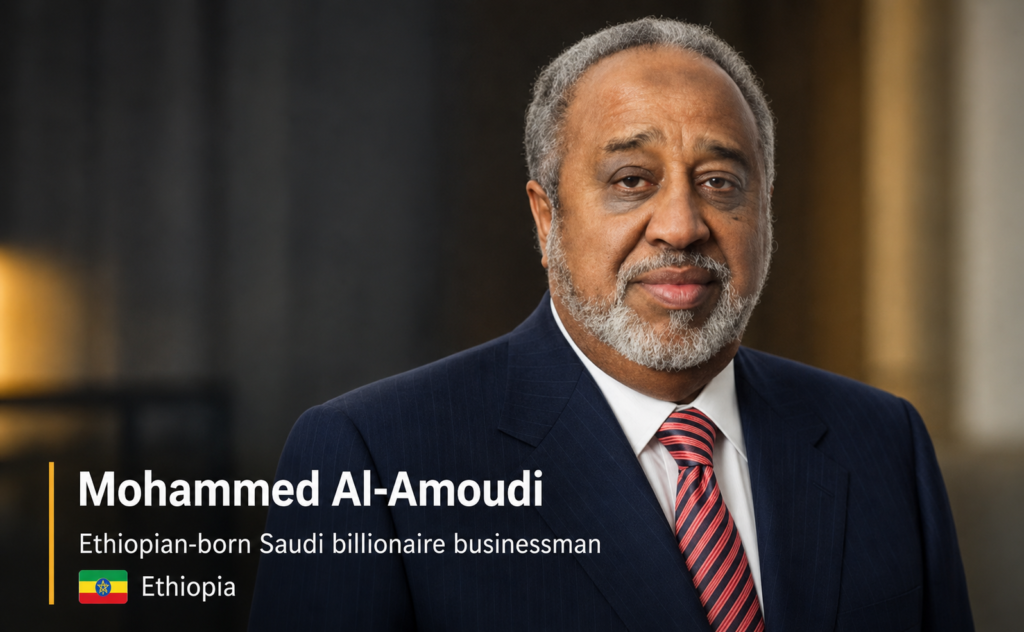
Mohammed Al-Amoudi: The Billionaire Ethiopia and Saudi Arabia Both Claim, and Why He Vanished From This Year’s Forbes List
Mohammed Al-Amoudi has spent nearly six decades building one of the most unusual fortunes on the African continent, an empire straddling three countries and controlled almost entirely through private companies rather than a single listed flagship. The 79 year old is regularly described as Ethiopia’s richest man and, at various points, the second richest Saudi citizen alive, yet in 2026 he is missing from the official Forbes World’s Billionaires List altogether, even as the Bloomberg Billionaires Index continues to track his fortune at just over 9 billion dollars.
Born in Ethiopia, made in Saudi Arabia
Al-Amoudi was born on 21 July 1946 in Dessie, in Ethiopia’s Wollo Province, to a Yemeni father from Hadhramaut and an Ethiopian mother from the region. He studied at Addis Ababa University before leaving for Saudi Arabia around the age of 19 with his brother, eventually taking Saudi citizenship, a dual heritage that has shaped both his business empire and his public identity ever since. He is frequently described in the same breath as Ethiopia’s largest individual foreign investor and one of Saudi Arabia’s wealthiest citizens, a combination that makes him something of an outlier among the continent’s billionaires, most of whom are firmly rooted in a single national economy.
His fortune began in construction and real estate in Saudi Arabia before he expanded into energy, buying oil refineries first in Morocco and later in Sweden. Today his holdings run through two main vehicles, MIDROC, which anchors his African and Middle Eastern investments, and Corral Petroleum Holdings, which sits atop his European energy assets. Between them, Al-Amoudi has built a portfolio spanning construction, agriculture, mining, hotels, healthcare and manufacturing, most of it held privately rather than through public shareholders, which makes his fortune considerably harder for index providers to value with precision compared with a founder whose wealth sits mainly in one traded stock.
The Preem sale that reshaped his fortune
The most consequential recent event in Al-Amoudi’s business life was the sale of Preem, Sweden’s largest oil refiner and long the cornerstone of his European portfolio. Switzerland based VARO Energy agreed to acquire Corral Petroleum Holdings, Preem’s parent company, in a deal that closed in 2025, with Al-Amoudi’s stake in Preem valued at roughly 5.09 billion dollars at the time of the announcement. The sale came as Preem itself was under strain, with revenue falling more than 5 percent in 2024 to about 130.77 billion Swedish krona, equivalent to roughly 12.77 billion dollars, and net profit collapsing 83 percent to about 995 million krona, or around 97 million dollars, that same year. Combined with changes to the valuation of his Ethiopian gold mining assets, the Preem exit and related adjustments cut roughly 4 billion dollars from Al-Amoudi’s tracked net worth in a single update in 2025, a sharp reset for a fortune that had exceeded 12 billion dollars at its peak.
Detained, then freed, with his empire untouched
Al-Amoudi’s business career has not been without serious political turbulence. In November 2017, he was among dozens of high profile Saudi businessmen detained in the sweeping anti corruption crackdown led by Crown Prince Mohammed bin Salman, an episode that drew a personal appeal for his release from Ethiopia’s Prime Minister Abiy Ahmed. Saudi authorities gave no public explanation for either his detention or his eventual release in January 2019, and throughout the roughly 14 month period, his European and African businesses continued operating normally, according to statements the companies issued at the time. The episode underscored how much of Al-Amoudi’s empire is structured to run independently of his personal presence, a function of the closely held corporate architecture behind MIDROC and Corral.
Why he disappeared from the Forbes 2026 list
Despite a Bloomberg valuation of about 9.12 billion dollars, Al-Amoudi does not appear anywhere on the Forbes World’s Billionaires List for 2026, a gap that has puzzled observers given that Forbes has included Saudi billionaires with comparable or smaller fortunes, including Prince Alwaleed bin Talal at around 20 billion dollars. The most likely explanation, according to analysts who track the discrepancy, lies in the opacity of Al-Amoudi’s holding structure. Because so much of his portfolio sits in privately held companies across three jurisdictions, with limited public disclosure of underlying financials, Forbes’ methodology, which places a heavy emphasis on verifiable public filings and audited disclosures, appears to have struggled to produce a figure it is willing to publish, even as Bloomberg’s more model driven approach continues to generate an estimate.
Ethiopia’s most significant foreign investor
Whatever the precise number, Al-Amoudi’s on the ground footprint in Ethiopia remains enormous. Through MIDROC, he controls Midroc Gold, the country’s leading gold mining operation, alongside agricultural ventures in coffee and rice production and a domestic oil company. He has also been a notable philanthropic presence in the country, sending dozens of truckloads of maize and animal feed to drought stricken areas of Oromia in 2017 and contributing roughly 1.5 million dollars to Ethiopia’s Somali Region around the same period. In 2020, he donated 120 million Ethiopian birr, then worth about 3.6 million dollars, to Addis Ababa’s response to the coronavirus pandemic, reported at the time as the largest single private donation to the city’s COVID-19 effort.
What comes next
With Preem now sold and his gold assets in Ethiopia revalued, Al-Amoudi’s fortune appears to have entered a more settled phase after years of sharp swings tied to detention, asset sales and commodity cycles. His remaining core, MIDROC’s African operations and Corral’s leftover interests including Naft Services, his Saudi based network of gas stations, will likely determine whether his net worth climbs back toward its earlier peak or continues to shrink as he divests further from the European energy assets that once defined his global profile. Either way, his position as the most prominent business bridge between Ethiopia and Saudi Arabia looks unlikely to change soon, even if the exact size of his fortune remains a matter of dispute between the index providers that try to track it.
Conclusion
Taken together, these six fortunes offer a more accurate picture of how wealth is actually created on the African continent than the oil centric narrative that still dominates much international coverage of the region. Dangote and Rabiu show how dominant positions in cement, sugar and food processing, businesses tied directly to what millions of ordinary Africans buy and consume every day, can generate fortunes that rival or exceed those built on natural resource extraction. Rupert and Oppenheimer demonstrate two different paths available to inherited wealth, one doubling down on a single global luxury brand and the other cashing out of a family’s signature business entirely to build something more diversified. Sawiris illustrates the advantages of spreading bets deliberately across industries and borders, from Egyptian construction to German sportswear to English football, while Al-Amoudi’s straddling of Ethiopia, Saudi Arabia and Sweden shows how a fortune can be substantial and influential even when it resists easy measurement by the standard wealth indexes. None of these six stories has finished playing out. Dangote’s refinery IPO, Rabiu’s cement and food expansion, Rupert’s luxury cycle, Oppenheimer’s private investment bets, Sawiris’s stalled but reviving merger and Al-Amoudi’s post Preem restructuring will all continue to move through the rest of 2026 and beyond. What is already clear is that the next generation of Africa’s richest people, much like this one, is unlikely to be defined by oil.