
|
Getting your Trinity Audio player ready...
|
Starlink Unveils Router 4, Its First Wi-Fi 7 Router, Promising Faster Speeds and Bigger Coverage
SpaceX has officially pulled back the curtain on Router 4, the newest piece of hardware for its Starlink satellite internet service, and it’s the biggest upgrade to the company’s in-home networking gear in years. The announcement came straight from Starlink’s own account on X, marking the first time the satellite internet provider has built a router around a Wi-Fi 7 chipset, a move that brings the service’s home networking hardware up to speed with the newest wireless standard now showing up across the broader consumer tech industry.
For anyone who’s dealt with a Starlink setup struggling to blanket a larger home or handle a house full of connected gadgets, Router 4 is squarely aimed at fixing that. SpaceX says the new router can cover up to 3,500 square feet and connect as many as 510 devices simultaneously, a substantial leap for a company whose satellite dishes are often used in rural homes, larger properties, and off-grid setups where a strong indoor Wi-Fi signal has to work a lot harder than in a typical suburban house.
The move to Wi-Fi 7 is the headline technical change, and it comes with real functional benefits beyond just faster peak speeds. Starlink says Router 4 delivers faster client connections and noticeably better performance in congested environments, the kind of situation where dozens of phones, laptops, smart TVs, and smart home devices are all fighting for bandwidth at once. To help with that, the router uses tri-band radios for improved mesh performance, running 4×4 antenna configurations on the 2.4GHz band and 4×5 on the 5GHz band, along with support for MU-MIMO and OFDMA, two technologies that let a router serve multiple devices at the same time more efficiently rather than handling connections one at a time. Security is handled through both WPA2 and WPA3 protocols, giving users backward compatibility with older devices while still supporting the stronger encryption standard.
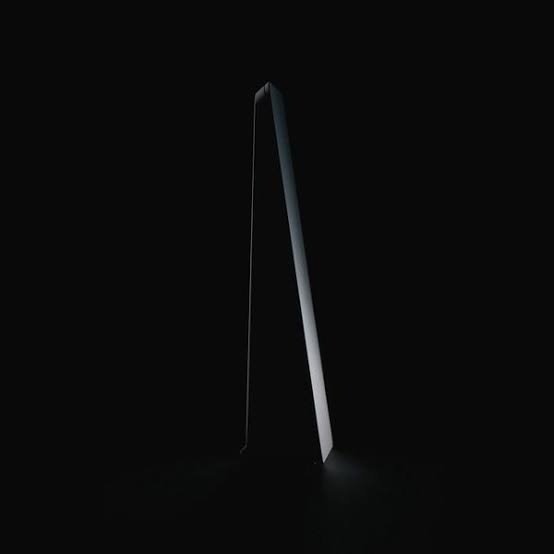
Physically, Router 4 is a compact piece of hardware, weighing just 0.9 pounds and measuring 1.8 by 8 by 4.5 inches. It ships with two ethernet ports tucked behind water-resistant port covers, along with an LED status indicator and a factory reset button for troubleshooting. Users who want to connect additional third-party networking hardware can do so by removing the port cover and plugging directly into one of the LAN ports, giving more technically inclined customers room to expand their home network setup beyond what Router 4 offers out of the box.
Durability appears to have been a real design priority here, which makes sense given how many Starlink customers rely on the service in remote or harsh environments. The router carries an IP56 rating for water resistance, though SpaceX notes it’s configured for indoor use rather than outdoor exposure. It’s also rated to operate across an unusually wide temperature range, from as cold as negative 22 degrees Fahrenheit up to 122 degrees Fahrenheit, a spec that reflects Starlink’s customer base spanning everything from frigid rural properties to hot, dry regions where standard consumer routers might struggle.
This launch follows a Federal Communications Commission filing spotted back in August, when SpaceX quietly secured equipment authorization for a device internally labeled the UTR-261, widely believed at the time to be this very router. That earlier filing confirmed the router was manufactured in Vietnam and built specifically for indoor use, details that line up with what SpaceX has now confirmed publicly. The timing of that FCC approval is notable too, since it came under a temporary exemption the agency granted SpaceX from a broader ban on new foreign-made routers, an exemption that has drawn some scrutiny given that other manufacturers, including TP-Link, have not received the same allowance despite relocating parts of their operations to the United States.
What SpaceX hasn’t confirmed yet is just as important as what it has. The company has not announced a retail price, a firm shipping date, or a full list of countries where Router 4 will initially be available. Interested customers are currently being pointed toward an email signup list to receive updates as the rollout expands, with Starlink describing availability as starting in select areas rather than a full global launch. Given how the company has handled hardware rollouts in the past, gradually expanding availability rather than launching everywhere simultaneously, it’s reasonable to expect Router 4 will follow a similar staggered path over the coming months.
The bigger context here is worth mentioning too. Starlink has had a busy stretch lately on multiple fronts, from expanding satellite-based Wi-Fi to airline cabins with partners like Austrian Airlines to wiring thousands of rural schools with connectivity in countries like Argentina. Router 4 fits into that broader push, but it also arrives at a moment when Starlink’s satellite ambitions have hit a real setback. The company’s next-generation V3 satellites, which SpaceX has said could eventually deliver speeds up to ten times faster than its current constellation, suffered a serious blow in July when a Starship test flight carrying twenty V3 prototype satellites failed shortly after launch, destroying the payload before it ever reached orbit. No new timeline for relaunching that V3 deployment has been announced since.
That satellite setback doesn’t take away from what Router 4 represents on its own, a genuine hardware upgrade that should meaningfully improve the in-home Wi-Fi experience for existing Starlink customers regardless of which satellite generation is beaming the signal down to their dish. But it does underline an important distinction for anyone excited about this announcement: a better router can only do so much when the actual internet speed reaching that router is still capped by the satellites overhead. For now, Starlink customers will need to keep watching for pricing and availability news, while the promise of dramatically faster speeds tied to the V3 satellite rollout remains on hold until SpaceX gets that next launch attempt off the ground.