|
Getting your Trinity Audio player ready...
|
A Chinese technology company has offered to sell Russia nearly $2.9 million worth of communications equipment that helps attack drones fly deeper into Ukraine, according to an investigation by the outlet The Insider, reported on Friday by the Kyiv Post. The findings rest on an undercover approach to the manufacturer, which reportedly kept negotiating after being told the equipment was for military use. The company has not been shown to have shipped anything, and the reports reviewed do not include a response from it or from Chinese authorities.
The Insider said Shenzhen Xingkai Technology offered to supply 500 mesh modems to a factory in the Alabuga special economic zone in Russia’s Tatarstan region, after an investigative journalist posed as a Russian military supplier. The company quoted 19.5 million yuan, or about $2.87 million, for the shipment. Alabuga is widely reported to be the site where Russia assembles its Geran drones, the Russian-built version of the Iranian Shahed design. According to The Insider, the potential buyers stated explicitly that the equipment would serve a military purpose, and the Chinese firm continued to discuss the deal anyway.
A mesh modem is a radio device that lets drones pass signals to one another, so a group of aircraft can act as a relay network. In practice, that means a drone flying beyond the range of its operator can still receive commands through other drones in the chain. The Insider’s report says mesh networks are the most practical technology for controlling Russian long-range drones over Ukraine, because they allow manual control and in-flight commands by exploiting gaps in Ukraine’s air defenses, as summarized by Ukrainian outlet UA.News. The communications link is what turns a one-way flying weapon into something that can be redirected, and that is why it matters to the way Russia has been striking cities and infrastructure far from the front line.
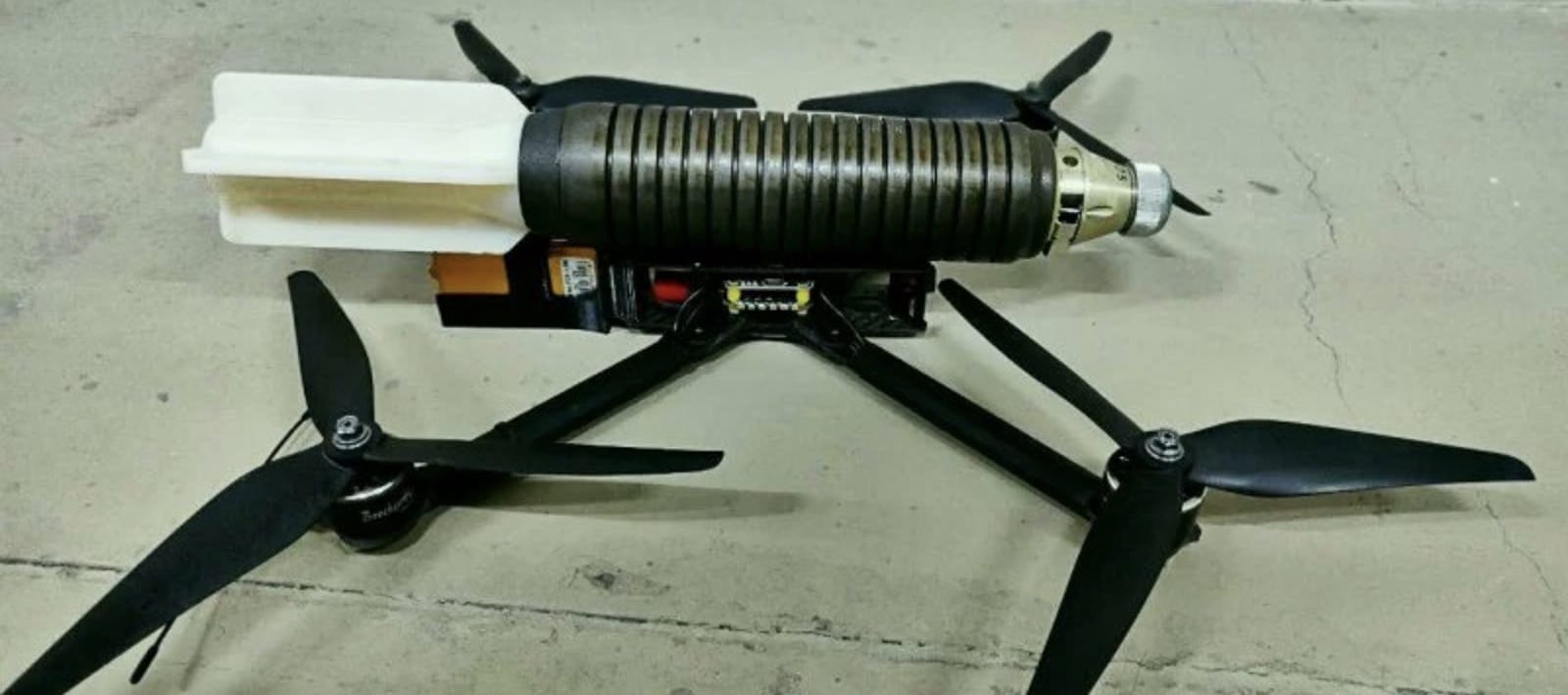
The reporting does not rely only on the sales pitch. The Insider’s correspondent in Ukraine examined a Xingkai Tech mesh modem recovered from a downed Russian Gerbera drone, a decoy and strike variant often flown alongside Geran drones. From that and other evidence, the investigation identified the Chinese manufacturer as a major supplier of communications equipment used in the Geran and Gerbera drone programs. The Insider estimated that Shenzhen Xingkai Technology accounts for about half of the market for high-powered mesh modems designed for those drones. That is the outlet’s estimate, and the reports reviewed do not describe how it was calculated. If it is accurate, a single supplier would sit at an important point in Russia’s drone supply chain.
The case adds to a long-running dispute over Chinese components in the war. China has tightened export controls on drones and related equipment for several years, citing concerns about prolonging the conflict, according to an Associated Press report this week. China’s Foreign Ministry told the AP that Beijing takes a prudent and responsible approach to military exports. The same AP report found that the restrictions have not stopped Chinese parts reaching Ukraine, but have caused delays and higher costs, pushing Ukrainian companies toward intermediaries in third countries. One Ukrainian firm traced advanced antennas on a recovered Russian drone to a Chinese supplier, and when it tried to buy several hundred, the supplier first refused and then agreed only on condition that the deal stayed private because the technology had been developed for Russia, the report said.
That asymmetry is the heart of the strategic concern. Ukraine has become a global leader in battlefield drone innovation, but it still depends on Chinese components for items such as motors, cameras, thermal imaging parts and some long-range civilian drones, which Ukrainian companies say are now difficult to buy directly. Robert Tallost, a researcher at the Royal United Services Institute, told the AP that China has leverage and could direct more material to Russia while restricting supplies to the West. The Xingkai case is a concrete example of how a private company, rather than a state policy, can end up supplying a military technology that Beijing publicly says it restricts.
The details matter for how the story should be read. An offer to supply, made to a journalist posing as a buyer, is not proof of an actual delivery, and it does not show that the Chinese government approved or knew of the proposal. Companies in China, like those elsewhere, can pursue sales that officials would later disown, and the reports reviewed do not say whether export licences would have been needed or sought for such a shipment. At the same time, the finding that a Xingkai modem was recovered from a Russian drone suggests earlier sales or transfers did take place, though the investigation as summarized does not say when or how the equipment reached Russia. These gaps should temper conclusions in either direction.
The timing is notable. Russia has continued large drone and missile attacks on Ukrainian cities, with strikes on Kyiv and an apartment building in Uman injuring several people overnight, according to Kyiv Post’s coverage, and Zelensky said Russian strikes injured 52 people across Ukraine in a single day. Ukraine, for its part, has been escalating its campaign against Russian refineries and airports, and The Atlantic reported it is preparing AI-guided drones capable of evading air defenses to target airports. President Donald Trump has criticised Ukraine’s refinery strikes as a disgrace, while this week also announcing an energy ceasefire that neither side confirmed. Drone communications equipment sits in the middle of all of this, since the range and reliability of drones determine how far each side can strike.
What could follow? Western governments have sanctioned Chinese and other third-country firms for supplying dual-use goods to Russia’s military, and reporting like this often feeds those decisions, though no such step has been announced in connection with Xingkai in the reports reviewed. Banks and shipping firms that handle payments and logistics for such transactions also face compliance questions when journalists document explicit military end uses. For Ukraine, the story reinforces the case for building domestic or allied supply chains for drone components, an effort that is under way but remains incomplete.
For readers outside the war zone, the lesson is about supply chains. Modern weapons depend on cheap, commercially available electronics, and the companies that make them can be difficult to monitor. A $2.87 million order for 500 modems is small by military standards, yet it illustrates how inexpensive parts can multiply the reach of a weapon. The Kyiv Post has the full summary of the investigation on its site, and the AP’s wider report on Chinese technology in Ukraine’s drone arsenal is available through ABC News.
Readers who follow global technology, security and business stories can find more coverage at BusinessTech Nigeria. The next developments to watch are whether Shenzhen Xingkai Technology or Chinese officials respond, whether any deliveries can be traced, and whether governments act on the findings.