|
Getting your Trinity Audio player ready...
|
India Gets One of the World’s Steepest iPhone Price Hikes
Apple’s latest pricing overhaul in India has left customers doing a double take, and for good reason. Following Wednesday’s “Surprise and Shine” event, where the company unveiled the iPhone 18 Pro, iPhone Pro Max, and its first foldable device, the iPhone Duo, Apple quietly repriced its entire iPhone catalogue in India, and the increases are among the steepest the country has ever seen from the company.
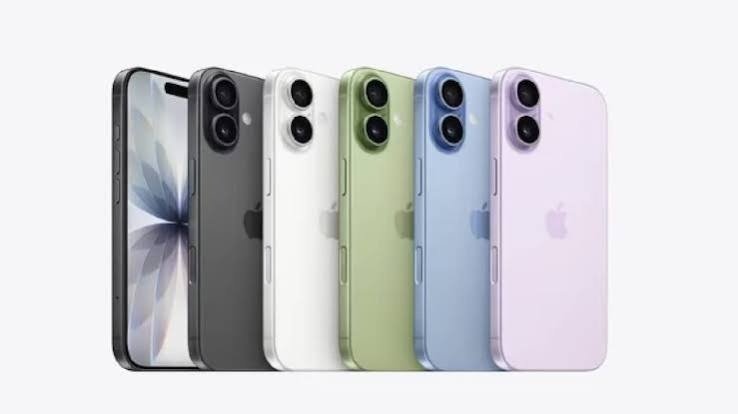
The numbers tell the story clearly enough. The iPhone 17 now starts at Rs 99,900 for the base 256GB model, up from Rs 82,900, a jump of roughly 20.5 percent. The iPhone 17e climbed from Rs 64,900 to Rs 79,900, a 23 percent increase. But it’s the iPhone Air that has absorbed the harshest treatment in this round of repricing. Its base 256GB model rose from Rs 1,19,900 to Rs 1,49,900, a 25 percent hike, while the top-tier 1TB variant jumped from Rs 1,59,900 all the way to Rs 2,24,900, an increase of over 40 percent. Even the older iPhone 16 wasn’t spared, with its entry-level model climbing from Rs 69,900 to Rs 89,900.
Then there’s the iPhone Duo, Apple’s much-anticipated first foldable, which has drawn attention for a different reason entirely. In the US, the device starts at $1,999 for the 256GB model, which works out to roughly Rs 1,90,164 at current exchange rates. In India, that same phone carries a price tag of Rs 2,99,900, which means Indian buyers are paying close to 58 percent more than their American counterparts for the identical device. For context, an American buyer picking up the standard iPhone 18 Pro saw its price rise by only about $100, while an Indian buyer felt a proportionally much larger bite, one industry tracker noted the increase in India runs more than double what buyers in the US and UK experienced, and lines up closely with the hikes Japan saw earlier this year.
None of this is happening in isolation. Data from Counterpoint Research shows India recorded the steepest average smartphone price increase of any major market globally in 2026, with retail prices climbing about 21 percent on average, compared to roughly 15 percent worldwide, 19 percent across the rest of Asia Pacific, and 18 percent in the Middle East and Africa. Counterpoint also found that newly launched smartphones globally were running around 25 percent more expensive this year compared to similar models launched a year earlier, with more than 40 percent of smartphone models seeing some kind of price increase in 2026 alone.
The underlying driver behind much of this, according to Counterpoint’s research, is a memory chip shortage that has been squeezing smartphone manufacturers everywhere. DRAM and NAND flash memory prices have reportedly risen nearly fourfold since September of last year, and that surge has pushed memory’s share of a phone’s total bill of materials above 45 percent for devices priced under Rs 15,000. The shortage traces back largely to the explosion in global demand for AI infrastructure, where data centers are consuming enormous quantities of the same memory chips that go into everyday consumer electronics, effectively putting phone makers and AI hyperscalers in direct competition for limited chip supply.
For India specifically, that global memory crunch is compounded by a few local factors. A weaker rupee makes dollar-denominated components and licensing costs more expensive to import, while existing import duties and the relatively higher cost of scaling up domestic manufacturing add further pressure on retail pricing. Apple has been investing heavily in Indian manufacturing in recent years, working with assembly partners including Foxconn, Pegatron, and the Tata Group, and reportedly produced around 55 million iPhones within the country in 2025 alone. A new Tata Electronics facility in Tamil Nadu and a $2.6 billion Foxconn plant near Bengaluru are both part of that expansion, with some reports suggesting Apple aims to shift a meaningful share of its US-bound iPhone production to India by late this year, targeting more than 60 million units exported annually. Despite all that local manufacturing muscle, it clearly hasn’t been enough to shield Indian consumers from the broader cost pressures rippling through the global supply chain.
The timing adds another layer of difficulty for Apple in India. Industry analysts at IDC had already been watching closely to see whether the company’s iPhone shipments would hold up in the country this year, especially with the end of no-cost EMI financing schemes, which had quietly done more to drive Apple’s growth in India over the past two years than headline pricing ever did. Apple’s market share in India climbed from 7 percent to 9 percent largely on the back of those interest-free installment plans making premium phones accessible to a much wider base of buyers. With EMI benefits fading and sticker prices now climbing sharply on top of that, IDC had projected iPhone shipments in India would stay roughly flat around 14 million units this year, and some analysts now expect that number could dip below that threshold if discounting on older models doesn’t pick up meaningfully during the festive shopping season.
Consumer sentiment data backs up the concern. A Counterpoint survey found that while 46 percent of prospective Indian smartphone buyers said they’d stretch their budgets to buy the device they actually want despite higher prices, a full 29 percent said they’d either switch to a different brand or scale back to a cheaper model, and another 25 percent said they’d simply delay their purchase altogether. That kind of hesitation matters a great deal in a market where Apple, despite its recent gains, still trails well behind volume leaders. Vivo held the top spot in India’s smartphone market in 2025 with a 23 percent share, followed by Samsung at 15 percent, with Apple’s 9 percent share still representing a distant fourth place by volume even at its record high.
What all of this points to is a company making a fairly deliberate bet. Rather than absorbing rising component costs or holding prices flat to protect volume in a market where it’s still building share, Apple appears to be leaning further into premium positioning in India, betting that its most loyal and financially comfortable customers will pay significantly more rather than switch brands, even as that strategy risks pushing the phone further out of reach for the much larger pool of aspirational buyers who had only recently started to see Apple as attainable thanks to easier financing. Whether that bet pays off will likely become clearer over the next few months, once festive season sales data gives a real read on how Indian consumers are actually responding with their wallets rather than just their survey answers.