|
Getting your Trinity Audio player ready...
|
Apple’s iPhone 18 Pro lineup is heading into its September launch with a price increase attached, according to a new report from Bloomberg’s Mark Gurman. The iPhone 18 Pro and iPhone 18 Pro Max are both expected to cost $100 more than their predecessors, pushing the smaller Pro model’s starting price to $1,199 and the Pro Max to $1,299. The report landed just hours ahead of Apple’s official launch event, meaning confirmed pricing was already close behind the leak.
For a lineup that has held its starting price steady for years, this marks a notable shift. The iPhone 17 Pro launched at $1,099 with 256GB of storage as the base configuration, while the Pro Max started at $1,199. If Gurman’s reporting holds up, the new Pro model will effectively take over the price point the Pro Max previously occupied, and the entire Pro tier moves up by roughly 9 percent.
What makes this increase notable is not that it happened, but how modest it turned out to be relative to earlier expectations. Analysts had spent much of the year warning that Apple’s Pro lineup could see a far steeper jump. Some supply chain forecasts pointed to increases as large as $250 to $300, which would have pushed the base iPhone 18 Pro as high as $1,399. GF Securities analyst Jeff Pu had gone as far as downgrading Apple stock to Hold earlier this year, citing anticipated price increases in that $200 to $300 range tied to rising costs for advanced chip production and memory components. Against that backdrop, a $100 increase looks like a comparatively restrained outcome.
The pressure behind these price moves is real and industry wide, not unique to Apple. Component costs, particularly for DRAM and NAND memory, have climbed sharply this year, and Apple has already passed some of that pressure on to buyers of its Mac and iPad lineups earlier in the summer. Tim Cook has previously described the memory pricing environment in stark terms, referring to it as a once in a century type of cost spike affecting hardware margins across the industry. Notably, iPhone pricing had remained untouched through that earlier wave of increases, which left many expecting the new iPhone generation to be where Apple finally adjusted.
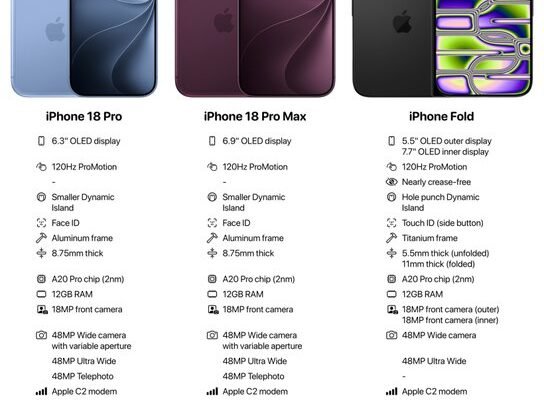
Beyond memory costs, the iPhone 18 Pro is expected to carry a more expensive bill of materials for other reasons as well. Rumors point to a new A20 Pro chip and an upgraded variable aperture camera system, both of which add to manufacturing costs. Combined with pricier memory and storage, those upgrades help explain why Apple appears to be moving off its long standing $999 to $1,099 starting price range for the Pro tier.
Apple’s decision also appears to be shaped by what its closest competitors have already done. Samsung’s Galaxy S26 lineup launched with the base S26 starting at $899.99, the S26 Plus at $1,099.99, and the S26 Ultra at $1,299.99, each roughly $100 above the prior generation’s equivalent pricing. Google followed a similar pattern with its Pixel 11 family, where the standard Pixel 11 starts at $899, the Pixel 11 Pro at $1,099, and the Pixel 11 Pro XL at $1,299. With both major Android rivals settling on roughly $100 increases for their flagship devices, Apple matching that figure keeps its Pro lineup positioned in familiar competitive territory rather than creating a noticeable price gap.
There is also a strategic argument for why Apple might have chosen restraint here. A smaller increase reduces the risk of denting upgrade demand at a moment when the company is counting on the iPhone 18 generation to drive strong replacement cycles, particularly with new AI focused features expected to be a central selling point. Pushing prices too aggressively risks the kind of demand pullback that could hurt unit sales, even if it temporarily protects gross margin on a per unit basis. Apple has already signaled that margins are under pressure this quarter, an indication that it is absorbing part of the rising costs internally rather than passing the full amount on to consumers.
Storage configuration is worth watching closely once official pricing lands, since past generations show Apple sometimes pairs a price increase with a storage bump rather than applying the higher price to an identical spec. The move from iPhone 16 Pro to iPhone 17 Pro, for example, came bundled with a jump from 128GB to 256GB as the entry point, meaning buyers got more for their money even as the sticker price rose. Some reports suggest Apple could take a similar approach again, potentially reserving the steepest increases for higher capacity 512GB and 1TB models rather than applying a flat $100 across every configuration.
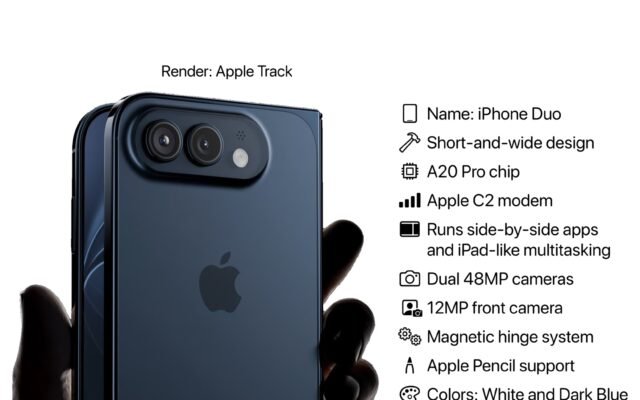
All of this arrives alongside one of the more ambitious product launches in recent Apple history, with the company also expected to introduce its first foldable iPhone this cycle. That device sits in an entirely separate pricing category and is expected to command a premium well above the Pro lineup, but its arrival adds context to why Apple may be treating the standard Pro price increase with more caution than some analysts initially predicted. A modest, competitively aligned bump on the Pro models leaves more room for the foldable to carry the bulk of this year’s pricing story.
Official confirmation of iPhone 18 Pro and Pro Max pricing will come directly from Apple at its September event, and buyers will get the full picture on storage tiers, trade in values, and carrier financing shortly after. For now, the signal from Bloomberg’s reporting is fairly clear: Apple appears to be following the same roughly $100 playbook that Samsung and Google have already used this year, rather than the far steeper increase many in the supply chain had been bracing for. Readers looking for continued coverage of how pricing shifts across major tech brands affect consumers and businesses can find further reporting at Business Tech, while full technical specifications for Apple’s current lineup remain available on Apple’s official website.