|
Getting your Trinity Audio player ready...
|
New Apple CEO John Ternus Will Need to Tap His Inner Steve Jobs to Sell the Public on a Foldable iPhone That Costs $2,000
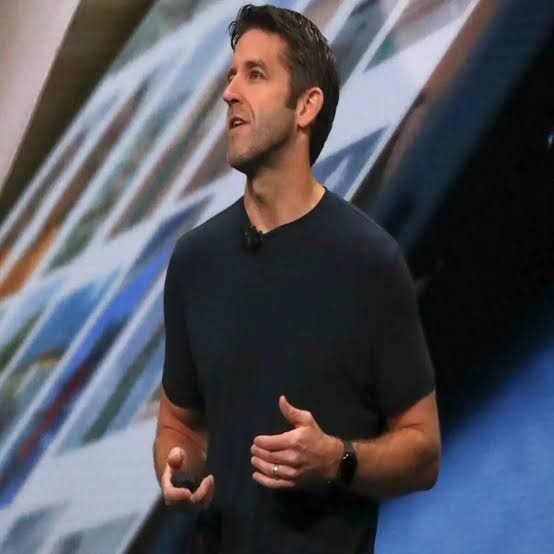
Apple is stepping into uncharted territory this week, and not just because of the device it’s expected to unveil. Wednesday’s “Surprise and Shine” event marks the first major product launch under John Ternus, who officially succeeded Tim Cook as Apple’s chief executive on September 1. The timing couldn’t be more consequential. Ternus isn’t just introducing new hardware, he’s introducing himself to investors, customers, and the broader tech industry as the person now steering the world’s most valuable public company, and he’s doing it while trying to convince people to spend roughly $2,000 on a folding phone.
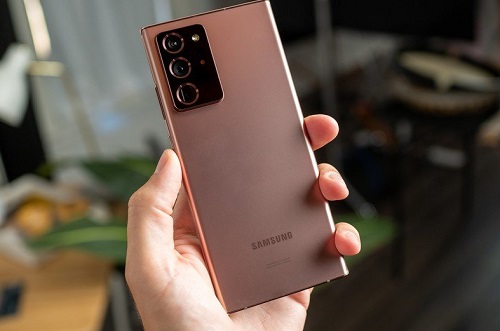
The event, scheduled for 1 p.m. ET at Apple Park in Cupertino, is expected to center on Apple’s first foldable iPhone, a device that would represent the biggest change to the iPhone’s form factor since the iPhone X arrived nearly a decade ago. According to reporting from Bloomberg, the foldable could carry a starting price around $2,000, making it comfortably the most expensive iPhone Apple has ever sold. For comparison, Apple’s current flagship, the iPhone Pro Max 17, starts at roughly $1,200. That’s not an incremental price jump, it’s a fundamentally different price category, one that puts Apple’s foldable in direct competition with Samsung’s Galaxy Z Fold 8, which starts at $1,899, and its higher-end Z Fold 8 Ultra, priced at $2,099.
The stakes attached to this launch go well beyond a single product’s price tag. Apple has a lot riding on convincing the public that a folding phone is worth that kind of money at a moment when many American households are feeling real financial pressure from rising costs on everyday essentials like groceries and gasoline. Persuading consumers to spend meaningfully more on a phone upgrade is a tough sell in any economic climate, and it becomes tougher still when nearly every U.S. adult already owns a smartphone, with roughly 158 million iPhones already in the hands of Americans, covering more than half the adult population. Growth in that market increasingly depends less on winning new customers and more on convincing existing ones to trade up, which is precisely the pitch a $2,000 device needs to nail.
This is where Ternus’s leadership debut becomes genuinely interesting to watch. Steve Jobs built his reputation, and much of Apple’s brand identity, on an ability to make audiences feel like they needed a product before they even understood why. That skill mattered just as much for pricing as it did for design, since Jobs routinely convinced people that premium Apple hardware was worth a premium price simply because of how it made them feel to own it. Tim Cook, whatever his considerable strengths as an operator and supply chain strategist, was never quite that kind of showman, and Apple’s product launches under his leadership tended to lean more on incremental technical improvements than on the kind of narrative magic that made earlier launches feel like cultural events. Ternus now has to decide which version of that legacy he wants to channel, and Wednesday’s event is effectively his opening statement.
Analysts following Apple closely have framed this week’s event as a genuine inflection point for how Ternus will be judged going forward. Wedbush analyst Dan Ives has said this event is critical for Ternus to establish his own identity at the company, noting that Ternus is stepping into an enormous legacy left behind by Cook. That legacy is substantial by any measure. Over Cook’s 15 years running Apple, the company’s annual revenue roughly quadrupled to more than $416 billion, and its market valuation climbed past $4.7 trillion, cementing its position as one of the most valuable publicly traded companies on the planet. Matching that kind of track record, let alone building on it, is an extraordinarily high bar for any new leader, and investors will be parsing Wednesday’s event for early signals about whether Ternus has the vision, not just the operational competence, to keep pushing Apple forward.
Ternus’s background gives some hints about how he might approach that challenge. He joined Apple’s product design team back in 2001 and has spent the bulk of his career on the hardware side of the business, eventually rising to oversee engineering for products across Apple’s lineup. That’s a meaningfully different professional path than Cook’s, whose reputation was built primarily around operations and supply chain management rather than product design itself. A hardware-focused CEO taking the stage to introduce Apple’s most ambitious form-factor change in years carries a certain symbolic weight, suggesting Apple may be leaning back toward product-driven storytelling as a core part of its identity under new leadership, rather than the more measured, incremental cadence that defined much of the Cook era.
Beyond the foldable itself, Wednesday’s event is also expected to bring updated iPhone 18 Pro and Pro Max models, along with new Apple Watch hardware. Notably, Apple appears to be breaking from its usual pattern by not launching a standard, more affordable iPhone 18 alongside the Pro lineup this year, with reports suggesting that model may not arrive until sometime in 2027. That decision, whether it reflects supply constraints, strategic sequencing, or something else, adds another layer of scrutiny to this week’s event, since it means Apple’s marketing push is concentrated almost entirely on its most expensive devices rather than being balanced by a mass-market option that typically drives the bulk of iPhone unit sales.
The bigger question hovering over all of this is whether a folding iPhone, however well-engineered, can actually justify a nearly $800 premium over Apple’s existing flagship in a way that resonates with everyday buyers rather than just early-adopter enthusiasts. Foldable phones have existed in the broader smartphone market for several years now through Samsung and other manufacturers, and while they’ve carved out a loyal niche, they haven’t come close to displacing traditional smartphone designs as the mainstream default. Apple entering this category years after its rivals gives it the benefit of a more mature underlying technology, but it also means the company can’t rely purely on novelty to drive sales. It needs a genuinely compelling reason for people to spend meaningfully more money on a fundamentally different kind of phone, and articulating that reason persuasively, on stage, in a way that photos and spec sheets alone can’t, is exactly the kind of moment that used to be Jobs’s specialty.
Whether Ternus can pull off that kind of moment remains to be seen, but Wednesday’s event will offer the clearest early read yet on how he intends to lead Apple through its next chapter. If the foldable iPhone lands well with critics and consumers, it could become a defining product of his tenure and a signal that Apple’s hardware innovation engine is still capable of surprising people. If it lands as an expensive niche curiosity instead, it may raise harder questions about whether Apple’s next era under Ternus can recapture the kind of cultural momentum that once made its product launches must-watch events rather than just quarterly earnings previews with better lighting.