|
Getting your Trinity Audio player ready...
|
Huawei Has Unveiled Their First Triple-Fold Phone Equipped With In-House Core Chips “Free From US Supply Restrictions”
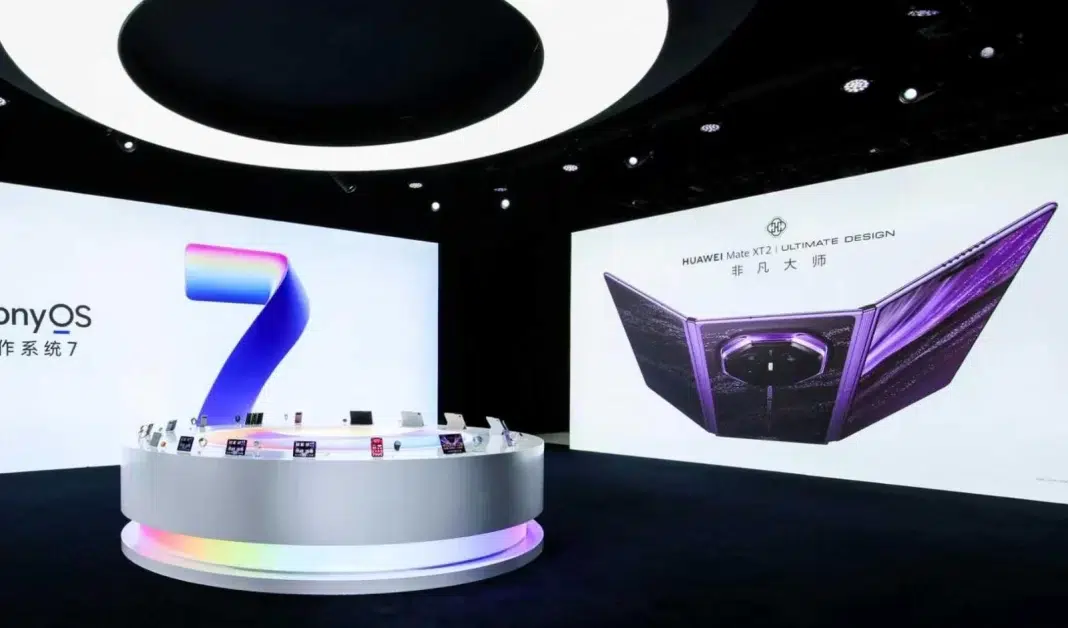
Huawei has unveiled the latest version of its triple-folding smartphone, the Mate XT2, and this time the company is making a specific point of highlighting what’s inside it rather than just how it folds. The device runs on a new in-house processor called the Kirin 9050 Pro, which Huawei says is built entirely without US technology, a milestone the company is treating as proof that years of American export restrictions haven’t stopped it from advancing its chip capabilities. The timing of the announcement is hard to ignore too, arriving just days before Apple is expected to unveil its own first foldable iPhone at a separate event.
The Kirin 9050 Pro represents a genuine technical claim rather than just marketing language, at least according to Huawei’s own description of the chip. The company says the processor’s core components, including its LinxiCore processing cores, graphics unit, and neural processing unit, were all designed in-house. Huawei built the chip using what it calls Tau Scaling architecture, an approach that arranges components closer together on the chip to reduce its overall size and improve performance without relying on the kind of advanced manufacturing processes used by companies like TSMC or Intel, both of which remain subject to restrictions on supplying certain chipmaking technology to Huawei. According to the company, this new chip delivers a 42 percent performance improvement over the processor that powered last year’s Mate XT.
Independent chip analysts have taken a more measured view of just how significant this breakthrough really is. While there’s general acknowledgment that Huawei has done genuinely interesting engineering work with its silicon, some industry observers stop short of calling it a fundamental technological leap, noting that Huawei’s approach appears more focused on clever architectural workarounds than on matching the raw manufacturing capabilities that leading foundries like TSMC currently offer. That distinction matters for understanding the broader context here. Huawei isn’t necessarily closing the technology gap with the most advanced global chipmakers in a literal sense, but it is finding creative ways to deliver competitive performance despite the restrictions still standing in its way, which is arguably the more relevant achievement given the constraints it’s operating under.
Beyond the chip itself, the Mate XT2 brings a redesigned folding mechanism compared to its predecessor. Rather than the accordion-style folding structure used in earlier Huawei trifolds, the new device folds both halves of its roughly 10.1-inch interior display inward, protecting the flexible screen and creating a 6.5-inch exterior display for everyday use, similar in concept to the folding approach Samsung used in its now-discontinued Galaxy Z TriFold concept. Huawei has also added a privacy-focused display feature, a design element that echoes similar functionality found in some of Samsung’s recent premium devices. On the camera side, the phone is well equipped for a foldable, featuring a 50-megapixel main camera, a 40-megapixel ultra-wide lens, a 50-megapixel periscope camera capable of 3.5x optical zoom, and an 8-megapixel front-facing camera for video calls housed in the interior display.
The Mate XT2 runs on Huawei’s own HarmonyOS operating system rather than Android, continuing the company’s long-running effort to build a fully independent software ecosystem after losing access to Google’s mobile services following the initial round of US sanctions in 2019. At the device’s launch event, Huawei executives pointed to HarmonyOS now running on roughly 85 million devices, a notable milestone for an operating system that only launched in its current independent form in October 2024, though that figure still represents a small fraction of the global smartphone and device market overall.
Pricing for the device reflects its position as a genuine premium flagship rather than a mass-market product, with reports pegging the phone at around $3,000, continuing the trend set by Huawei’s earlier trifold models, which similarly launched at premium price points well above conventional flagship smartphones. That pricing strategy makes sense given the realistic size of the folding phone market. Analyst firm Counterpoint projects that folding phones will account for a relatively small slice of the overall smartphone market by the end of 2026, meaning devices like the Mate XT2 are competing for a specific, high-spending segment of buyers rather than trying to displace conventional smartphones at scale. Counterpoint’s forecasts suggest Huawei could end 2026 holding roughly 24 percent of the global folding phone market, a meaningful position but one that puts it in direct competition with Apple’s rumored foldable iPhone, which the same analyst firm predicts could capture around 25 percent of that same market by year’s end.
The broader significance of this launch extends well beyond specs and market share projections, though. Huawei doesn’t currently sell smartphones in the United States due to ongoing sanctions, yet the company has managed to build a dominant position in its home market despite years of restricted access to American chip technology and software. According to recent market data, Huawei led China’s smartphone market with a 22.6 percent share in the second quarter of this year, edging out Apple’s 18.1 percent share in the same market and same period. That kind of domestic performance, achieved while operating under substantial technological restrictions, underscores how effectively Huawei has adapted its supply chain and product strategy since the US first cut off its access to American components and services back in 2019.
For Washington, the Mate XT2 and its US-restriction-free chip serve as a fairly pointed signal that years of export controls haven’t prevented Huawei from continuing to innovate, even if the company has had to take a different technical path to get there than it might have otherwise. For consumers and industry watchers, the more practical takeaway is that the competitive landscape for premium folding phones is about to get more interesting, with Huawei and Apple effectively racing to launch flagship foldable devices within days of each other, each backed by very different underlying philosophies about hardware, software, and geopolitical positioning. Whichever company ultimately wins more of that narrow but high-value market segment, the launch itself makes clear that the folding phone category, long dominated by Samsung, now has multiple serious global competitors pushing the format in genuinely different directions.