|
Getting your Trinity Audio player ready...
|
OPPO Find X10 Pro Max Confirmed With World’s First Triple 200MP Camera System and Samsung’s New ISOCELL HPC Sensor
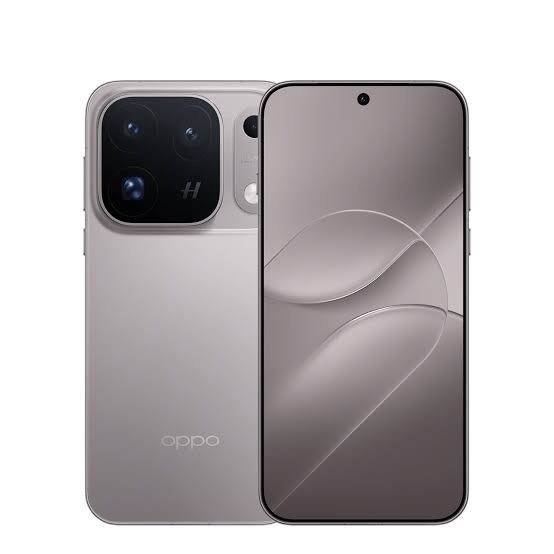
OPPO has officially confirmed what leakers have been teasing for weeks: the Find X10 Pro Max will ship with three separate 200-megapixel cameras on its back, making it the first smartphone to pack that resolution into every rear lens rather than reserving it for just the main sensor. The company detailed the setup itself through an official Weibo post, moving the phone from rumor territory into confirmed specification, ahead of a launch expected in China later this month.
The headline feature is the main camera, which uses Samsung’s newly announced ISOCELL HPC sensor, a 200-megapixel, 1/1.3-inch chip built around what Samsung calls DeepPix pixel architecture. According to OPPO’s Find series product lead Zhuo Shijie, the sensor was developed jointly with Samsung’s imaging team specifically for this phone, and it’s designed to solve a problem that’s dogged high-resolution sensors for years: getting both extreme resolution and strong dynamic range out of the same chip without sacrificing one for the other. DeepPix combines front deep trench isolation with dual vertical transfer gates and a shared floating diffusion structure, which Samsung says increases single-pixel full-well capacity by 60 percent over its previous generation without needing to make the pixels physically larger. The practical result, according to OPPO, is up to 17EV of dynamic range from the main camera alone, well above the roughly 14EV that most current flagship phones top out at.
That same sensor also supports single-frame 16-bit HDR capture across multiple in-sensor zoom levels, from 1x through 4x, along with native 16-bit RAW output, which Samsung is marketing as a first for smartphone CMOS sensors generally. Video capability tops out at 4K at 180 frames per second using partial-pixel readout, or 4K at 120 frames per second with full-pixel phase-detect autofocus active. The main camera carries an f/1.5 aperture and CIPA 6.5-level image stabilization, rounding out a spec sheet clearly built for both stills and serious video work.
What makes the Find X10 Pro Max unusual isn’t just that main sensor, though. OPPO is putting a second 200-megapixel sensor behind the ultrawide lens, a spot most phone makers treat as an afterthought with a modest, lower-resolution chip. This one carries an f/2.2 aperture and a 124-degree field of view, giving it enough resolution headroom for detailed group shots, architecture, and tight interior spaces without the usual loss of sharpness toward the frame’s edges. The third 200-megapixel sensor sits behind a periscope telephoto lens, with an f/2.1 aperture, CIPA 7.5-level stabilization, and support for telephoto macro shooting down to roughly 10 centimeters, letting users get close-up shots while still working through the optical zoom path rather than a dedicated macro lens.
Rounding out the rear camera array is a smaller 3-megapixel multispectral sensor, a component increasingly common on flagship phones that helps the camera system read ambient lighting conditions more accurately and correct color rendering across mixed or unusual lighting. Up front, the phone is expected to carry a 50-megapixel selfie camera with autofocus, a notable upgrade over the fixed-focus front cameras still found on plenty of competing flagships.
The camera system reportedly continues OPPO’s partnership with Hasselblad, which has shaped the color science and imaging tuning on the Find series’ recent generations, and all three rear cameras are said to support 8K video recording. For high-end video work, OPPO is also building in OpenGate capture support, letting videographers use the sensor’s full surface for 4:3 aspect ratio footage, along with compatibility with the Blackmagic Camera app and support for O-Log2 and Dolby Vision capture, features aimed squarely at users who treat their phone as a serious secondary video camera rather than a casual point-and-shoot.
Beyond the cameras, the Find X10 Pro Max is expected to run on MediaTek’s Dimensity 9600 Pro chipset, a 2-nanometer processor that hasn’t been officially released by MediaTek yet, paired with a display that reporting has pegged at either a 6.78-inch or 6.89-inch LTPO OLED panel running at 2K resolution with a 144Hz refresh rate. The software side will run ColorOS 17 layered over Android 17. A standard Find X10 Pro model is also launching alongside the Pro Max, though with a slightly scaled-back camera setup limited to two 200-megapixel sensors covering the wide and periscope telephoto positions rather than all three.
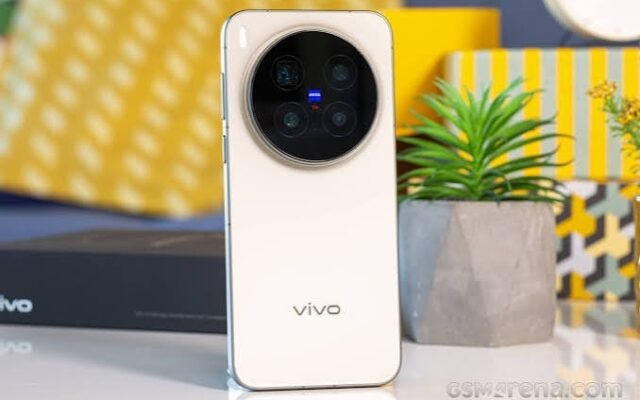
Timing-wise, OPPO has confirmed the Find X10 series will debut in China this month, expected to land roughly a week after Vivo’s competing X500 series launch event on September 21, putting the two rivals on a near-identical release schedule as they continue a resolution arms race that’s played out across Chinese flagship phones for much of the past year. The Find X9 Ultra and Vivo’s X300 Ultra each carried two 200-megapixel sensors earlier this year, which at the time represented the high-water mark for camera resolution on a single device. Tripling that count on every rear lens, rather than just adding a second high-resolution sensor, marks a fairly significant jump even by that standard, and it puts pressure on both Vivo and other Chinese manufacturers to respond with their own next-generation camera systems.
Global availability for the Find X10 Pro Max is expected to follow the China launch by a few weeks, with an October release window most commonly cited in current reporting, though OPPO hasn’t confirmed international pricing or specific markets yet. For buyers whose primary interest in a flagship phone is photography and video capability rather than raw processing benchmarks, the Find X10 Pro Max is shaping up to be one of the more ambitious camera phones released this year, betting heavily on the idea that resolution and dynamic range no longer need to be a trade-off. More detail on the ISOCELL HPC sensor itself is available through Samsung Semiconductor’s own announcement of the chip, while OPPO’s official specifications for the Find X10 series will likely be confirmed in full at the phone’s China launch event later this month.