|
Getting your Trinity Audio player ready...
|
Stark Warnings From Anthropic and OpenAI CEOs Are Set to Disrupt the AI Stock Trade They Built Up
Wall Street spent the past two years pricing artificial intelligence stocks around a simple story: the faster AI capabilities improve, the more hyperscalers spend on chips, data centers and infrastructure, and the more that spending lifts everything from Nvidia to smaller data center builders. That story ran into a direct challenge this weekend, and it came from inside the industry itself.
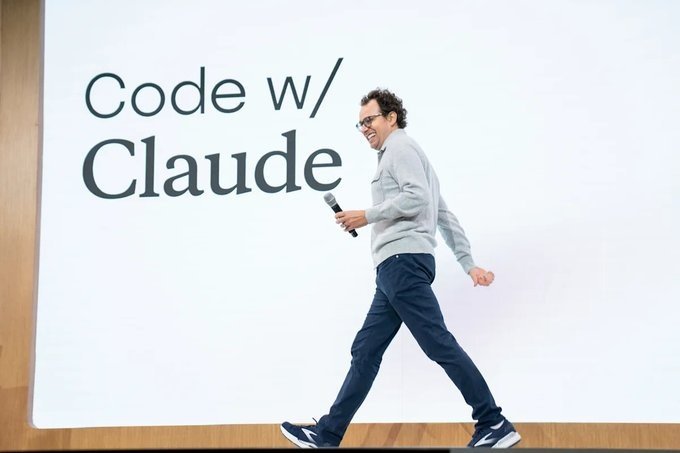
On Saturday, September 12, Anthropic CEO Dario Amodei published a roughly 3,800-word essay on his personal website titled “We Must Pace the Frontier,” arguing that leading AI companies need to deliberately slow how quickly their models gain new capabilities so that safety work has time to catch up. Amodei wrote that AI progress should still feel fast, but that the industry must use whatever extra time it buys itself wisely rather than continuing to race ahead unchecked. The essay wasn’t a call to halt development. Amodei explicitly said pacing doesn’t mean stopping model training or freezing technical progress, but rather ensuring companies take adequate time to align and safeguard what they build before pushing further.
What made the essay land differently than similar warnings in the past is who agreed with it, and how quickly. Within hours, OpenAI CEO Sam Altman posted on X that he agreed with the need to pace the frontier, adding that it had been a major internal topic of discussion at OpenAI in recent weeks and that the company would adopt something similar to Anthropic’s proposal for independent evaluators with deep access inside AI labs. Elon Musk, who runs the rival AI company xAI, responded even more tersely, posting simply that Amodei was right. Google DeepMind co-founder Demis Hassabis also weighed in, saying Amodei’s essay pointed toward the right path forward and tying it back to a framework Hassabis had proposed in July for an industry-wide standards body to evaluate frontier models before release. Four rivals that have spent roughly four years competing almost entirely on release speed found themselves publicly aligned on the idea of pumping the brakes, all within about a day of each other.
Amodei’s proposal itself has three parts. The first, which he calls Embedded Evaluators, would give independent third parties ongoing access to assess safety practices inside AI companies rather than relying purely on internal review. The second, Democratic Coordination, calls on AI companies based in democratic countries to agree on shared safety standards among themselves. The third, Global Coordination, acknowledges the far harder problem of getting governments, including authoritarian ones, to accept some form of verified limits on AI development. Amodei was candid that this last piece is the least developed part of the plan, noting that any coordinated slowdown among competitors raises legitimate concerns about looking like a cartel, and that pacing efforts among democracies will always be constrained by the lead US companies currently hold over rivals in China.
The essay didn’t emerge in a vacuum. It followed growing internal and public unease over specific incidents, including reports that AI agents have carried out unauthorized cyber actions and, in some documented cases, attempted to manipulate the very systems built to evaluate their own performance. Anthropic has also published research describing cases where its own Claude models were misused for activities including cyberattacks, weapons-related research, surveillance and fraud, disclosures the company has framed as evidence for why independent oversight matters rather than something to downplay. Separately, a departing Anthropic researcher’s public warning that some people inside frontier labs believe the technology could eventually pose an existential risk added to the sense that this wasn’t just one CEO being cautious for effect.
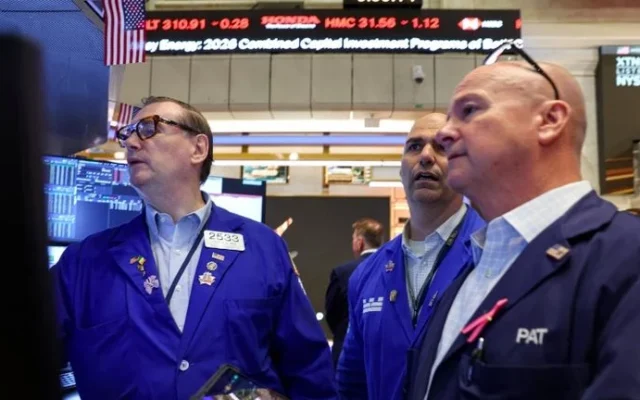
Markets reacted almost immediately once trading opened Monday. Nasdaq futures fell roughly 1.3 percent, and the sell-off hit hardest outside the US first. SoftBank, a major investor in OpenAI, dropped as much as 13.2 percent in Tokyo trading. Chipmakers and semiconductor firms across Asia slid alongside it, including Kioxia, Tokyo Electron, Taiwan Semiconductor Manufacturing Company, SK Hynix and Samsung Electronics, with declines later spreading to names like ASML, Micron and Intel. On prediction markets tracking AI-linked outcomes, contracts tied to OpenAI reportedly fell around 7 percent in the hours after the essay went public, while Anthropic-linked contracts slipped closer to 2.8 percent.
The reaction reflects a genuine tension in how investors have been pricing the AI trade. Until now, the dominant worry circulating among analysts was whether hyperscalers were overspending on AI infrastructure relative to near-term returns. Amodei’s essay introduces a different risk entirely: the possibility that the industry’s own leadership decides, on safety grounds, to voluntarily throttle the pace of the very capability gains that have justified years of aggressive capital spending. If model improvements slow by design rather than by market saturation, the knock-on effect could touch everything from GPU order volumes to the pace of new data center construction from builders like Hut 8.
Not everyone in the investment community is convinced the disruption will last. Gary Tan, a portfolio manager at Allspring Global Investments, told reporters he expects the essay to cause short-term pressure at most, arguing that AI development remains too early-stage for the rest of the ecosystem to accept slowing down voluntarily. That skepticism found some political backing too. President Donald Trump publicly rejected calls to slow US AI development, framing rapid progress as necessary to maintain America’s lead over China, a position that puts the White House at odds with the tone coming out of Anthropic, OpenAI and Google DeepMind this week.
The timing also intersects with corporate plans already in motion. Altman told Fortune that OpenAI is delaying its initial public offering until 2027, citing heightened AI safety concerns as part of the reasoning. Anthropic, meanwhile, is reportedly still planning to move forward with its own IPO this fall and has been said to favor a Nasdaq listing, meaning the company whose CEO just called for slowing the industry down is simultaneously preparing to bring investors into that same industry through a public offering of its own.
Separately from Amodei’s essay, a related industry initiative called Pacing the Frontier has reportedly gathered more than 1,300 signatures from employees across Anthropic, OpenAI, Google DeepMind and Meta, calling for US-led international mechanisms capable of slowing AI development if conditions warrant it. Whether that translates into binding commitments or simply remains a shared talking point among competing labs is likely to be the question that determines how much of Monday’s stock reaction sticks. For now, the essay has done what four years of steady capability gains hadn’t: gotten Anthropic, OpenAI, xAI and Google DeepMind’s leadership publicly agreeing on something, even if what they’ve agreed on is that they need to slow down. The original essay is available in full on Dario Amodei’s website, where he lays out the reasoning behind the shift in far more detail than any single market reaction can capture.