|
Getting your Trinity Audio player ready...
|
Reported by Joshua Ezim
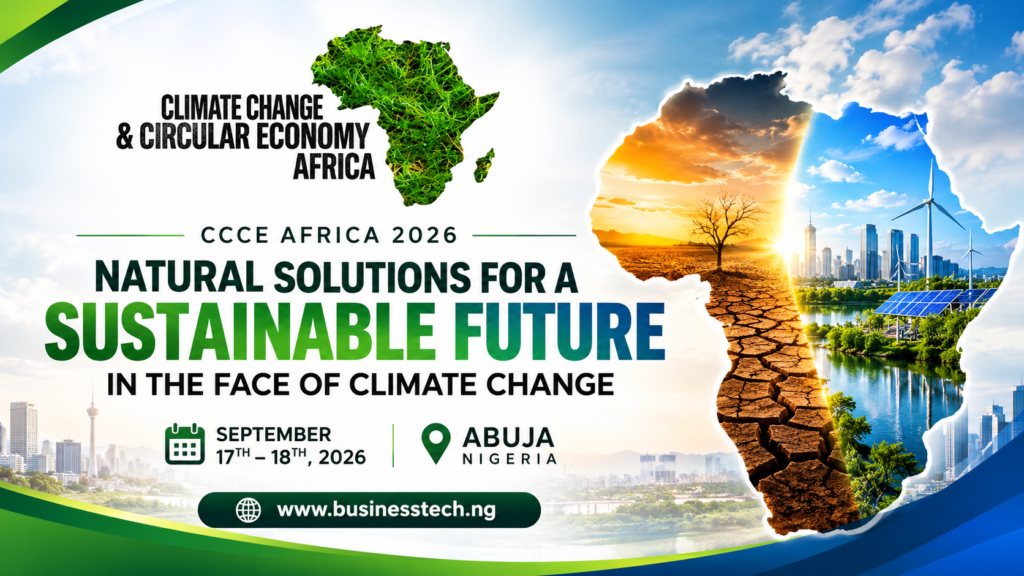
ABUJA, Nigeria. In a country still working to translate its climate pledges into measurable results, Abuja is about to become the meeting point for a continent-wide conversation on how Africa turns environmental ambition into economic opportunity. On the 17th and 18th of September, the Nigerian Society of Engineers in the Central Area of the capital, just a short distance from the National Mosque, will host the Climate Change and Circular Economy Africa Conference and Exhibition, popularly known as CCCE Africa 2026.
Organized by CCCE Africa, a non-governmental organization built around the idea that climate resilience and economic growth do not have to compete with one another, the two-day gathering has been described by its organizers as more than a conference. It is being pitched as a working session for governments, businesses, researchers and communities who are ready to move past talk and into implementation. The event begins at 9am Nigerian time on both days and is expected to draw policymakers, industry leaders and green innovators from across the continent and beyond.
For a country like Nigeria, where waste management, energy access and industrial pollution remain daily struggles in cities from Lagos to Kano, the timing of the summit is not incidental. Africa contributes only a small fraction of global greenhouse gas emissions yet continues to absorb some of the heaviest consequences of a warming planet, from shifting rainfall patterns in the Sahel to coastal erosion along the Gulf of Guinea. CCCE Africa 2026 is positioning itself as a space where that imbalance is addressed not through complaint, but through concrete strategy.
CCCE Africa describes its mission as driving sustainable transformation across industries by weaving climate action, circular economy principles and green innovation into the fabric of Africa’s economic life. Rather than treating environmental policy as a side conversation to development, the organization argues that resource efficiency, industrial sustainability and climate resilience should sit at the center of how African economies grow.
That philosophy is expected to shape much of what unfolds at the Nigerian Society of Engineers venue this week. According to information released ahead of the conference, the event aims to be the continent’s premier platform for collaborative action on climate change and resource efficiency, with organizers hoping to promote circular economy practices, strengthen partnerships across sectors, mobilize investment and empower communities to lead Africa’s shift toward a low-carbon and inclusive future.
The conference’s objectives are closely tied to the United Nations Sustainable Development Goals, particularly those addressing climate action, industry innovation, responsible consumption and sustainable cities. Organizers have framed the event as an invitation rather than a lecture, calling on governments, businesses, multilateral organizations, research institutions and NGOs to see partnership with CCCE Africa as a direct contribution to those global targets.
One of the more distinctive threads running through this year’s program is what organizers have called “Bamboo as a Beacon,” a showcase of the plant’s potential as a natural climate solution. Bamboo grows quickly, absorbs large volumes of carbon dioxide, and can be used to restore degraded land while offering raw material for construction, furniture and bioenergy. For a region grappling with deforestation and desertification along its northern frontier, the case for bamboo as both an environmental fix and a livelihood generator is one organizers appear keen to press home.
Beyond bamboo, the conference’s exhibition hall is expected to spotlight a wider range of green technologies. Reports on the event describe live demonstrations of waste-to-value systems, carbon capture and sequestration technology, and innovations from electric vehicle manufacturers and renewable energy companies working across the continent. The idea, organizers say, is to give attendees something tangible to look at rather than abstract policy talk alone, pairing conversations about carbon credit monetization with actual working models of the technologies that could make such credits possible.
Carbon credits, in particular, appear to be a recurring theme. CCCE Africa has framed the effective monetization of carbon credits as one of the continent’s biggest untapped opportunities, arguing that projects built around renewable energy, reforestation and sustainable agriculture can generate real financial incentives for emissions reduction while creating jobs in rural communities that have historically been left out of climate finance conversations.
The push behind CCCE Africa 2026 has been shaped in part by professionals whose backgrounds straddle engineering, public policy and grassroots development work. Among those associated with the conference is Donald Ikenna Ofoegbu, an economist and sustainable development expert with more than fifteen years of experience managing donor-funded programs and policy initiatives across Nigeria and West Africa. He currently serves as Program Manager for the Sustainable Nigeria Program at the Heinrich Böll Stiftung, a German green foundation with a long-standing presence in the region’s environmental policy space.
Speaking about the thinking behind the conference, one of its lead organizers described a personal journey that mirrors the event’s broader argument. She explained that her professional training initially centered on understanding the relationship between industrial processes, resources, energy and waste, but that she came to realize technical solutions alone could not resolve Africa’s environmental and socioeconomic problems. That realization, she said, pushed her toward an approach in which economic growth, environmental responsibility and social impact are treated as mutually reinforcing rather than competing priorities.
She also argued that the continent can meet global sustainability standards by shifting from commitments to actual implementation, pointing to stronger environmental governance, investment in technology and innovation, climate finance mobilization and the development of green skills as the levers that matter most. According to her, entrepreneurship, responsible leadership and social innovation will be just as important as engineering fixes if environmental solutions are to become sustainable businesses capable of creating real opportunities for communities on the ground, as reported by the News Agency of Nigeria.
Prof. Olutimo, another figure linked to the conference, brings a background as a recognized speaker who has featured at workshops and seminars both within Nigeria and internationally, sharing insights with students and professionals alike. Outside of his conference work, he is said to maintain an active interest in emerging technologies, a detail that fits neatly with an event built around innovation as much as policy.
The organizing team’s mix of backgrounds, spanning engineering, development finance and applied policy, appears deliberate. Conferences of this kind often struggle when they lean too heavily toward one discipline, producing either technically sound ideas that never survive contact with government budgeting cycles, or political commitments that have no engineering pathway behind them. By pulling together economists, engineers and public policy specialists under one program, CCCE Africa is betting that its recommendations will carry weight on both fronts once the conference concludes and the real work of follow-through begins.
CCCE Africa 2026 does not exist in isolation. Nigeria’s capital has increasingly become a hub for gatherings focused on climate change, waste reduction and circular economy strategy, with several similar conferences scheduled across the country in 2026 alone. That density of activity suggests a growing recognition, at least among policy circles and civil society, that Nigeria’s environmental challenges require sustained, repeated engagement rather than a single flagship event.
What may set CCCE Africa apart, organizers argue, is its attempt to combine high-level government and industry dialogue with an exhibition floor built for hands-on demonstration, and its explicit framing of climate action as an economic strategy rather than a purely regulatory burden. Whether that combination translates into binding commitments or follow-through investment will likely be the real test once the two days of sessions in Abuja come to a close.
That crowded calendar also reflects a wider shift in how African governments and civil society groups are approaching sustainability. A decade ago, climate conversations on the continent were often dominated by international donors and framed primarily around adaptation and disaster response. Today, a growing share of that conversation, including much of what is expected to surface in Abuja this week, is framed around opportunity: green jobs, carbon markets, manufacturing tied to renewable materials, and industries that did not exist in their current form a few years ago. That shift in language, from vulnerability to opportunity, is itself one of the quieter but more significant developments in Africa’s climate policy landscape.
Nigeria’s relationship with climate policy has often been defined by ambitious commitments that struggle to survive contact with implementation realities, from inconsistent power supply undermining renewable energy rollout to weak enforcement of environmental regulations in industrial zones. Conferences alone cannot fix that gap. But gatherings like CCCE Africa 2026 do serve a function that is easy to underestimate, bringing engineers, economists, policymakers and entrepreneurs into the same room at the same time, often for the first genuine conversation some of them will have with one another all year.
For Abuja specifically, hosting an event of this scale carries symbolic weight. The city has positioned itself in recent years as a venue for continental policy discussions, and a successful, well-attended climate and circular economy summit adds to that reputation. For Nigeria more broadly, the hope among organizers appears to be that visibility translates into investment, that investment translates into projects, and that projects eventually translate into the kind of green jobs and cleaner cities that policy documents have promised for years without fully delivering.
Among those expected to headline the conversation on “Natural Solutions for a Sustainable Future in the Face of Climate Change” is a distinguished lineup of policymakers, diplomats, academics, environmental advocates and business leaders, as attention increasingly turns to the urgent climate and sustainability challenges facing Africa. Endorsed by the Federal Ministry of Environment
The gathering is expected to bring together voices from government, academia, diplomacy, civil society and the private sector to examine practical and nature-based approaches to climate resilience, environmental protection and sustainable development.
Among the speakers expected to feature prominently are Senator Ireti Heebah Kingibe, Dr. Nenpomigyi Christopher Beka, Amb. Otto Canon, Muttaqha Rabe Darma, PhD, DBA, MNSE, MNIM, Sarah Adekola, Mrs. Omotenioye Majekodunmi, Aisha Amirah Adedeji, Titilola Bright Oridami, Balarabe Abbas Lawal, Omosede Imohe, Dr. Mustapha Abdullahi, and Fatima Umar Bayero.
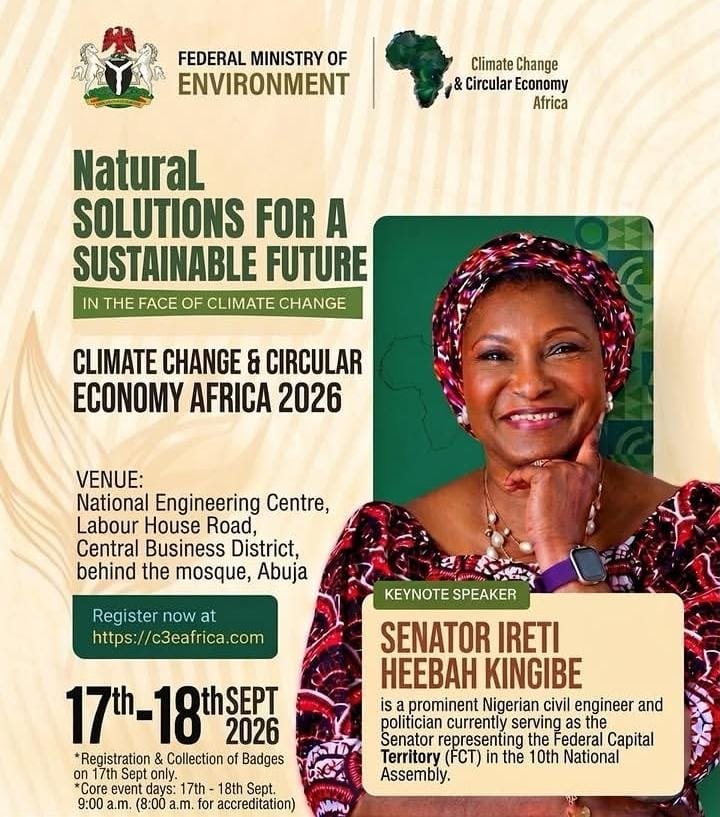
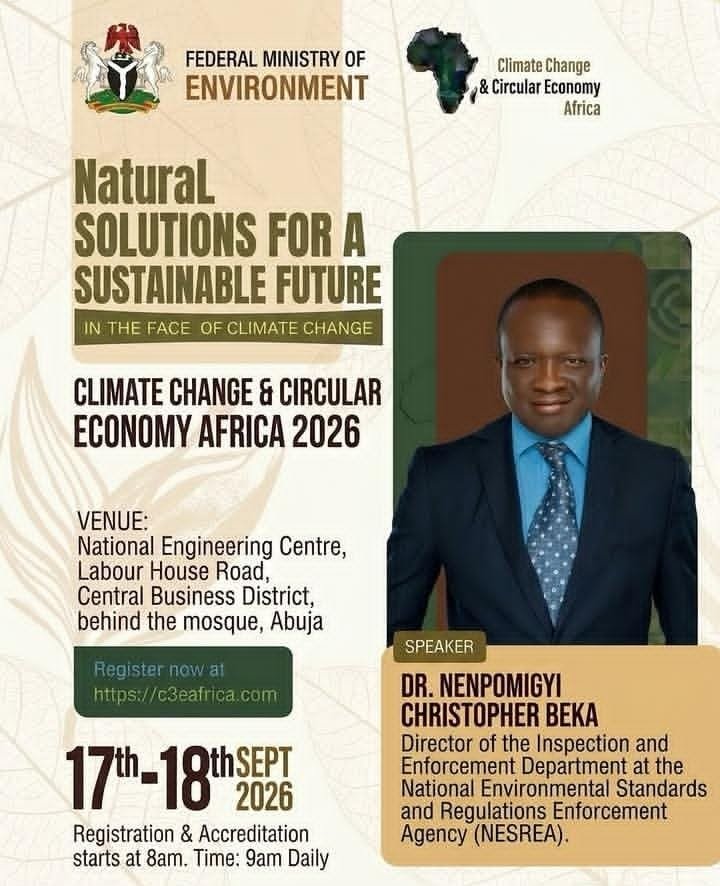
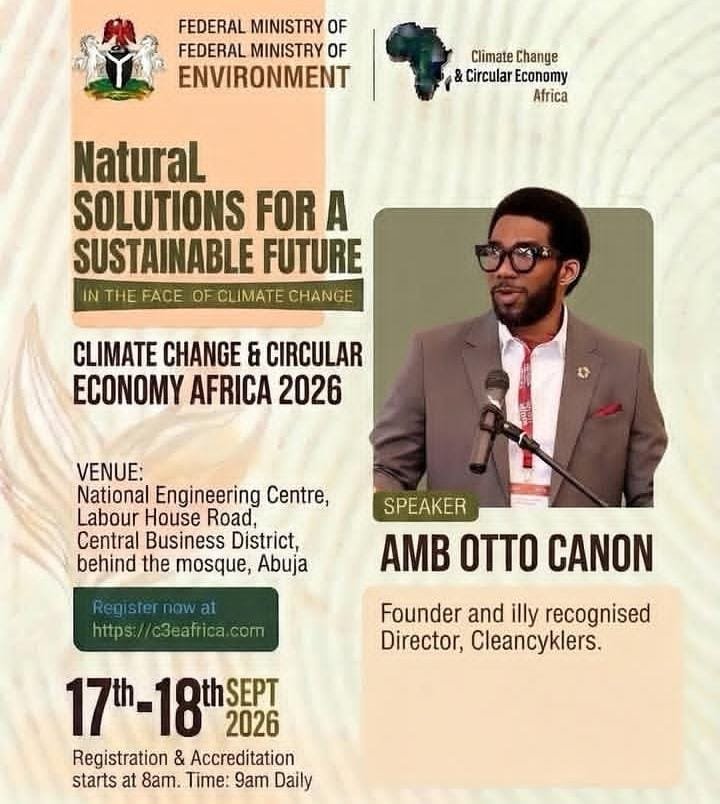
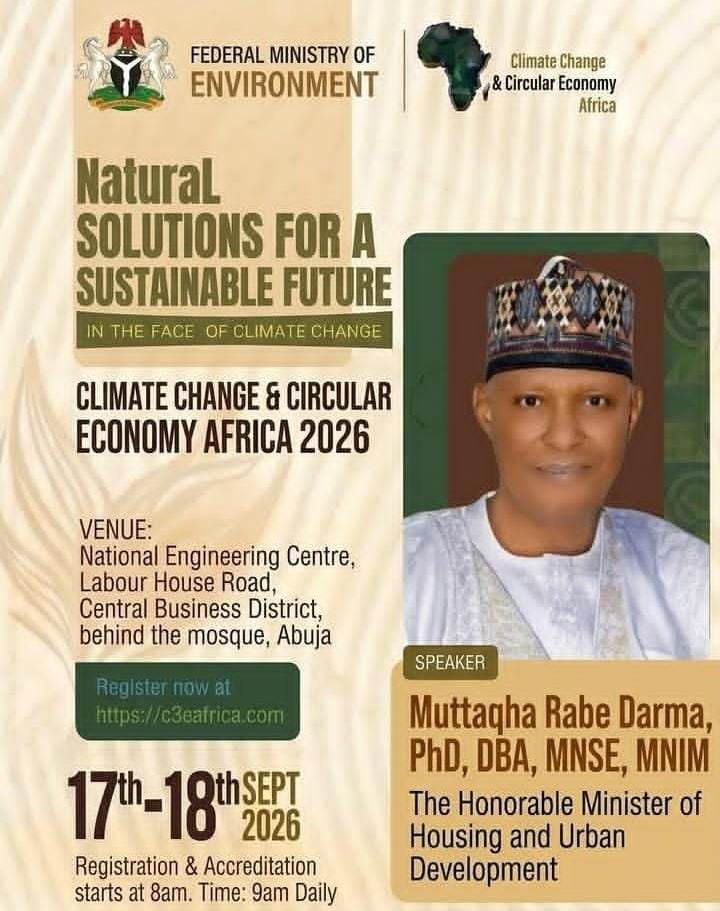
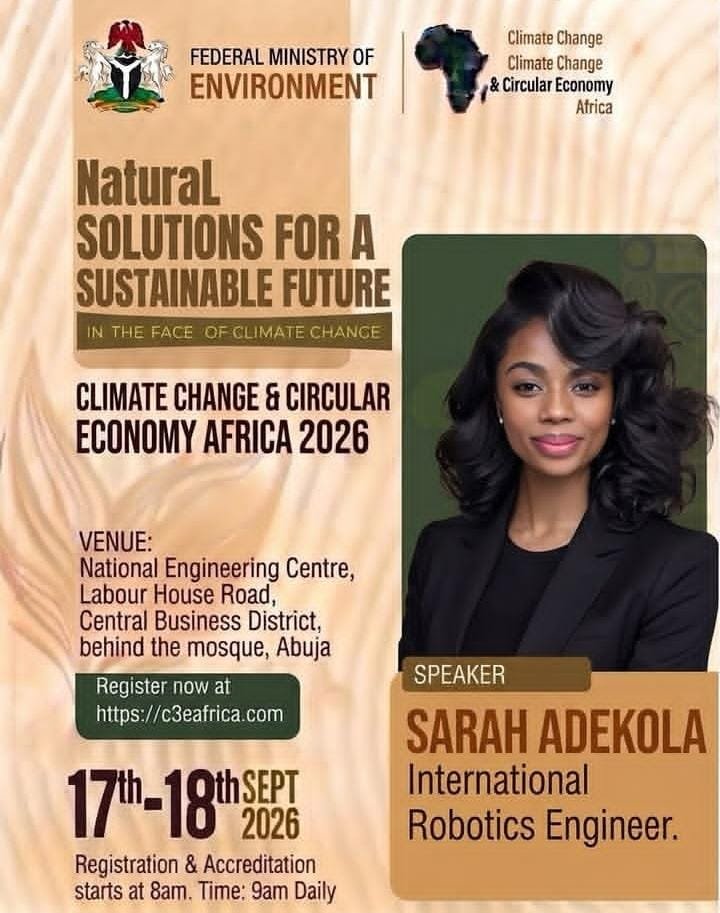
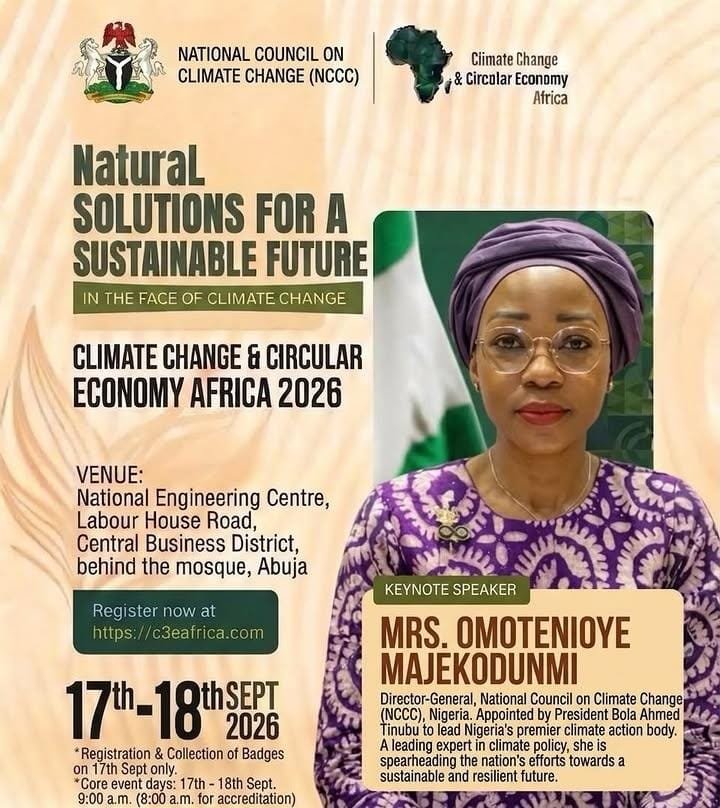
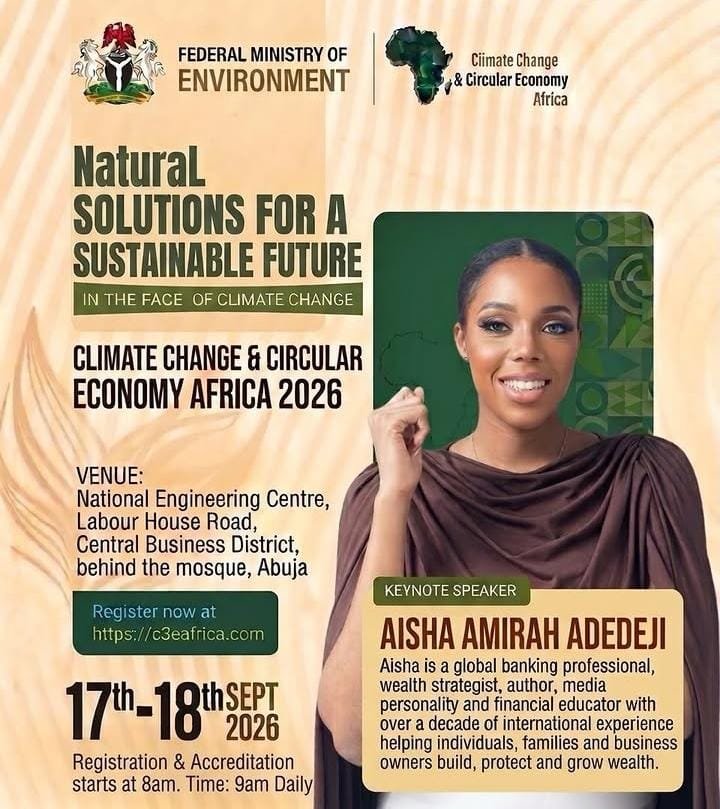
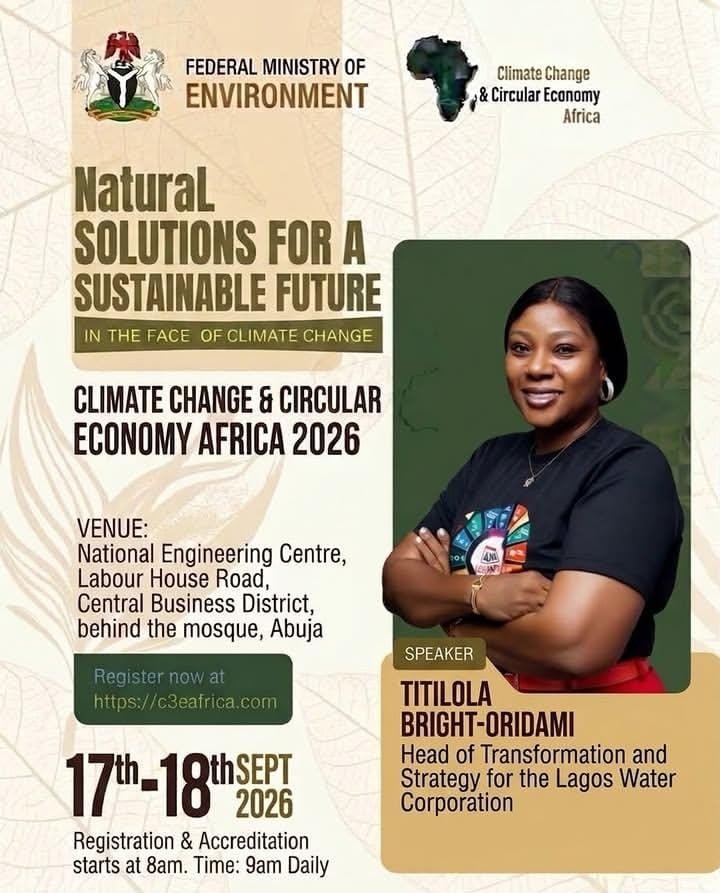
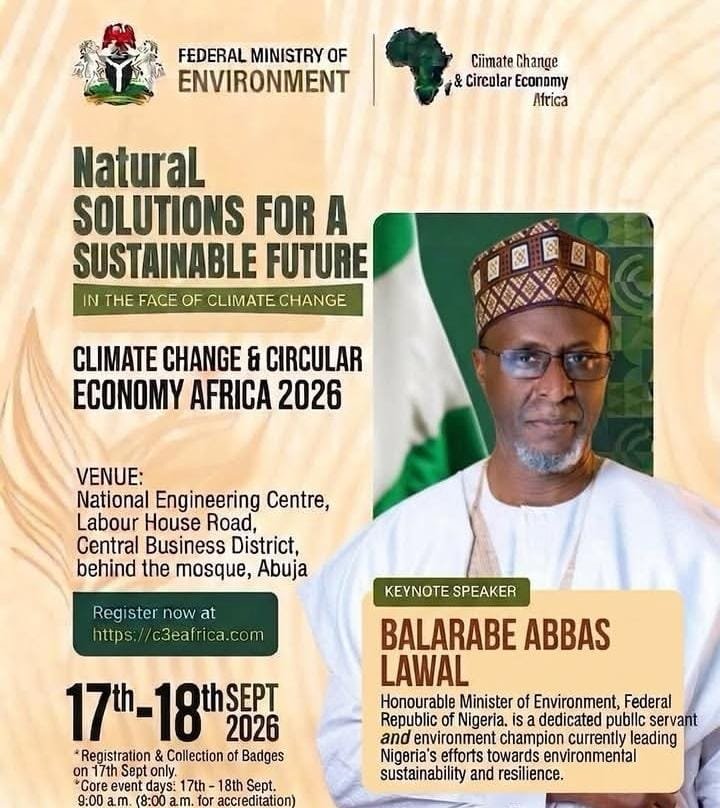
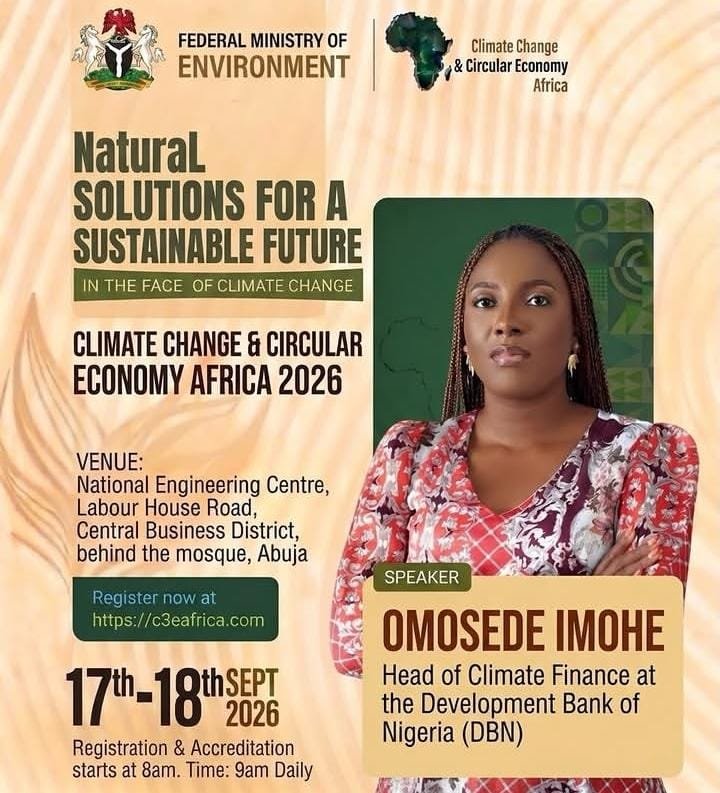
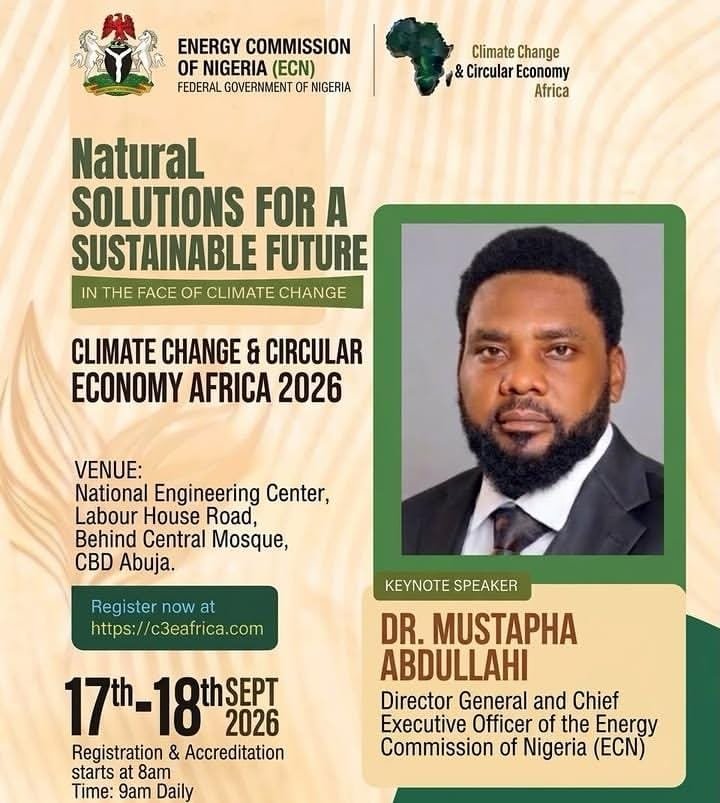
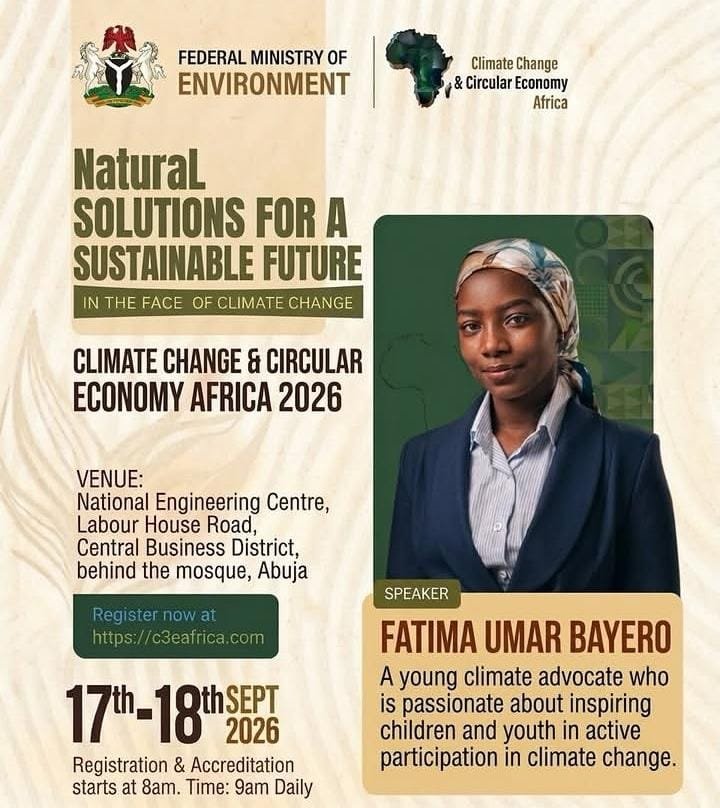
Prominent leaders expected to feature at the event, according to details shared by the organizers, include heads of state, policymakers, industry pioneers and global climate advocates who will discuss strategic pathways for addressing climate challenges while embedding circular economy principles and carbon monetization into Africa’s development plans. The mix of political and technical voices reflects CCCE Africa’s effort to create a platform where high-level commitments are examined alongside practical, on-the-ground solutions. Their expected participation comes as governments and institutions across the continent face growing pressure to tackle climate change while balancing economic growth, energy needs, environmental protection and the livelihoods of vulnerable communities.
The conversation is expected to explore how natural and locally driven solutions can contribute to a more sustainable future, while highlighting the importance of collaboration between policymakers, communities, researchers, businesses and environmental organizations.
With Africa facing some of the world’s most significant climate vulnerabilities despite contributing comparatively little to global emissions, the discussions are expected to underscore the need for solutions that are both environmentally sustainable and responsive to the continent’s development priorities.
The event is therefore poised to provide a platform for examining not only the challenges posed by climate change, but also the opportunities for innovation, investment and collective action in building a more resilient and sustainable Africa.
Attendees arriving at the Nigerian Society of Engineers venue this week can expect a program built around panel discussions, exhibition stands and networking sessions designed to connect investors with green entrepreneurs, and researchers with policymakers who can act on their findings. The exhibition pavilion, in particular, is likely to draw attention from businesses looking to secure a stand and showcase their own sustainability projects, from waste-to-energy startups to renewable power developers.
For journalists, researchers and members of the public tracking Nigeria’s climate and sustainability landscape, CCCE Africa 2026 offers a useful snapshot of where the conversation currently stands, which technologies are gaining traction, which financing models are being tested, and which voices are shaping the policy debate heading into the second half of the decade. Whether the event delivers lasting outcomes beyond its two days in Abuja will depend on what happens after the exhibition stands come down and the delegates return to their home countries and institutions.
Those interested in registration details, speaker lineups or exhibition space can find further information through the conference’s official channels, including its website at c3eafrica.com, or by contacting organizers directly. More background on the broader global framework the conference says it is aligned with is available through the United Nations Sustainable Development Goals platform, while additional reporting on the thinking behind the conference has been published by the News Agency of Nigeria.
As Africa continues to search for a development model that does not repeat the high-carbon paths taken by earlier industrializing economies, gatherings like CCCE Africa 2026 will keep testing whether climate resilience and economic growth can genuinely be built together, rather than negotiated as a trade-off. For two days in Abuja this week, at least, that will be the question on the table.