|
Getting your Trinity Audio player ready...
|
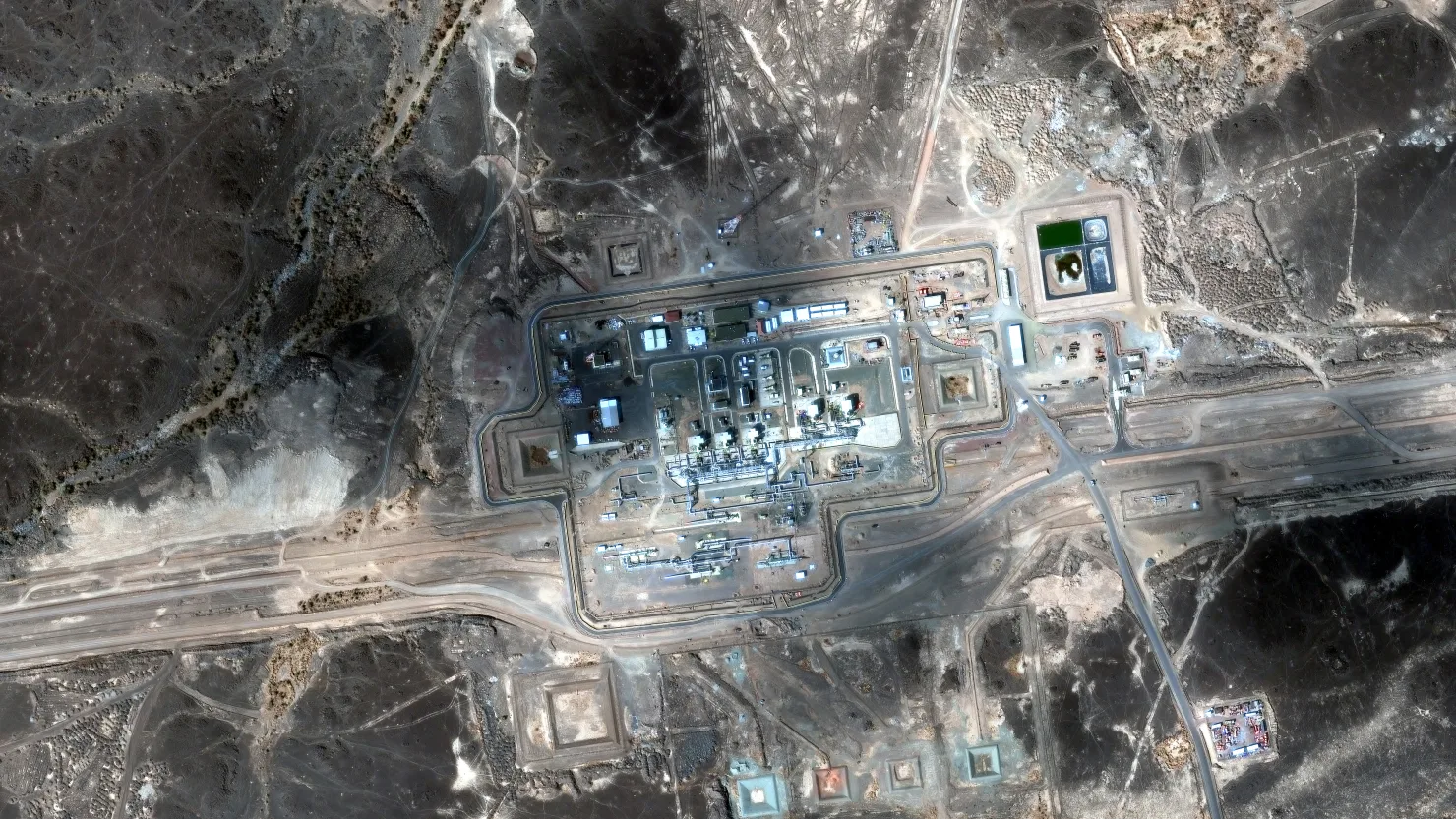
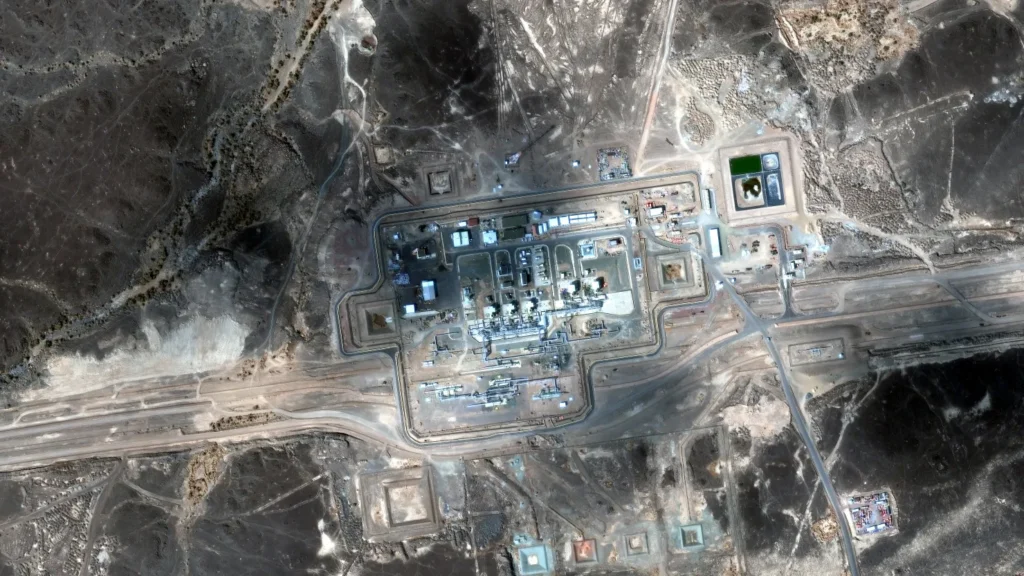
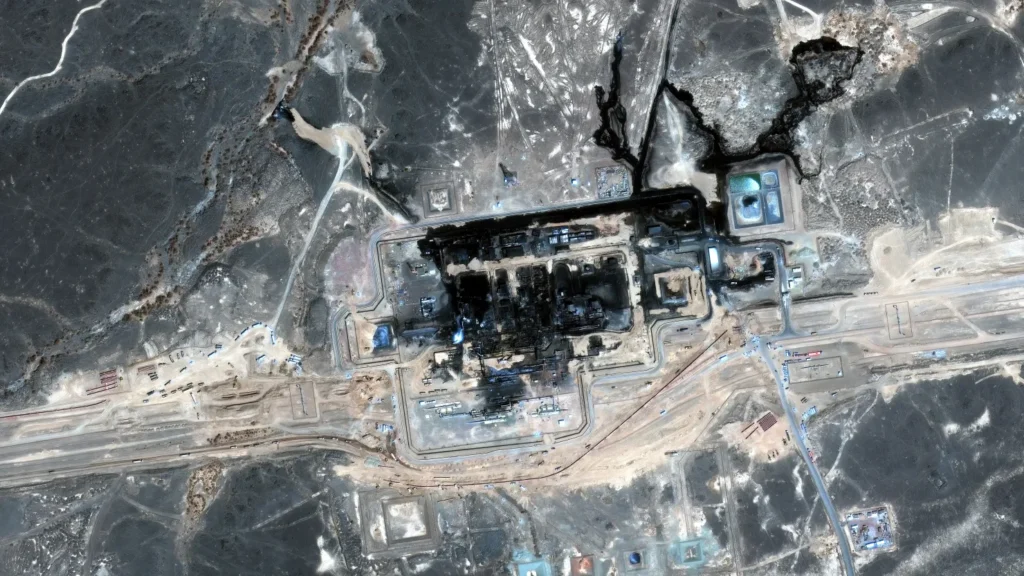
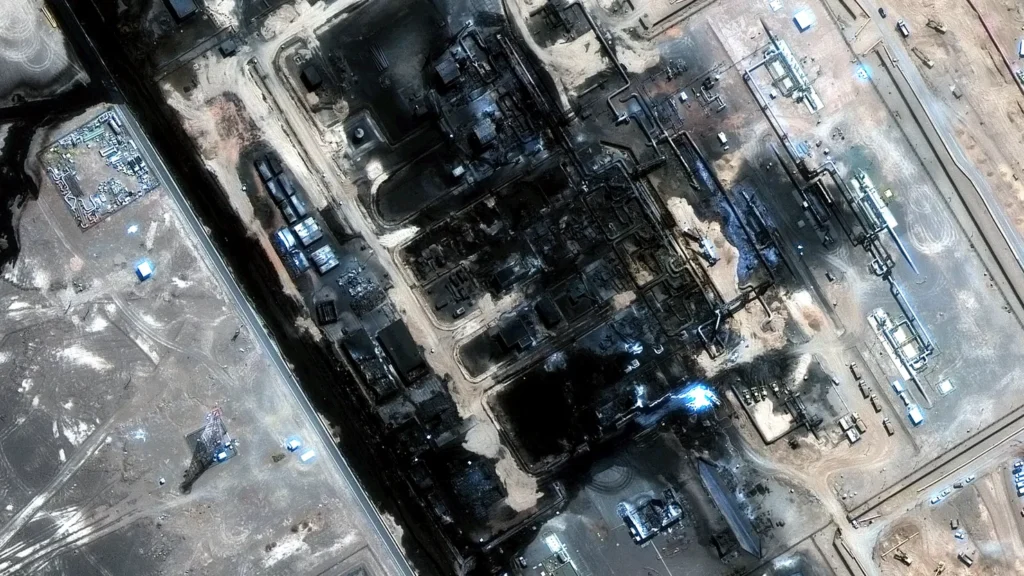
Newly released satellite imagery has revealed the scale of destruction at Saudi Arabia’s East-West pipeline, the kingdom’s primary route for moving crude oil away from the increasingly dangerous Strait of Hormuz, after a drone strike forced Riyadh to shut down the roughly 750-mile line entirely. The images, captured over the weekend and published through outlets including Al Jazeera and satellite imaging firm Vantor, show a pumping station left charred and structurally damaged, with blackened ground stretching across the surrounding facility.
The attack struck on September 11 and targeted a pumping station along the pipeline’s path, which carries crude from Abqaiq on Saudi Arabia’s eastern Gulf coast roughly 1,200 kilometers west to the Red Sea port of Yanbu. Early indications of the strike emerged days before the full extent of the damage became clear, when low-resolution satellite photos showed a large smoke plume rising from the pipeline corridor south of Medina, accompanied by spikes in infrared readings from NASA’s fire-tracking systems consistent with active, sustained burning. Detailed satellite analysis later confirmed clear impacts at two separate pumping stations, with one showing particularly extensive fire damage.
Saudi Arabia has blamed the attack on drones launched from Iraqi territory, a claim Iraqi authorities have acknowledged, tracing the aircraft to the southeastern Iraqi province of Maysan and opening a formal investigation. Iraq’s government condemned the attack and stated it does not accept its territory being used as a launchpad against any nation, adding that it would pursue legal action against anyone found responsible. Saudi Arabia’s foreign ministry said it had chosen not to respond militarily at this stage, at Iraq’s request, while reserving the right to take further action if necessary.
The timing and target of the strike carry significant weight given what the East-West pipeline represents for Saudi Arabia’s export strategy. With shipping through the Strait of Hormuz severely restricted amid the ongoing conflict between the United States and Iran, the pipeline had become Riyadh’s primary alternative for moving crude to international markets, carrying an estimated 5 million barrels per day toward Yanbu out of a total design capacity of roughly 7 million barrels per day following recent expansions. Saudi Arabia had specifically increased the pipeline’s capacity in 2026, converting parallel natural gas liquids lines to crude service, precisely to prepare for scenarios in which Hormuz became unreliable. The current shutdown represents an unexpected reversal of that contingency plan, since the very route built to insulate the kingdom from a closed strait is now closed itself.
Ben Cahill, a senior fellow at the Atlantic Council Global Energy Center, described the pipeline’s damage as a real blow to Saudi Arabia’s export flexibility, noting that the protective buffers that had carried the kingdom through the past six months have largely eroded. Saudi political analyst Khalid Bartafi warned that continued attacks on the pipeline could escalate into a broader crisis for the global community, and argued that the strike further reinforces Iran’s effective blockade of the strait, since Riyadh’s main workaround has now also been compromised. Bartafi suggested the episode sends a signal to Saudi Arabia and other Gulf states that Iran cannot be trusted to allow safe passage through the region’s key export routes.
Saudi Arabia does maintain limited crude reserves at Egyptian ports in Ain Sukhna and Sidi Kerir, which can supply customers for a short period while the pipeline remains offline, but those reserves are finite and would eventually be depleted if repairs take longer than expected. Oil buyers and traders have warned that Saudi Arabia could run through its exportable stocks within days if the line is not restored quickly, a scenario they estimate could remove as much as 4 percent of global oil supply from the market.
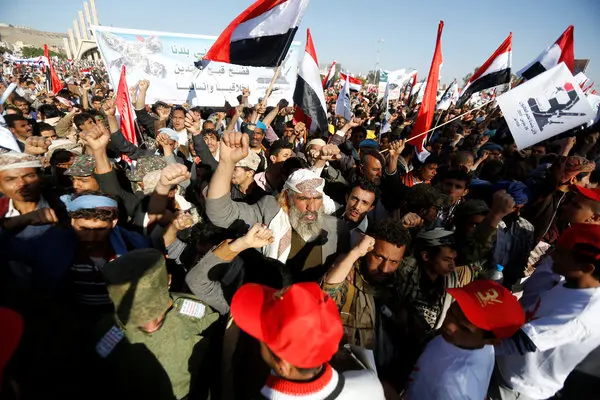
The pipeline shutdown compounds an already precarious situation for Saudi oil exports on multiple fronts. On the Red Sea side, Yemen’s Iran-backed Houthi movement has intensified its offensive against Saudi targets while simultaneously launching a rapid ground campaign to seize control of the Bab el-Mandeb Strait, another critical chokepoint for regional shipping located roughly 75 kilometers south of the pipeline’s terminus at Yanbu. Houthi forces captured the Red Sea port of Mocha and later completed their takeover of the strait itself, adding pressure to a Saudi export system that now faces disruption at both its eastern origin point and its western destination.
Global oil markets have responded accordingly. Brent crude climbed back above $100 per barrel for the first time since July, reflecting growing investor concern that Saudi Arabia, one of the world’s largest oil exporters, is running out of reliable routes to move its crude to international buyers. That price movement sits against a backdrop of broader supply anxiety across the Gulf, even as some analysts note a partial offsetting factor: TankerTrackers.com has reported that daily crude flows through the Strait of Hormuz itself have actually climbed above 10 million barrels per day in recent weeks, a notable rebound after months of Iranian restrictions, aided by a rise in ship-to-ship transfer activity near Fujairah where tankers are loading cargo at a comparatively safer anchorage in the Gulf of Oman before continuing on to international buyers.
Whether that partial rebound in Hormuz traffic can meaningfully offset the loss of the East-West pipeline remains uncertain, particularly given how quickly the broader conflict has continued to escalate across multiple fronts simultaneously. With Iraq investigating the source of the attack, Saudi Arabia weighing its response, and Houthi forces consolidating control over the Bab el-Mandeb Strait on the other side of the peninsula, the coming days are likely to determine how much lasting damage this latest strike inflicts on both Saudi Arabia’s export capacity and the broader stability of global energy markets. Continuing coverage of how the Middle East conflict is affecting global oil markets and shipping routes is available on Business Tech. Additional reporting and satellite imagery analysis of the pipeline damage can be found through Al Jazeera’s coverage of the story, and further market context is available through CNBC’s ongoing reporting on the conflict.