|
Getting your Trinity Audio player ready...
|
The World Trade Organization issued one of its starkest warnings in years on Tuesday, telling its 166 member governments that the rules underpinning global commerce have failed to keep pace with a rapidly changing world and risk breaking apart into competing regional blocs unless members commit to substantial reform. The warning, delivered in the WTO’s annual report from its Geneva headquarters, comes at a moment when trust in the multilateral trading system has been tested repeatedly by rising tariffs, industrial subsidies and deepening political rivalry between major economies.
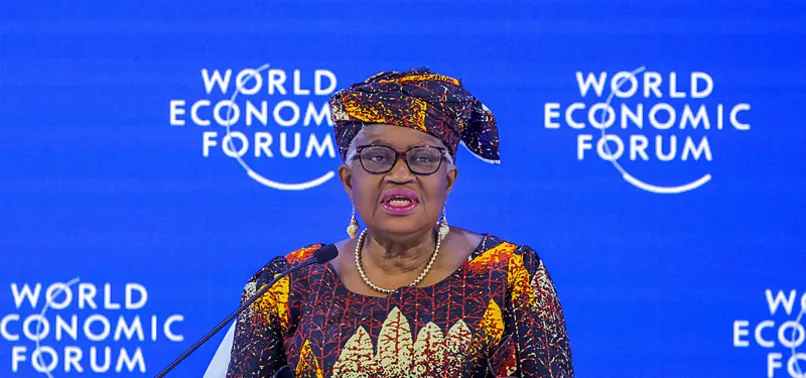
According to the report, existing WTO rules have struggled to keep up with shifts in global economic power, the growing use of industrial policy by major economies, the rise of digital trade, and escalating political tensions between the United States, China and other large trading powers. WTO Director-General Ngozi Okonjo-Iweala said the organization’s founding logic, that countries are better off cooperating through shared rules than acting unilaterally, remains as relevant today as it was when the WTO was established in 1995, even as she acknowledged the system’s current strain. She described the situation bluntly, saying it has placed the world trading system at a critical juncture, while noting the system remains resilient but not robust enough in its current form.
The financial stakes attached to inaction are significant. The WTO’s report warns that failing to carry out meaningful reform could result in a 10 percent loss of global GDP by 2050, a projection intended to underscore that the debate over WTO reform is not a purely bureaucratic or symbolic exercise but one with direct consequences for global economic output over the coming decades. The report also notes that global trade has expanded nearly fiftyfold over the WTO system’s roughly 80-year history, framing the current moment as a test of whether that long run of expansion can continue or whether fragmentation will begin eroding those gains.
Tuesday’s warning followed a significant setback earlier this year. WTO members failed to reach agreement on a reform package during a ministerial meeting held in Yaounde, Cameroon, in March, a outcome that led negotiators to relaunch talks in Geneva focused on some of the organization’s most contentious structural issues, including how the WTO makes decisions, how it resolves disputes between members, and how it should handle the growing use of government subsidies by major economies. Those three issues have become intertwined over the past several years, since disagreements over subsidies and industrial policy have repeatedly ended up in disputes that the WTO’s weakened enforcement system has struggled to resolve.
The dispute settlement mechanism sits at the center of the WTO’s credibility problem. The organization’s Appellate Body, the body responsible for hearing appeals in trade disputes, has been unable to function for several years because the United States has blocked the appointment of new judges, a standoff that has left the WTO without a fully operational way to enforce its own rulings. More than 120 WTO members have jointly called for the selection process for new appellate judges to move forward, but that call has so far not resolved the underlying disagreement, leaving the enforcement mechanism effectively paralyzed even as new disputes continue to accumulate.
Developing economies occupy a particularly important position in this reform debate, representing roughly two-thirds of the WTO’s total membership. According to the UN Trade and Development agency, trade between developing countries expanded from about $500 billion in 1995 to $6.8 trillion in 2025, now accounting for more than a quarter of global trade, a shift that has reshaped who has the most at stake in how WTO reform unfolds. The WTO has invested roughly $780 billion over the past two decades in programs designed to help developing economies strengthen trade infrastructure and institutions, and the organization has signaled that any reform package must continue prioritizing the integration of smaller and developing economies into global markets rather than focusing reform efforts solely on issues that matter most to wealthier trading powers.
The broader geopolitical backdrop makes reaching consensus on reform especially difficult. Much of the current strain on the multilateral trading system traces back to tensions rooted in domestic political constraints within both the United States and China, layered on top of the broader rivalry between the two economies, according to analysis from the Brussels-based think tank Bruegel. That dynamic has pushed some trading blocs toward negotiating their own bilateral and plurilateral agreements rather than waiting for WTO-wide consensus, a pattern some trade analysts argue is becoming the default operating environment for international commerce rather than a temporary disruption. The European Union, in particular, has been identified as a potential leader in building a coalition of middle powers to help push reform forward, given its extensive network of existing free trade agreements with countries also involved in the Comprehensive and Progressive Agreement for Trans-Pacific Partnership.
With WTO members set to gather again for the organization’s Global Review in October, the coming weeks are likely to test whether the renewed urgency behind Tuesday’s warning translates into actual progress on the specific sticking points that derailed talks in Cameroon earlier this year. Given how directly the WTO has now tied inaction to a measurable, long-term economic cost, the pressure on member governments to show tangible movement on reform, rather than another round of workarounds and partial fixes, appears higher than it has been in years. Continuing coverage of how global trade policy is shaping international markets is available on Business Tech. The WTO’s full annual report and additional detail on the reform discussions are available through the organization’s official site, and further reporting on Tuesday’s warning can be found through Reuters’ coverage of the announcement.