|
Getting your Trinity Audio player ready...
|
Sepehran Airlines Boeing 737 Suffers Mid-Air Structural Failure, Forces Emergency Return to Mashhad
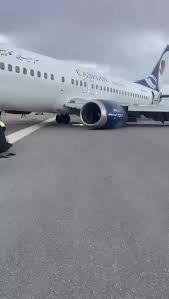
A domestic flight in Iran turned into a genuinely terrifying ordeal for passengers this week after a Sepehran Airlines Boeing 737 experienced a landing gear failure shortly after takeoff, triggering violent vibrations that tore loose sections of the cabin ceiling and sent overhead compartment panels crashing down on people below. The aircraft was operating a routine domestic route from Mashhad’s Hashemi Nejad International Airport to Kermanshah when the problem developed, forcing the crew to declare an emergency and turn back.
According to multiple reports citing Iranian outlets and flight tracking sources, the trouble began when a tire on the aircraft’s landing gear reportedly burst or came off entirely during takeoff, an event that in turn caused damage severe enough to trigger what’s being described as an engine malfunction. Whatever the exact chain of mechanical failure, the result inside the cabin was immediate and alarming. Passengers reported the aircraft began shaking violently, and video captured from inside the cabin, later shared by the Iranian news agency Akharin Khabar and picked up widely on social media including by the account Breaking Aviation News & Videos, shows the intensity of what unfolded. Ceiling panels can be seen breaking loose and falling into the passenger compartment, exposing sections of the aircraft’s internal structure, while overhead bins came open and sent passengers’ bags and belongings tumbling down, with some items reportedly striking people seated below.
The footage that’s circulated most widely captures passengers gripping their seats, screaming, and in several documented accounts, praying aloud, visibly believing they might not survive the flight. It’s the kind of raw, unfiltered fear that’s hard to overstate watching the video, and it’s understandable given what they were experiencing: a shaking aircraft, structural panels literally falling apart above their heads, and no immediate way of knowing whether the vibrations they were feeling meant the plane was coming apart entirely or whether it was, as turned out to be the case, a serious but survivable mechanical failure.
The pilots’ response was to abort the route to Kermanshah and turn the aircraft back toward Mashhad, where it landed safely a short time later. Despite how dramatic the in-cabin footage looks, preliminary reports from multiple outlets indicate no passengers or crew members were injured during the incident. Following the landing, the runway at Mashhad airport was briefly closed so ground crews could inspect it, standard procedure after any emergency landing involving a damaged aircraft, before it was reopened for normal operations. Passengers who had been aboard the affected flight were subsequently rebooked and transferred onto another aircraft to complete their journey to Kermanshah.
Exactly what caused the initial tire failure, and whether it was linked to a maintenance issue, wear, or something else entirely, hadn’t been officially confirmed as of the most recent reporting. Aviation incidents involving tire failure on takeoff aren’t unheard of industry-wide, but the resulting cascade here, an engine-related problem serious enough to produce vibrations strong enough to physically dislodge interior ceiling panels, points to a failure more severe than a routine blown tire alone would typically cause, and it’s the kind of detail that would normally draw scrutiny from Iranian civil aviation investigators as part of any formal review.
This isn’t an isolated black mark for the airline either. Reports note that this incident comes just weeks after a separate Sepehran Airlines Boeing 737-500 veered off the runway while landing, also at Mashhad airport, meaning the carrier has now had two notable safety incidents tied to the same airport within a relatively short stretch of time. That pattern alone is likely to draw closer attention to the airline’s maintenance practices and fleet condition going forward, particularly for an airline operating older 737 variants under the kind of parts and maintenance constraints that Iranian carriers have faced for years due to international sanctions limiting access to genuine Boeing replacement parts and factory-authorized servicing.
It’s also worth placing this incident in a wider context. Cabin interior failures during turbulence or mechanical stress aren’t unique to Iranian carriers or older aircraft. Just last year, passengers on an American Airlines Boeing 757 flight from San Francisco to Dallas described a similarly frightening experience when interior wall panels tore open mid-flight, and Alaska Airlines made global headlines in 2024 when a door plug blew off a Boeing 737 MAX 9 shortly after takeoff, triggering a broader regulatory grounding and inspection of that aircraft variant. Structural integrity failures involving interior panels or fuselage components, whether triggered by mechanical failure, pressure differentials, or maintenance oversights, remain one of the more visceral and viral categories of aviation incident precisely because passengers experience and record them in real time, well before investigators have had any chance to determine an actual root cause.
For now, what’s confirmed is that everyone aboard the Sepehran Airlines flight walked away physically unharmed, the aircraft is grounded pending inspection, and passengers who lived through several genuinely frightening minutes have a video record of exactly how close the situation felt to catastrophic, even though it ultimately ended without injury.