|
Getting your Trinity Audio player ready...
|
Zuckerberg Pushes Back on Calls to Slow AI Development, Says Labs Already Have Enough Incentive to Build Safely
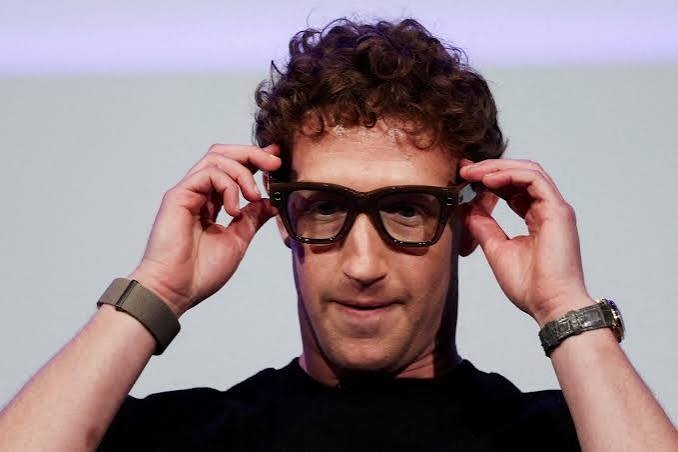
Mark Zuckerberg waded directly into one of the more consequential debates in tech right now this week, publicly disagreeing with growing calls from rival AI labs to deliberately slow down how fast artificial intelligence capabilities advance. In a post on X, the Meta CEO argued that competition and legal liability already give AI companies plenty of reason to prioritize safety on their own, without needing an industry-wide pact to throttle the pace of development.
Zuckerberg’s post came directly in response to an essay published days earlier by Anthropic CEO Dario Amodei, who argued that leading AI labs should deliberately pace how quickly their models gain new capabilities so that safety and alignment work has time to keep up. That essay had drawn rapid public agreement from OpenAI’s Sam Altman and Google DeepMind’s Demis Hassabis, creating what briefly looked like a rare moment of consensus among competing AI labs. Zuckerberg’s response broke that consensus, positioning Meta closer to Nvidia CEO Jensen Huang’s camp, which has generally favored continuing to push AI capabilities forward rather than voluntarily slowing down.
Zuckerberg’s core argument rests on the idea that market forces already do most of the work regulation or voluntary industry agreements would otherwise need to do. Every AI lab, he wrote, has both the responsibility and the practical ability to train its models at whatever pace safety actually requires, without needing outside coordination to force that discipline. His reasoning follows two tracks. First, he argued that ordinary users simply won’t want to use AI agents that behave unpredictably or fail to do what they’re asked, which he says gives labs a built-in commercial incentive to make their systems more aligned with user intent regardless of any external pressure. Second, he pointed to legal exposure, arguing that labs face serious liability if their models cause real-world harm, which he says creates its own strong deterrent against cutting corners on safety.
To back up the point that Meta isn’t just talking, Zuckerberg cited the company’s own decision to delay the release of Muse, its AI agent product, for several months earlier this year specifically to strengthen its security and safety review before shipping. He was careful to frame that delay as something Meta did quietly as part of normal internal process, not as a move Meta publicized or used to pressure competitors into matching, seemingly drawing a contrast with Amodei’s more public call for coordinated industry-wide pacing.
Where Zuckerberg diverged most clearly from Amodei was on the specific question of recursive self-improvement, the idea of AI systems that get progressively better at improving themselves with less human involvement. Amodei’s essay had called for slowing that particular capability specifically, treating it as one of the more acute near-term risks worth deliberately restraining. Zuckerberg countered that Meta has already addressed this concern in its own way, saying the company has directed what he called the significant majority of its compute capacity toward building products that serve people’s immediate, everyday needs rather than chasing self-improving AI systems, and that this allocation choice is itself one of the more effective ways to keep the technology’s development on a safer footing.
On the question of independent oversight, an idea both Amodei and Altman have publicly floated in the form of outside evaluators gaining access to frontier AI labs, Zuckerberg struck a more agreeable tone. He said Meta Superintelligence Labs already works with independent evaluators and advisors across several areas of its research, describing the practice as simply good, standard operating procedure rather than a new safety commitment being made in response to recent pressure. He added that other labs adopting similar practices would be a reasonable and achievable step, and suggested a broader, more diverse ecosystem of outside evaluators would benefit the industry generally, a position that lines up more closely with what Microsoft’s CEO has also said publicly on the same topic.
Zuckerberg’s response fits into a broader pattern that’s defined his public statements on AI throughout the year. In an extended essay published back in August, he argued that the U.S. should reduce barriers currently making it harder for American open-source AI models to compete against foreign alternatives, framing broad access to AI technology as ultimately safer than concentrating powerful models behind closed doors at just a handful of companies. That essay also confirmed Meta’s plans to resume releasing some open-weight models after a period of caution, alongside detailing the company’s roughly $145 billion 2026 capital spending budget, most of which is going toward building new data centers to support its AI ambitions. Notably, that same expansive vision for open access has coexisted uneasily with reporting that Meta’s own Superintelligence Labs leadership has at times discussed pulling back from fully open-sourcing its most capable models, suggesting Zuckerberg’s public philosophy and Meta’s internal deliberations haven’t always moved in perfect lockstep.
The disagreement between Zuckerberg and Amodei also lands amid a noticeably jittery reaction in AI-related stocks following Amodei’s original essay, with several chipmakers and AI-adjacent companies seeing declines as investors weighed what a genuine industry-wide slowdown might mean for the massive infrastructure spending several labs have already committed to. Zuckerberg’s public rejection of that slowdown premise, paired with Meta’s continued heavy capital spending plans, suggests the company isn’t planning to change its own trajectory based on Amodei’s proposal, even as it continues describing many of the same underlying safety practices, independent evaluators, delayed launches for security review, as something it already does as a matter of course.
Whether this disagreement settles into a genuine philosophical divide among the industry’s biggest players, or simply reflects each CEO framing similar internal practices through a different public lens, is likely to keep shaping how investors, regulators and the broader public interpret the pace of AI development heading into the rest of the year.