|
Getting your Trinity Audio player ready...
|
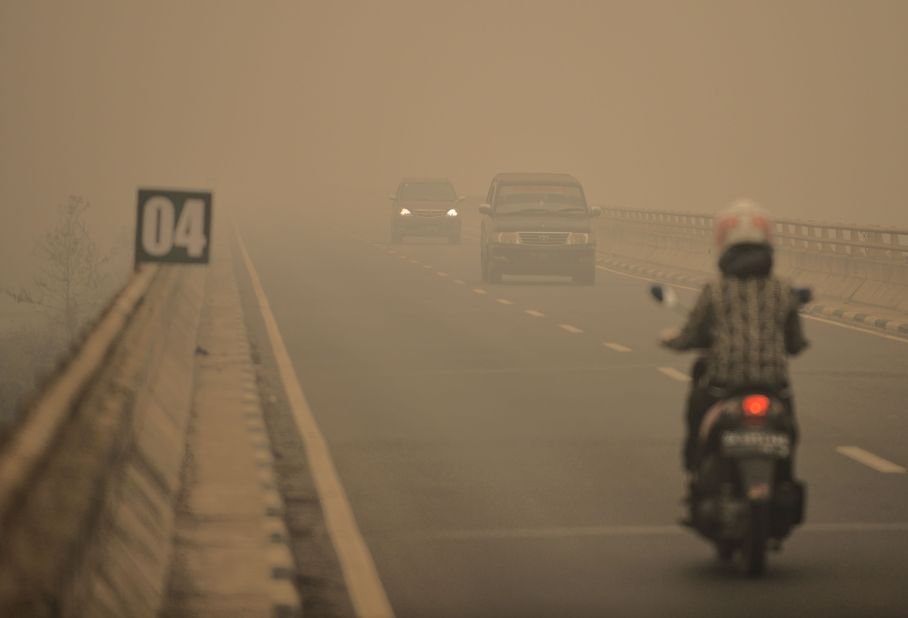
Thick haze has settled over the Indonesian province of West Kalimantan on the island of Borneo, choking the city of Pontianak and surrounding communities as the country battles its most intense wildfires in eleven years. Driven by what meteorologists are describing as super-El Niño conditions, the fires have pushed temperatures up and triggered punishing droughts across Indonesia’s peatland regions, and the resulting smoke has left children across the affected provinces struggling with coughs, fever, and breathing problems that local health clinics are now treating in overwhelming numbers.
The scale of exposure across the country is staggering. Health ministry data shows more than 12.5 million people have been exposed to haze from fires burning across seven provinces on Indonesia’s islands of Borneo and Sumatra. The number of people battling wildfire-related respiratory illnesses in those provinces more than doubled in the space of a week, climbing from 50,891 cases on September 1 to 113,336 by September 9. One local clinic reported treating 187 cases of breathing difficulty in just the first eleven days of September, compared to 422 cases for the entire month of August, with daily visits now ranging between 80 and 120 patients, according to the clinic’s own reporting.
The human toll behind those figures is playing out in homes and health clinics across the region. Mimi Marlina, a 45-year-old mother of two in Pontianak, described her own children battling respiratory problems ranging from coughing and sore throats to fever as she rode through the thickening haze to buy groceries and supplies. Despite wearing a mask herself, she said she struggled to breathe in the widespread pollution, which has repeatedly pushed air quality readings in the region to hazardous levels. Volunteers on Borneo have begun distributing oxygen cylinders directly to residents and firefighters struggling to breathe as respiratory illnesses continue climbing.
Further south, in South Kalimantan province, health workers diagnosed 36,196 cases of acute respiratory infection between July 12 and August 15 alone, across a province of roughly 4.4 million people. Reporting from Mongabay documented individual cases behind those statistics, including a young child whose cough persisted for three weeks before developing into a fever, and families in villages where fires came within 100 meters of homes, close enough that residents joined community efforts to beat back flames with pieces of wood before firefighters arrived. Indonesia’s Health Ministry has said 3.4 million people are considered at risk of respiratory infection due to smoke exposure, and the fires have forced widespread school closures across affected provinces as authorities try to limit children’s direct exposure to the toxic air.
The smoke hasn’t stayed confined within Indonesia’s own borders either. Haze drifting from fires in Kalimantan has settled over the Malaysian state of Sarawak, located on the same island of Borneo, pushing air quality to hazardous levels there as well and forcing the cancellation of outdoor Malaysian Independence Day celebrations in August. The smoke has reached peninsular Malaysia, Brunei, and Singapore too, with Malaysian officials describing the episode as the region’s worst haze crisis in a decade, and treating roughly 13,500 people for respiratory infections in July and August alone. According to the Indonesian government, fires burned more than 200,000 hectares between January and July across Borneo and Sumatra, an area roughly three times the size of Jakarta.
Much of the underlying fuel for these fires comes from Indonesia’s carbon-rich peatlands, low-lying deltas and plains across Borneo and Sumatra that have been extensively cleared over the years, often to make way for palm oil plantations. That land clearing, combined with weak land tenure enforcement that has sometimes turned deliberate burning into a tool used in disputes between local communities and plantation companies, creates conditions that El Niño years like this one push toward genuine crisis. Peatland fires are notoriously difficult to extinguish once established, since they can smolder underground for extended periods even after surface flames appear contained, a characteristic that helps explain why haze events tied to peatland burning tend to persist far longer than typical forest fires.
The long-term health consequences of this kind of prolonged smoke exposure extend well beyond the immediate coughs, fevers, and breathing problems currently filling local clinics. Research examining Indonesia’s severe 1997 wildfire season found that smoke exposure that year was linked to more than 15,600 child, infant, and fetal deaths, with poorer communities disproportionately affected. Toxicants inhaled during pregnancy have been shown to interfere with fetal nutrition and oxygen flow, and researchers have documented that smoke-contaminated air, soil, and food carry particular risk for both prenatal and postnatal child health, effects that can persist well beyond the weeks or months any given fire season actually burns.
For families like Siti Zahra’s in West Kalimantan, who told reporters she’s brought her two children to a health clinic three separate times in a single month as they cycle through stomachaches, fever, coughs, and runny noses, the crisis has become an inescapable part of daily life. Ash covers homes regardless of how often residents sweep, and many parents have simply stopped letting their children go outside at all. Indonesia’s fires have burned before, including a particularly devastating 2015 season that scorched more than 2.5 million hectares and caused an estimated $16 billion in losses, but residents in West Kalimantan quoted across multiple news reports this month describe conditions worse than anything they’ve experienced in years, a distinction that, for families watching their children struggle to breathe, offers little comfort regardless of how the current season eventually compares to past ones in the historical record.
For more coverage of environmental and public health crises across Southeast Asia, visit Business Tech.