
|
Getting your Trinity Audio player ready...
|
UK’s Burnham and Canada’s Carney Hold First Bilateral Meeting, Agree on AI Safety and Defence Cooperation
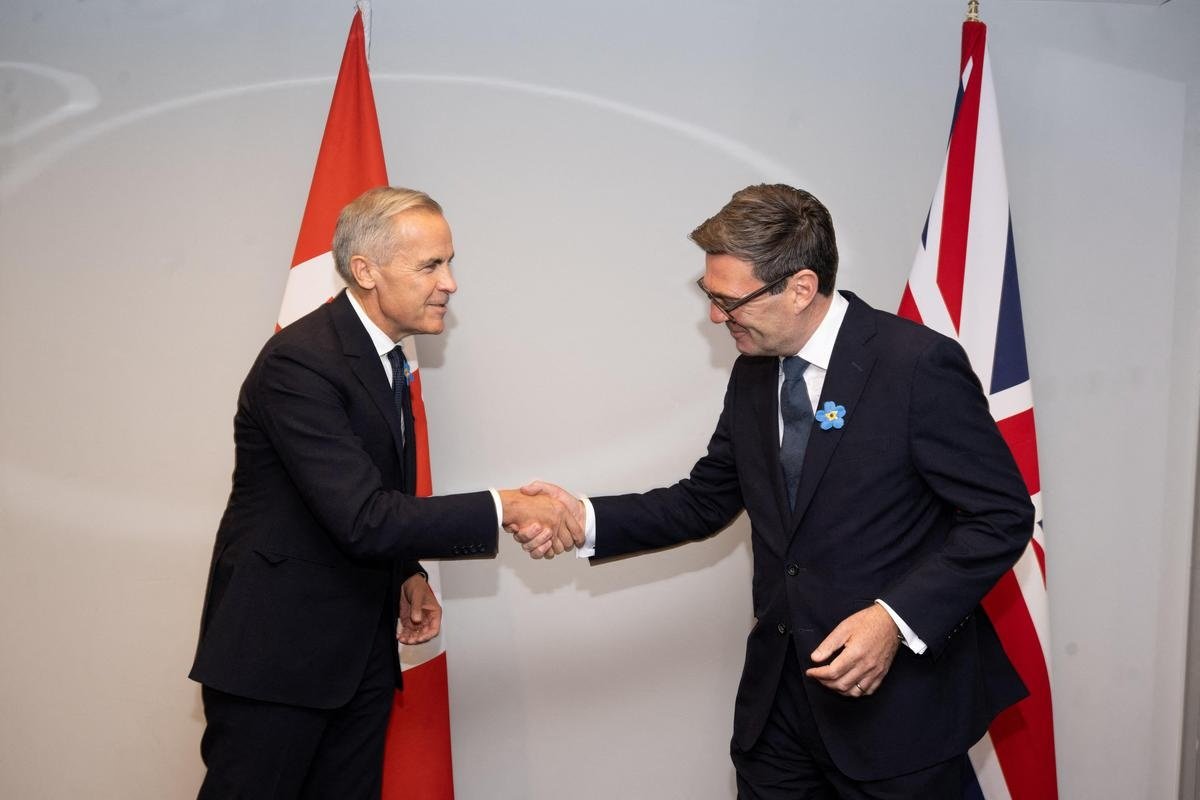
British Prime Minister Andy Burnham and Canadian Prime Minister Mark Carney sat down for their first bilateral meeting as counterparts this week, and artificial intelligence risk turned out to be one of the central topics on the agenda, alongside a broader push to deepen defence ties between the two countries. The meeting took place in Liverpool on September 16, with Downing Street confirming afterward that both leaders had discussed the opportunities and challenges AI presents and agreed that governments and the technology sector need to work together to address shared concerns and protect online safety.
The AI conversation didn’t happen in isolation from the wider debate currently playing out across the tech industry. Just days before the meeting, Burnham’s spokesperson had welcomed the fact that companies building the most advanced AI systems were increasingly talking openly about the technology’s risks alongside its benefits, a comment that lines up with a string of recent public statements from AI lab leaders about the need for caution as capabilities keep advancing. The spokesperson added that any policy response needs to be grounded in evidence rather than speculation, while also acknowledging that existing regulatory frameworks may not stay adequate as AI systems become more capable, a fairly candid admission that governments are still catching up to a technology moving faster than the rules built to govern it.
Beyond the AI discussion, defence cooperation made up a significant part of the agenda too. The two leaders talked about the complementary roles of the Multilateral Defence Mechanism and the Canada-led Defence Security Resilience Bank, an initiative that has had a rockier path toward broader European buy-in than Canada might have hoped. Britain and Germany had both kept their distance from the DSRB when it was first proposed, but that stance has shifted somewhat on the UK side. Back in June, then-Chancellor Rachel Reeves told Parliament the government was working closely with Canada on the initiative, before being replaced as finance minister by John Healey the following month. Both prime ministers reportedly stressed the importance of building closer ties with European partners more broadly, particularly around trade and defence, suggesting the DSRB conversation is part of a wider effort to bring more of Europe on board over time.
Defence-industrial cooperation came up in an earlier portion of the visit as well, when the two leaders met in northern England to discuss the Global Combat Air Programme, a joint advanced fighter jet initiative that Canada formally joined as an observer back in July 2026. Expanding collaboration on that program was described by Carney’s office as one of the opportunities the two sides explored during the visit, adding a concrete industrial dimension to what was otherwise a fairly high-level diplomatic exchange.
The visit wrapped up on a considerably more casual note than most bilateral meetings tend to. Burnham and Carney capped the day by attending an Everton football match together at Liverpool’s Hill-Dickinson Stadium, where Everton faced Wolverhampton Wanderers. The football outing wasn’t just a courtesy gesture either. Burnham, a lifelong Everton supporter dating back to the 1970s, reportedly promised during his first phone call with Carney back in July that he’d roll out the blue carpet for the Canadian leader whenever they eventually met in person. Carney’s own connection to the club reportedly comes from family ties in Liverpool, along with the years he spent living in the city while serving as Governor of the Bank of England, a role that predates his move into Canadian politics.
Coverage of the meeting across British outlets has leaned fairly heavily on that football moment as much as the policy substance, with headlines from CTV News, the Belfast Telegraph and the Evening Standard all leading with the Everton match rather than the AI and defence talks themselves. That’s not unusual for this kind of diplomatic visit, where a shared cultural moment often ends up being the more memorable, photogenic takeaway compared to the more technical language of joint statements on regulatory frameworks and defence banks.
Still, the substance of what was discussed matters beyond the optics. AI governance has become one of the more urgent items on the agenda for governments worldwide this year, as leading AI labs themselves have grown more vocal about the pace of development and what safeguards should accompany it. A UK-Canada conversation specifically framed around governments and the tech sector needing to work together, rather than governments regulating from the outside looking in, reflects an approach that leans toward collaborative oversight rather than purely top-down restriction, though neither country has announced any specific new joint policy or regulatory commitment stemming directly from this meeting.
For now, what’s confirmed is an agreement in principle: both governments see AI risk and online safety as areas requiring closer cooperation with industry, and both see value in strengthening UK-Canada defence ties through existing mechanisms like the DSRB and joint programs like the Global Combat Air Programme. Whether either commitment translates into something more concrete in the months ahead will likely depend on how quickly the broader international conversation around AI regulation continues to move.