|
Getting your Trinity Audio player ready...
|
ABC News has obtained a new set of images showing damage to American military assets across the Middle East from Iranian missile and drone attacks, adding to a growing body of evidence suggesting the Pentagon has significantly understated how much punishment US bases in the region have actually absorbed since fighting resumed with Iran earlier this year. The images, captured at three US bases in Kuwait and a Saudi Arabian base housing American assets, show damaged buildings and at least one destroyed aircraft, and they follow a similar disclosure by CBS News just days earlier that first pulled back the curtain on the scale of the damage.
According to ABC News, among the photos obtained is what appears to be a Boeing E-3 Sentry, a surveillance aircraft used for early warning and valued at roughly $270 million, damaged in late March at Prince Sultan Air Base in Saudi Arabia. Separate CBS News reporting, citing images provided by active service members on condition of anonymity due to military media restrictions, described the same aircraft in starker terms, showing a direct hit on the back half of the four-engine plane, its tail severed from a charred fuselage that had supported the aircraft’s rotating radar system. Additional images reviewed by both outlets show hollowed-out buildings and barracks at Camp Buehring in Kuwait, alongside damaged trailers and radar systems at other facilities across the region.
The gap between what’s actually happening on these bases and what’s being communicated publicly is the central thread running through both news organizations’ reporting. One deployed service member told CBS News plainly, “This is major damage to our bases that hasn’t been communicated to the American public,” adding that the situation amounts to American forces standing exposed while attacks continue landing largely unaddressed. A separate service member who spoke to ABC News echoed that same frustration, describing regular drone and ballistic missile strikes hitting bases on an ongoing basis while the Pentagon treats the situation as though it were routine and unremarkable, rather than the sustained military crisis those actually stationed there say it feels like.
That frustration carries particular weight given comments from Defense Secretary Pete Hegseth following a deadly March 1 attack on the Port of Shuaiba in Kuwait that killed six US troops, when he characterized incoming strikes that occasionally penetrate defenses as unfortunate “squirters,” a term one service member speaking to CBS News specifically rejected as inaccurate. According to that service member, what’s happening isn’t a rare leak through otherwise effective defenses, it’s American forces largely unable to intercept incoming fire at all, watching bases absorb hits rather than successfully defending against them.
The scale of the underlying damage has some official documentation behind it as well, beyond the photos themselves. A Pentagon inspector general report released earlier this week confirmed that US Central Command, which oversees American forces across the Middle East, had internally reported widespread damage to facilities and equipment throughout the region. The Defense Department has separately estimated total war costs at $33.4 billion as of late June, a figure that reflects the cumulative financial toll of sustained combat operations and battle damage repair rather than any single incident. Despite that internal accounting, the Pentagon has not provided public information detailing the specific extent of damage inflicted on US bases across Kuwait, Bahrain, Qatar, the UAE, Saudi Arabia, Iraq, Oman, and Jordan, leaving independent satellite imagery and now these firsthand photographs as the primary public window into what’s actually happened at these sites.
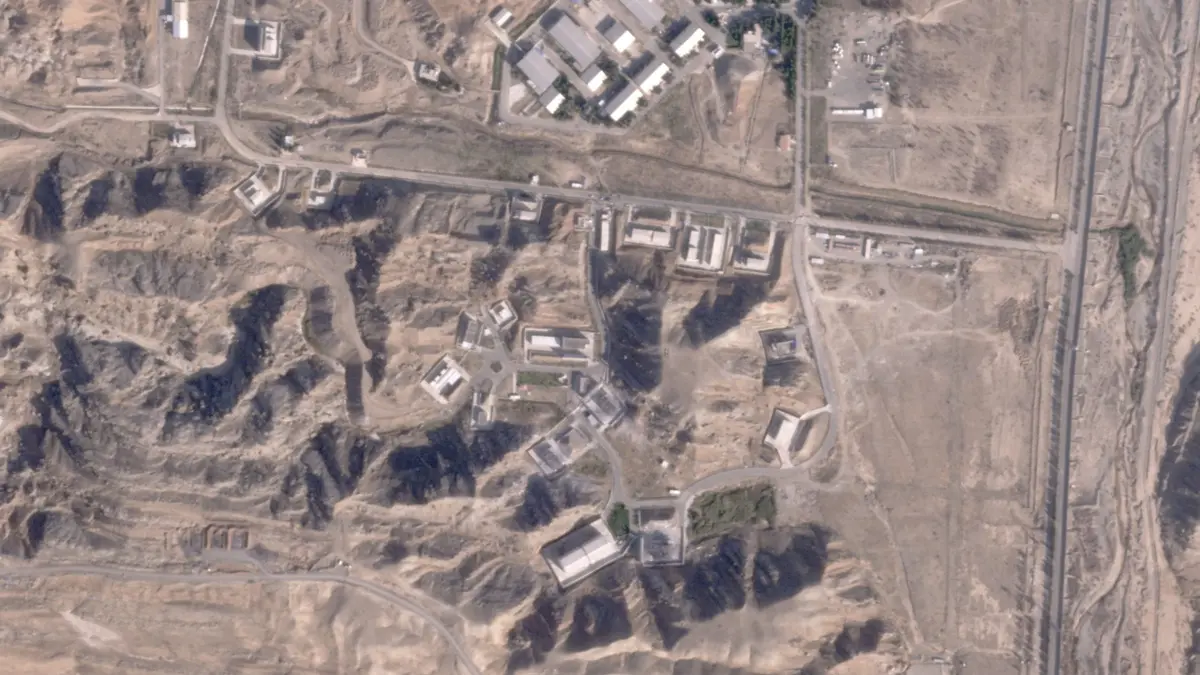
That imagery gap hasn’t gone entirely unaddressed by outside analysts. An earlier ABC News visual analysis, drawing on satellite imagery and video from July, identified damage at bases in Jordan, Bahrain, and Qatar, along with a former UN base camp and industrial area in Kuwait, tied to Iranian-claimed missile and drone strikes. Satellite imagery specifically showed apparent damage to a warehouse building at the US Navy’s 5th Fleet Headquarters in Bahrain, a site analysts described as one Iran has targeted repeatedly since the conflict began. Sam Lair, a fellow at the Foreign Policy Research Institute, told ABC News at the time that despite President Trump’s public characterization of having “demolished” Iran’s military, Iran had continued demonstrating it retained sufficient capability to carry out these kinds of strikes. Ken Pollack, vice president for policy at the Middle East Institute and a former CIA military analyst, offered a similar read, suggesting Iran has been deliberately targeting sites it knows it can reliably hit while avoiding civilian targets specifically to control the pace of escalation and limit the risk of a harsher US response.
The human cost behind these strikes has already been significant even beyond the buildings and aircraft shown in the newly obtained images. Three US service members were killed in Jordan in July, along with one additional service member killed in Iraq, both attributed to Iranian attacks. Fighting between the two countries has continued intermittently since an April ceasefire brought an end to the most intense phase of full-scale conflict, one that had also involved Israeli forces striking Iranian targets directly. Since then, the US and Iranian militaries have continued trading strikes across the region in periodic bursts lasting days or weeks at a time, a pattern that shows little sign of resolving even as the Pentagon has generally avoided detailed public disclosure of the resulting damage.
For American service members stationed across these Gulf and regional bases, the message coming through in both the CBS and ABC reporting is consistent and direct, they believe the American public has been kept largely in the dark about conditions they’re living through daily. Whether the Pentagon responds to this latest round of disclosures with more detailed public accounting of the damage its forces have sustained, or continues treating ongoing strikes as a matter not requiring broader public explanation, will likely shape how much additional firsthand documentation from service members on the ground continues finding its way to news organizations in the weeks ahead.
For more coverage of Middle East conflict developments and US military affairs, visit Business Tech.