|
Getting your Trinity Audio player ready...
|
Most people carry a quiet story about who they are, shaped by where they started, what happened to them, and what they were told they could or couldn’t become. That story feels less like a choice and more like a fact, fixed and unchangeable.
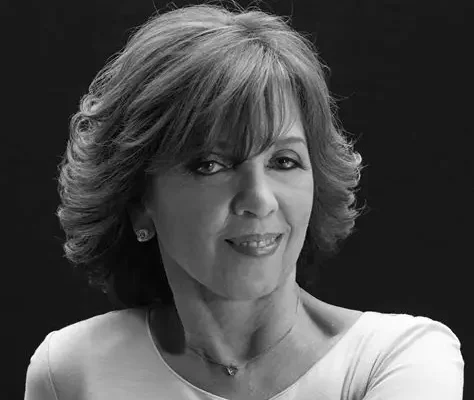
Academy Award-winning actress Viola Davis, who has spoken openly about growing up in poverty before building one of the most respected careers in her industry, pushed back against that idea directly. Life isn’t handed to you as a finished script. It can be rewritten, not by erasing where you came from, but by refusing to let where you came from be the only thing that decides where you end up.
Here’s where people sometimes misread this idea. Recreating a life doesn’t mean pretending the difficult parts never happened, or that starting over is easy. It means the past gets to inform the story without being allowed to dictate its ending.
Picture two people who both grew up with very little money. One decides that early struggle set a ceiling on what’s possible, and quietly stops reaching for more than what feels safe. The other treats that same struggle as the starting chapter of a longer story, one that includes new choices, new skills and new chapters still being written. Neither person’s past changes. What changes is whether that past gets to write every chapter that comes after it. That’s the real weight behind Davis’ words.
Ask Which Parts of Your Story Are Facts and Which Are Just Habits
Instead of accepting the whole narrative about your life as settled, it helps to separate what actually happened from the conclusions quietly built on top of it. “I grew up without much” is a fact. “So I’ll never have much” is a habit of thought, not a fact, and habits of thought can be examined and changed even when the facts underneath them can’t be
Deciding your life can be recreated is only the starting point. The actual recreation happens through specific, repeated choices, a skill learned, a habit changed, a door knocked on despite the odds. Waiting to feel fully transformed before acting differently usually means waiting indefinitely. The acting differently is what produces the transformation, not the other way around.
Recreating a life rarely moves in a straight line. There will be setbacks that feel like proof the old story was right all along. Davis’ own path included plenty of difficulty even after early success. A setback isn’t evidence that the rewrite failed, it’s simply part of what rewriting usually looks like up close. Treating every setback as final is what actually ends the process, not the setback itself.
This isn’t a single decision made once and then finished forever. People can recreate their lives more than once, and often need to. A career reinvention in your twenties doesn’t exempt you from needing another one later, whether by choice or by circumstance. Staying open to redefinition, even after success, is what keeps the story moving instead of settling into a new, comfortable version of the old ceiling.
How to Put This Into Practice
You don’t need a dramatic reinvention to live by this idea, you just need to keep questioning which parts of your story are still true simply because no one has challenged them lately.
At work: is there a belief about what you’re capable of that was formed years ago and never actually re-tested since?
In business: is there an old limitation, on funding, on market, on scale, that made sense once but hasn’t been re-examined against your current situation?
In personal life: is there a version of yourself you’re still living up to, or living down to, that no longer reflects who you’ve actually become? The past explains where the story started. It was never meant to write the ending on its own.
Viola Davis’ quote challenges an assumption many people carry without examining it: that their circumstances of origin quietly set the limits of what’s possible for them. In reality, those circumstances are the opening chapter, not the whole book.
Choosing to redefine your life doesn’t mean rejecting where you came from. It means refusing to let that starting point be the only thing that gets a say in where the story goes next, which is likely why an actress who once had very little found herself, years later, describing exactly how she got from there to here.