|
Getting your Trinity Audio player ready...
|
Xiaomi Brings Back Its Transparent Phone Tradition With a Red Special Edition of the 18 Pro
Xiaomi has revived one of its more distinctive design traditions with the launch of Transparent Special Editions for its newly unveiled 18 Pro and 18 Pro Max flagships, unveiled alongside the standard models in China on September 23. The look is bold, unmistakably red, and a clear callback to a design language Xiaomi hasn’t touched on a flagship phone in several generations.
Despite the name, calling these phones genuinely transparent is a bit of a stretch, and Xiaomi itself is fairly upfront about that. Rather than an actual see-through back panel, the company achieves the effect through what it describes as a micron-level film process, layering a deep red finish over a raised, three-dimensional embossed texture that mimics the appearance of visible internal components sitting just beneath the surface. It’s less a window into the phone’s actual hardware and more a stylized, tactile illusion of one, closer to relief artwork than genuine transparency, but reviewers who’ve gotten early hands-on time with the devices have generally praised how convincing and well-crafted the effect actually looks and feels in person.
The design isn’t coming out of nowhere either. Xiaomi previously offered similarly styled transparent editions on earlier flagships, including the Mi 8, Mi 9 and Mi 10 Ultra, before the concept quietly disappeared from the company’s more recent flagship lineups. Bringing it back for the 18 Pro series marks a deliberate return to that earlier design identity, dressed up with several years’ worth of manufacturing refinement behind it.
Both special editions ship in a single, maxed-out configuration: 16GB of LPDDR5X RAM paired with 1TB of UFS 4.1 storage, positioning them squarely as a premium option for buyers who want the top-tier internal specs to match the standout exterior rather than a budget-friendly variant of the design. That positioning shows up clearly in the pricing too. The 18 Pro Transparent Special Edition starts at 9,999 yuan, roughly $1,492, while the larger 18 Pro Max version runs 10,999 yuan, about $1,642, a real premium over what the standard color options cost for the same underlying hardware.
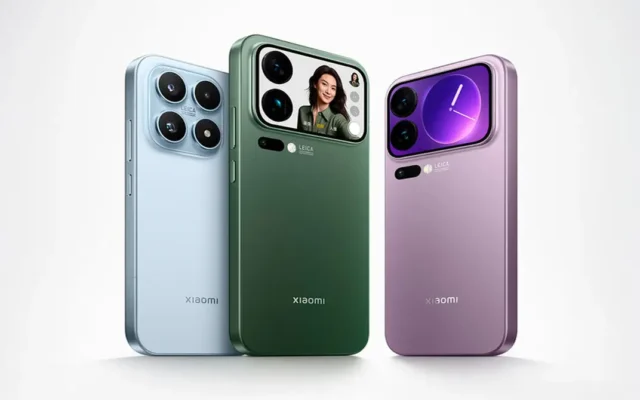
Xiaomi extended the theme well beyond just the phone’s back panel. Both the primary display and the secondary rear screen, a smaller display built into the camera module that Xiaomi has used across recent generations for notifications and selfie framing, come loaded with custom wallpapers depicting a digital rendering of the phone’s internal circuitry and components, tying the software experience directly to the physical design concept. The retail packaging carries the theme through as well, with Xiaomi including a matching transparent red charging brick and data cable in the box rather than shipping the special edition with standard black accessories.
Underneath all of that styling, the hardware is identical to the standard 18 Pro and Pro Max models, which means buyers are essentially paying the design premium purely for the aesthetic rather than any functional upgrade. The 18 Pro runs on Qualcomm’s Snapdragon 8 Elite Gen 6 chipset, built on a 2-nanometer process, paired with a 7,000mAh silicon-carbon battery. The larger Pro Max steps up to the more powerful Snapdragon 8 Elite Extreme Gen 6, also a 2-nanometer chip, backed by an even larger 8,500mAh silicon-carbon battery. Both models support 100W wired charging, 50W wireless charging and 27W reverse charging, and both use OLED displays with adaptive refresh rates ranging from 1 to 120Hz, along with a circular cold-pump cooling system to manage heat during sustained heavy use. A hardware-level privacy feature lets the screen blur automatically when viewed from the side, keeping onlookers from easily reading what’s on the display.
Camera duties across both special editions run through a Leica-branded triple system, headlined by a 200-megapixel main sensor, a second 200-megapixel periscope telephoto lens offering 3.2x optical zoom, and a 50-megapixel ultrawide camera rounding out the setup. Software runs on Xiaomi’s HyperOS 4 with the company’s Super XiaoAI 2.0 assistant layered on top, and both phones include UWB support, NFC, an IP water and dust resistance rating, and Dolby Atmos audio support.
Xiaomi has confirmed that the standard 18 Pro and 18 Pro Max will launch globally later this year, following the same naming pattern the company has increasingly leaned into, one that closely mirrors Apple’s own Pro and Pro Max branding for the iPhone. The Xiaomi 18 Pro Fold, a separate foldable model announced alongside the Pro series, will remain exclusive to China. Whether the Transparent Special Edition itself makes the jump to international markets is still an open question, since Xiaomi hasn’t confirmed global availability or pricing for that specific version yet, leaving buyers outside China to wait and see whether they’ll get a shot at the red, embossed design or only the standard flagship colorways when the wider rollout eventually arrives.
The launch also reflects a broader pattern taking shape across the premium phone market this year, where transparent and limited-run special editions have increasingly become a way for manufacturers to stand out in a segment where core specs across rival flagships have started to look fairly similar year over year. Xiaomi leaning back into its own transparent design heritage, rather than simply chasing a new gimmick, gives the 18 Pro Transparent Special Edition a bit more identity than a typical limited color drop, even if the phone hiding underneath the red shell is exactly the same device everyone else is already buying.