|
Getting your Trinity Audio player ready...
|
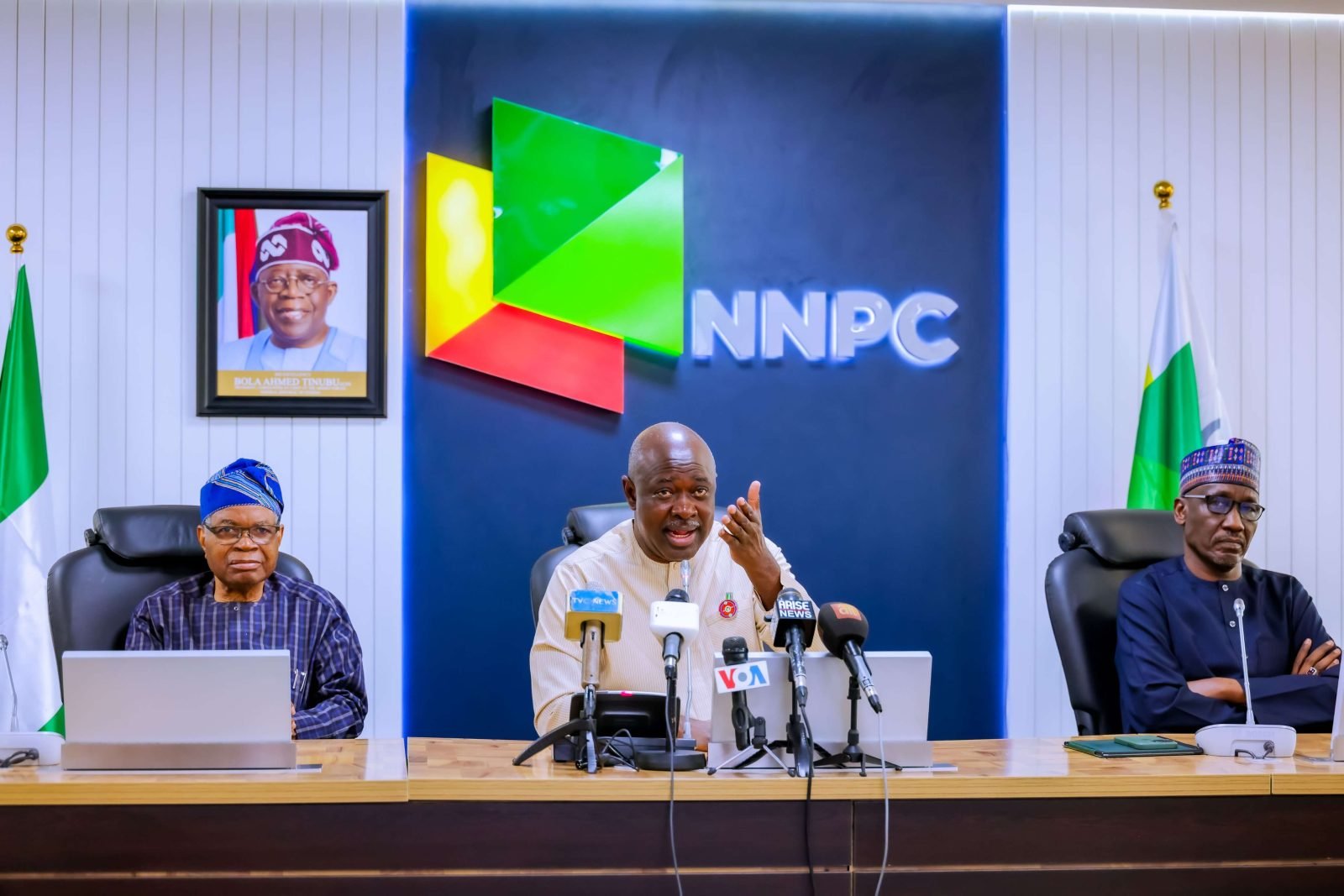
The Federal Government says Nigeria’s crude oil production has climbed by 80 percent over the past three years to 1.824 million barrels per day, a headline claim that has landed in the middle of a long-running debate about how the country measures its output. Minister of State for Petroleum Resources Heineken Lokpobiri made the statement during an interactive session with Niger Delta media organisations at the Bayelsa State Government House, as reported by The Guardian Nigeria. The announcement offers a hopeful reading of the oil sector’s recovery, but the monthly numbers from the industry regulator tell a more careful story.
According to the report, Lokpobiri said that when he took office, Nigeria was producing less than 1 million barrels per day of crude and condensate. The remark followed praise from a media executive for the progress made under President Bola Tinubu, including reforms, new investment and renewed activity across the industry. The minister pointed to deepwater projects by Shell and ExxonMobil, among them Bonga North, Bonga Southwest and Zabazaba. He also said international oil companies once controlled about 90 percent of production, while indigenous companies now account for roughly 60 percent.
On the surface, the claim fits a real trend. Production did sink to very low levels in 2022, when crude theft, pipeline sabotage and underinvestment pushed output to around 1.1 million barrels per day by the end of that year, according to figures reported at the time. Output has since recovered. Regulator data showed crude and condensate output of 1.737 million bpd in January 2025, then 1.71 million bpd in July 2025, made up of about 1.507 million bpd of crude and roughly 205,000 bpd of condensates. National Petroleum Company Limited chief executive Bayo Ojulari has also said the country averaged between 1.6 million and 1.7 million bpd last year. Measured against late 2022, the improvement is substantial.
The arithmetic behind the 80 percent figure is worth a second look. If 1.824 million bpd represents an 80 percent rise, the starting point would be just over 1 million bpd. That is close to the minister’s description of a starting level below 1 million, but higher than the 1.1 million bpd commonly cited for late 2022, which would imply a gain nearer 66 percent. The gap comes down to which starting month is used and whether the number includes condensate, a light liquid that is counted in total output but not in the crude oil quota set by OPEC. The government has not published the baseline behind the 80 percent figure, so the exact percentage cannot be verified from public data.
The 1.824 million figure itself is the harder part to match. The Nigerian Upstream Petroleum Regulatory Commission, known as NUPRC, reported that combined crude oil and condensate production averaged 1,677,777 bpd in August 2026, up 0.4 percent from 1,670,890 bpd in July, according to Vanguard. The commission said the lowest daily reading in August was 1.64 million bpd and the highest was 1.71 million. In other words, even the best single day last month came in below the minister’s number. Excluding condensates, Nigeria produced 1,500,190 bpd of crude, which the commission described as 100 percent of its OPEC quota of 1.5 million bpd and the fourth straight month of meeting it.
That gap suggests the 1.824 million figure refers to something other than the August monthly average. It could reflect a recent peak, a different measure, or production capacity rather than actual output, though the minister’s office has not said which. This is not the first time such a difference has surfaced. In April, BusinessDay reported that regulator data showing a crude average of about 1.49 million bpd, and 1.66 million bpd with condensates, fell well short of a 1.84 million bpd level cited by government officials. The regulator noted at the time that daily peaks, which reached 1.85 million bpd that month, can sit far above the monthly averages used to judge compliance with OPEC rules.
Other benchmarks tell the same story. OPEC’s September report, covering August, put Nigeria’s crude production at 1.50 million bpd based on figures the country submitted directly, slightly below 1.505 million in July and below 1.555 million in June. Independent estimates compiled by OPEC placed August output higher, at about 1.57 million bpd. The 2026 budget was built on 1.84 million bpd including condensates, which means actual production is still running about 160,000 barrels per day short of the planning assumption. The government has also set a more ambitious target of 2.6 million bpd for the year, though it uses a lower figure for budgeting.
The shortfall matters because oil still carries the public finances. Crude exports account for around half of Nigeria’s total export earnings, and the country earned roughly 31.5 billion US dollars from crude oil in 2025, according to published estimates. Each additional 100,000 barrels per day adds meaningful foreign exchange and government revenue when prices hold up, and every barrel below the budget benchmark leaves a gap that has to be filled by borrowing or spending cuts. That is why the difference between a peak figure and a monthly average is not a technical footnote. It affects revenue forecasts, currency stability and how much room the government has to spend.
There is good news in the details, too. NUPRC said the small August gain came largely from fixing a mooring problem at the Erha field, which had hurt output the month before. Domestic demand is also rising. Data from the tracking firm Kpler showed the Dangote refinery received 565,000 bpd of Nigerian crude in August, almost double its average of 280,000 bpd last year. The refinery has a capacity of 700,000 bpd, and more local refining means a bigger share of crude that stays in the country rather than being exported raw.
The obstacles that held production back for years have not gone away. Ageing fields, crude theft, funding gaps and delays in upstream investment all continue to limit what the industry can reliably pump. Analysts quoted in recent coverage say the policy goals, including a medium-term target of 2 million bpd, remain ahead of what operators have so far delivered month after month. Private operators are moving to close the gap, and some indigenous firms have announced large drilling campaigns, but new wells take time to translate into sustained barrels.
For readers trying to make sense of the competing numbers, the practical rule is to ask three questions whenever an output figure is announced: is it a monthly average or a daily peak, does it include condensates, and does it come from NUPRC or OPEC? Using those tests, the verified picture is that Nigeria is producing about 1.5 million bpd of crude, about 1.68 million bpd including condensates, and that it has met its OPEC quota for four months in a row. That is a clear improvement on 2022, even if it does not match the 1.82 million bpd headline.
Readers who follow Nigeria’s energy sector and economy can find more business and technology coverage at BusinessTech Nigeria. The next set of NUPRC and OPEC figures, due in the coming weeks, will show whether the minister’s number is a new baseline or a high-water mark.