|
Getting your Trinity Audio player ready...
|
Nigeria earned ₦998.5 billion from petrol exports in the first half of 2026, a sixfold jump from a year earlier and a sharp turn for a country that spent decades importing most of the fuel it burned. Yet the same trade data shows that the country also bought a large amount of petrol from abroad, so much that the second-quarter import bill alone came close to the entire six-month export haul. The result is a story with two honest readings: Nigeria has become a real exporter of refined fuel, and it has not yet stopped importing it.
The figures come from the National Bureau of Statistics (NBS) and were widely reported in recent weeks, including by Leadership. Premium Motor Spirit, the formal name for petrol, brought in ₦546.02 billion in the second quarter, which made it Nigeria’s seventh-largest export and about 2 percent of total shipments. African buyers took ₦621.72 billion of the half-year total, more than 60 percent, with most of the volume going to West Africa. In dollar terms, the half-year figure is roughly 750 million US dollars.
The contrast with 2025 is striking. In the first quarter of last year, petrol was not among Nigeria’s notable exports at all. It sat instead among the biggest imports, at ₦1.76 trillion. By the second quarter of 2025 exports had appeared, but at only ₦85.83 billion, which is why the second-quarter 2026 figure is more than six times larger. Investment analyst Abeeblahi Rufai told Punch that early 2025 exports were weak because the country simply did not have surplus petrol to sell, with the Dangote refinery still working through outages at its fluid catalytic cracker and prioritizing the domestic market under its naira-for-crude arrangement.
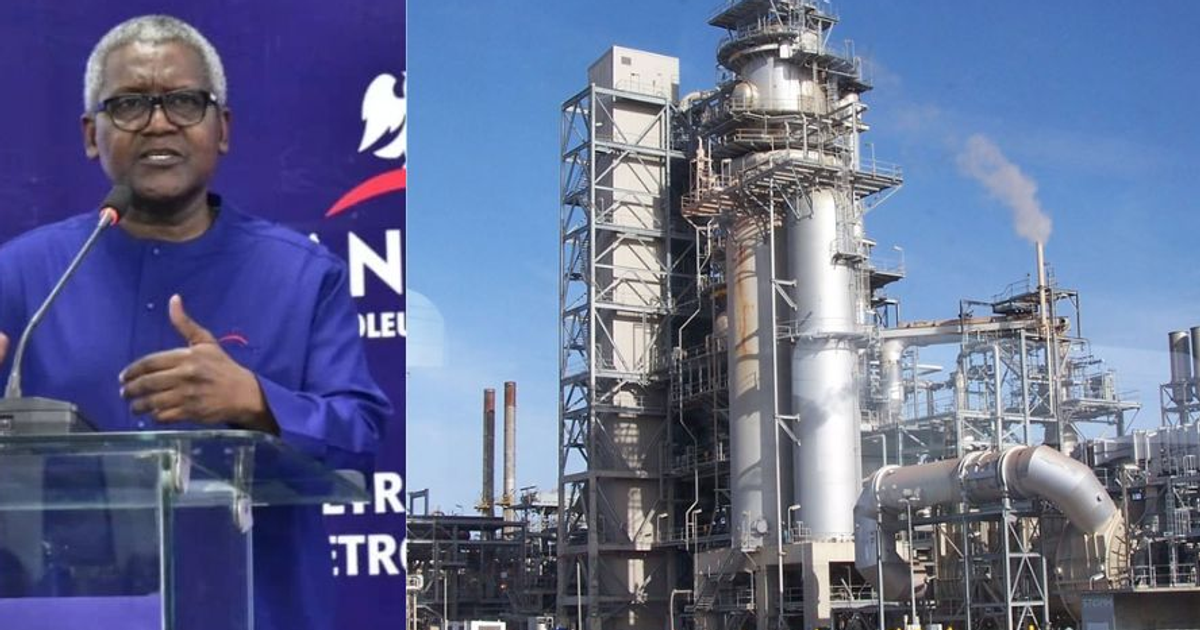
Two forces explain the change, according to the analysts quoted in the coverage. The first is the Dangote refinery moving past its ramp-up phase. The 700,000 barrel per day plant now supplies more than half of local petrol demand, economist Ayo Teriba said, and has begun shipping petrol, diesel and jet fuel abroad. Tomiwa Adeniji of CardinalStone Securities put the shift in perspective, noting that usable refining capacity has gone from about 400,000 barrels a day at roughly 1 percent utilization before Dangote to about 1.1 million barrels a day at around 62 percent. The second force is the war involving Iran, which disrupted shipping through the Strait of Hormuz and cut refined product flows from the Gulf and Asia to African importers. Lagos, with shorter shipping distances to West African customers, became a natural alternative supplier.
That is the good news, and it matters for a country that has historically lost large sums of foreign exchange to fuel purchases. A refinery that sells to neighbors earns hard currency instead of consuming it. Analysts also point out that on refined products as a whole, Nigeria is now closer to being a net exporter, with jet fuel and diesel adding to the petrol numbers.
The petrol line on its own tells a more complicated story. The same NBS report shows that Nigeria imported ₦952 billion worth of petrol in the second quarter, about 715 million US dollars, which is almost 11 times the first-quarter figure. That is ₦406 billion more than the country exported in the same three months. Compare ₦952 billion in one quarter of imports with ₦998.5 billion in six months of exports, and the sense of the phrase “wiped out” becomes clear.
A caution on the arithmetic is in order. The reported ratio implies that first-quarter petrol imports were below ₦100 billion, which would put the half-year import total at roughly ₦1.04 trillion, a little above the export figure. That is my own estimate from the reported ratio, and the NBS half-year import total for petrol should be checked once the full tables are reviewed. What is firmly reported is the quarterly picture: exports of ₦546.02 billion against imports of ₦952 billion in the second quarter, a net deficit on petrol for that period.
Why did imports jump when a large local refinery was supplying more fuel? The coverage points to a public dispute between marketers and Dangote over pricing and supply. Fuel marketers continued to bring in cargoes rather than rely entirely on local supply, and in that environment imports surged. Price differences, payment terms and the availability of cargoes at the right time all influence a marketer’s decision, and none of the reports reviewed here gives a full account of the reasons. What the data shows is that import licences and cargo arrivals continue to coexist with the new export trade, which is different from the promise that Nigeria would stop importing fuel altogether.
The broader import picture supports this reading. Earlier NBS data showed that mineral fuels were Nigeria’s single largest import group in the second quarter of 2025, at ₦4.43 trillion, or nearly 29 percent of the total import bill. That figure covers all fuels, not just petrol, but it shows how heavily the trade balance has leaned on energy imports. The new data suggests the gap is narrowing for some products and still wide for others.
For households, the shift matters in subtler ways than the headline numbers. Exports bring in dollars, which can ease pressure on the naira and help the central bank’s reserves. Imports, by contrast, draw dollars out, and they tend to follow the exchange rate when marketers set pump prices. If the balance tips further toward local supply, Nigerian motorists could eventually see more stable prices and fewer shortages. If marketers keep importing in large volumes, the benefits of local refining will be diluted.
The next leg of this story depends on crude supply. Dangote’s refinery runs at 700,000 barrels a day and the company plans to expand it to 1.4 million barrels a day by 2029, which would require far more Nigerian crude than the country produces for local use today. Minister of State for Petroleum Resources Heineken Lokpobiri has said that active rigs have grown from about a dozen to more than 65 and that the target is 3 million barrels a day. Official regulator data, however, shows crude and condensate output near 1.68 million barrels a day in August, so output will have to rise substantially to support both exports and a larger refinery.
What to watch is simple. The third-quarter NBS report will show whether petrol exports keep growing faster than petrol imports, and whether the second-quarter import spike was a temporary reaction to the pricing dispute or the start of a new pattern. Figures on how much crude the refinery receives locally and how much it buys abroad will also matter, since a refinery that depends on imported crude changes the foreign exchange math. For now, the data supports a cautious conclusion: Nigeria has built a genuine export business in petrol, and it is still working out how to retire the import business that came before it.
Readers who follow Nigeria’s energy, trade and business developments can find more coverage at BusinessTech Nigeria. Additional context on the NBS figures and analyst commentary is available from Billionaires.Africa.