|
Getting your Trinity Audio player ready...
|
NNPCL Cuts Petrol Price to ₦1,370 in Abuja and ₦1,360 in Lagos as Dangote Lowers Supply Rate
Nigerians got a modest break at the pump this week as the Nigerian National Petroleum Company Limited lowered petrol prices at select filling stations in Abuja and Lagos, continuing a run of price cuts that has unfolded over the past several days.
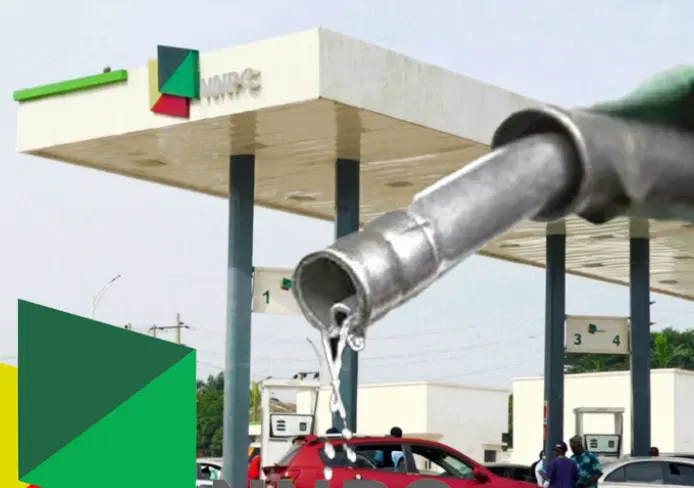
A market check on Thursday, October 1, found NNPCL outlets in Abuja and surrounding areas selling petrol at ₦1,370 per litre, down ₦25 from the previous ₦1,395. In Lagos, the company’s pump price fell to ₦1,360 per litre, a ₦15 reduction from ₦1,375. The adjustments landed on Nigeria’s 66th Independence Day, and NNPCL paired the price cut with a separate ₦66 discount promotion tied to the anniversary, offering customers who pay through its mobile app a reduction on fuel purchases at participating stations between October 1 and October 7.
The cuts aren’t an isolated move. They follow directly from Dangote Petroleum Refinery’s decision to lower its own petrol gantry, or ex-depot, price by ₦25 to ₦1,325 per litre, down from ₦1,350. Since Dangote’s refinery supplies a large share of the petrol that marketers across Nigeria eventually sell at retail, a cut at the gantry level typically filters through to pump prices within days, and that’s roughly the pattern that’s played out here. MRS filling stations moved in step with NNPCL, also dropping their price to ₦1,370 per litre in Abuja to match.
Thursday’s figures actually represent the second round of cuts within about a week. A few days earlier, NNPCL had already brought its Lagos price down from ₦1,385 to ₦1,370, while its Abuja price fell from ₦1,430 to ₦1,405. Measured from where prices stood before that first adjustment, Abuja’s NNPCL price has now fallen a combined ₦60 per litre, while Lagos has dropped ₦25, both moves tracing back to the same underlying shift in Dangote’s supply pricing.
Behind Dangote’s own price cut sits a sharper move in the cost of bringing petrol into the country in the first place. Data from the Major Energy Marketers Association of Nigeria showed the benchmark petrol landing cost, essentially what it costs to import a litre of fuel before local taxes and distribution markups, fell by ₦69.45 per litre in just three days, from September 25 to September 28, dropping to ₦1,278.37 per litre. That decline tracked a broader shift in global oil prices tied to developments in the US-Iran standoff, including periods where expectations of progress in peace talks pulled crude prices lower, even as the overall conflict remained unresolved. When international benchmark prices like Brent and WTI move, Nigeria’s landing cost calculations respond fairly quickly, and that cost eventually works its way down through gantry prices and, from there, into what motorists actually pay at the pump.
Despite the reductions, Nigeria’s petrol market remains far from uniform. Not every filling station has adjusted its pricing in step with NNPCL and Dangote’s cuts. Checks around Abuja found stations along the Kubwa Expressway, Air Junction, and Wuse Zones 4 and 5 still selling petrol at ₦1,395 per litre as of the latest market survey, while other major brands including Ranoil, AA Rano and Empire Energy were still pricing fuel anywhere between ₦1,395 and ₦1,430, well above what NNPCL and MRS had already moved to. That kind of spread between stations, sometimes in the same city, has become a defining feature of Nigeria’s deregulated downstream fuel market, where individual marketers set their own prices based on their own supply costs and inventory rather than following a single, government-set rate.
This year’s price swings have been genuinely dramatic when viewed over a longer stretch. Back in January, NNPCL was selling petrol at ₦835 per litre in Lagos and ₦839 in Abuja, figures that look almost unrecognizable next to today’s prices. The climb from there was steep and largely tied to the escalating conflict involving the US, Israel and Iran, which pushed global crude prices sharply higher through much of the year and fed directly into Nigeria’s own import-dependent pricing formula. Abuja’s NNPCL price had briefly dipped to ₦1,299 per litre in early August before climbing back up through September as the conflict intensified and oil prices spiked again, eventually reaching the ₦1,430 level that preceded this week’s cuts.
For Nigerian motorists, the latest reductions offer welcome, if modest, relief after a difficult year of rising fuel costs, particularly with the naira holding relatively steady around ₦1,329 to the dollar in the official market and global oil prices still sitting above $100 a barrel for Brent crude. Whether this latest downward trend continues will depend largely on how the US-Iran standoff develops in the weeks ahead, since any fresh escalation or disruption to Middle East oil supply has repeatedly shown the ability to reverse these gains just as quickly as they appeared.