|
Getting your Trinity Audio player ready...
|
Summary: Nigeria LNG exports 2026 are rising from a low base but are still capped by feed-gas supply and not by demand. NLNG’s six-train plant was running at 82–83% utilisation in mid-September, and its 2022 force majeure remains in place. Buyers are asking for more Nigerian cargoes after the Iran war disrupted Gulf supply, and Europe took more Nigerian LNG in early 2026. Train 7, which would lift capacity from 22 to 30 million tonnes a year, is now targeted for end-2027.
Nigeria LNG Exports 2026: How Much Does NLNG Ship?
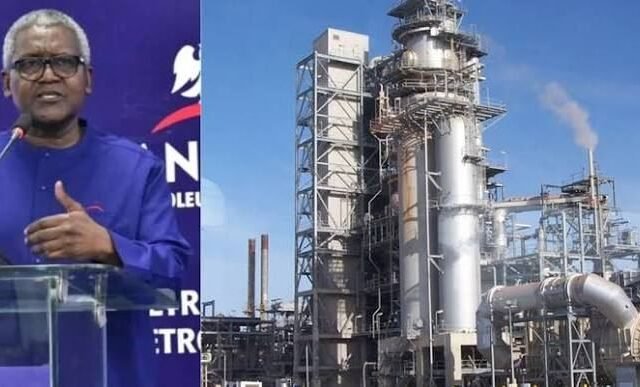
Nigeria LNG Limited (NLNG), on Bonny Island, is the country’s only LNG exporter. NNPC holds the majority, with Shell, TotalEnergies and Eni as minority partners. At its Facts and Figures briefing on 28 July 2026, the company reported $149.6 billion in cumulative revenue since it began operating 37 years ago, $47.2 billion in dividends paid, $10.8 billion in taxes to the federal government since 2009, and more than 6,285 cargoes delivered. NLNG buys gas from upstream producers and does not produce it, which explains why its output depends on other companies’ supply.
Export volumes over time
| Year | LNG exports (million tonnes) | Source and date |
|---|---|---|
| 2019 | 21.33 | Kpler, via Natural Gas Intelligence, April 2023 |
| 2022 | 14.61 | Kpler, via Natural Gas Intelligence, April 2023 |
| 2023 | 13.47 | Kpler, via Natural Gas Intelligence, September 2024 |
| 2024 | 13.78 | International Gas Union World LNG Report 2026, as cited by Leadership, 2026 |
| 2025 | 14.78 | International Gas Union World LNG Report 2026, as cited by Leadership, 2026 |
The series mixes two sources, so year-to-year gaps should be read as approximate. On these numbers, 2025 exports were about 31% below the 2019 peak (BusinessTech.ng calculation). The International Gas Union ranks Nigeria seventh among LNG exporters, with 3.4% of a record global trade of 436.98 million tonnes.
Two figures to treat with caution. First, the same press report values 2025 exports at about $14.63 billion. That works out to roughly $990 a tonne, or about $19 per MMBtu, while the Asian benchmark averaged $12.16 per MMBtu in 2025 according to the same International Gas Union report, or about $630 a tonne. The dollar figure probably includes other products or a different valuation basis, and we would not reuse it until the underlying table is checked. Second, NLNG said in July that it supplies about 6% of global LNG. The International Gas Union figure is 3.4% of trade. The 6% matches the share Kpler reported for Nigeria in 2021, so NLNG may be quoting a stale or differently defined number.
Utilisation, Force Majeure and the Feed-Gas Constraint
The binding limit on Nigeria LNG exports in 2026 is gas supply. Speaking at the Gastech conference in Bangkok, reported on 15 September 2026, NLNG’s managing director Adeleye Falade said the plant is running at 82% to 83% utilisation and that a force majeure declared in 2022 after severe flooding is still in effect. He said the company would lift it on reaching 90% utilisation, described the remaining gap as about 15%, and named gas supply as the main constraint.
Applying 82–83% to the 22 million tonne nameplate would imply roughly 18 million tonnes of output. The reported 2025 export figure is 14.78 million tonnes. We cannot reconcile the two from public data, since they may use different bases such as LNG only versus all products, so we leave the gap open. It is a good question to put to NLNG.
Train 7: what has changed
Train 7 would raise capacity by 35%, from 22 to 30 million tonnes a year, and its final investment decision dates from 27 December 2019. The project has moved on in 2026:
- At the July briefing, Falade put completion at 93%.
- On 15 September, he gave end-2027 as the start-up target, with the project cost cited at $10 billion. Earlier public estimates were lower, including $5.7 billion in 2020 and $6.5 billion in other project descriptions, so the cost has grown or the scope has been redefined.
- Falade also said NLNG has started exploratory discussions on Trains 8, 9 and 10. The company had earlier said in October 2023 that Train 8 was not possible because of gas supply, so this is a notable change of position.
Where Nigeria’s LNG Goes
NLNG delivers to Europe, Asia and the Middle East. Kpler data reported in 2024 said more than half of Nigeria’s LNG exports go to Europe. The main buyers are Spain, Portugal, France, Italy, Turkey, China and India. Portugal is the most exposed, with over 51% of its LNG imports coming from Nigeria in 2024.
The Iran war has shifted the picture in 2026:
- The Institute for Energy Economics and Financial Analysis (IEEFA) reports that Nigeria overtook Qatar and Algeria to become Europe’s third-largest LNG supplier in the first quarter of 2026, with EU imports from Nigeria up 19% year on year.
- By March 2026, the Asian benchmark had reached $25.41 per MMBtu and the European benchmark $22.50, according to the International Gas Union. Kpler counted 11 cargoes diverted from Europe to Asia, though the International Gas Union counted at least eight, a difference that likely reflects different windows.
- Belgium’s Fluxys named Nigeria and the United States as the credible alternatives to cover a shortfall in Qatari supply, as BusinessDay reported on 31 March. Nigeria is about 10 sailing days from European ports and avoids the Hormuz chokepoint.
- The European Union has approved a ban on Russian LNG from 1 January 2027, a year earlier than planned, which the Channels TV/Reuters report of October 2025 suggests could raise the value of West African supply.
Falade said at Gastech that interest in additional and spot volumes had risen. NLNG’s own priority, he said, is meeting its existing contract commitments first, so new spot volumes are limited by the same feed-gas problem.
Gas Production: The Supply Behind the Exports
| Nigeria gas, NUPRC data | Figure | Period and source |
|---|---|---|
| Total gas production | 7.93 billion cubic feet a day (bcf/d) | May 2026, NUPRC via Nairametrics, 16 June 2026 |
| Of which associated / non-associated | 3.96 / 3.98 bcf/d | May 2026, NUPRC via CED Magazine |
| Export sales | 3.07 bcf/d | May 2026, NUPRC |
| Domestic sales | 2.18 bcf/d | May 2026, NUPRC |
| Field operations and own use | 2.11 bcf/d | May 2026, NUPRC |
| Flared | 0.57 bcf/d (reported flare rate 6.9%) | May 2026, NUPRC |
| Production, August | 245,439 million standard cubic feet, about 7.9 bcf/d | NUPRC via Nairametrics, 17 September 2026 |
| Exports, January to August | 733,778 million standard cubic feet, up 19.1% year on year | NUPRC via Kanyi Daily, September 2026 |
A cross-check supports the export series. January to August exports average about 3.0 bcf/d (BusinessTech.ng calculation), in line with May’s 3.07 bcf/d. The structure of supply is also shifting. Non-associated gas, from dedicated gas fields, produced 354.17 billion cubic feet in the first quarter of 2026 against 296.99 billion a year earlier, while associated gas from oil wells fell from 370.28 to 332.82 billion cubic feet, according to NUPRC figures reported by ThisDay on 26 May 2026. That matters for LNG, because associated gas rises and falls with crude output.
NNPC’s group chief executive Bayo Ojulari has set targets of 10 bcf/d of gas by 2027 and 12 bcf/d by 2030. Against roughly 7.9 bcf/d now, reaching 10 bcf/d in 2027 needs about a 26% increase in 15 months (BusinessTech.ng calculation).
Gas Flaring: Progress Stalled in August
Flaring is falling over the long run, but August 2026 reversed part of the improvement. NUPRC data, reported on 17 September 2026, show the following.
| Flaring metric | Figure | Source |
|---|---|---|
| August 2026 flared volume | 18,350.55 million standard cubic feet (7.48% of output) | NUPRC via Nairametrics |
| July 2026 | 15,587.54 million standard cubic feet (6.72%) | NUPRC via Streamlinefeed |
| August 2025 | 16,729.35 million standard cubic feet (7.37%) | NUPRC via Nairametrics |
| January to August 2026 (cumulative) | 131,564 million standard cubic feet | NUPRC via Streamlinefeed |
| Full year 2025 | 203,965 million standard cubic feet, about 7.5% of roughly 2.71 trillion cubic feet produced | NUPRC via Nairametrics |
| Q1 2026 average flare rate | 6.81%, against 7.65% in Q1 2025 | NUPRC via ThisDay, 26 May 2026 |
August’s 7.48% was the highest rate since October 2025, when it was 7.55%. Flared volume rose 9.7% year on year while production rose 8.1%. Overall gas utilisation stayed at 92.5%, so the loss reflects gathering and processing gaps and not lack of demand. Nigeria’s flaring also rose 12% in 2024, according to World Bank data cited in the same coverage.
The two agencies disagree. For May 2026, NUPRC recorded 17.6 units of flared gas while the National Oil Spill Detection and Response Agency (NOSDRA) recorded 30.7, about 74% higher if the units are the same, which press reports do not make clear. NOSDRA valued the May flaring at $107.5 million and said operators face penalties of $61.4 million. Anyone citing flaring volumes should name the agency.
Policy is moving in parallel. NUPRC issued permits to 28 firms for flare-gas utilisation in December 2025, projecting $2 billion in investment. The stated national goal is to end routine flaring by 2030.
Domestic Supply: Exports Are Winning the Argument
Nigeria’s Domestic Gas Delivery Obligation requires producers to supply a set share of gas to the local market. Data suggest that exports have taken priority in 2026:
- A ThisDay analysis of NUPRC data, reported on 30 March 2026, found that Nigeria exported an average of 45.8% of its utilised gas in January and February while gas supply to thermal power plants weakened and power cuts spread.
- In the first quarter, export gas sales rose 30.75% year on year to 292.87 billion cubic feet, while domestic sales slipped, according to NUPRC figures reported on 26 May.
- In May, exports ran at 3.07 bcf/d against 2.18 bcf/d for domestic sales. That puts exports at about 42% of gas utilised after flaring (BusinessTech.ng calculation).
One bright spot is cooking gas. NLNG said it supplied a record 500,000 tonnes of LPG to the domestic market in 2025, about one third of national demand, and has sent all of its LPG to Nigerian buyers since 2022.
The West African Gas Pipeline
The West African Gas Pipeline carries gas 678 kilometres from Nigeria to Benin, Togo and Ghana. At an April 2026 briefing reported by ThisDay, its operator, WAGPCo, gave these figures:
| WAGP item | Figure |
|---|---|
| Volume transported in 2025 | 80,023,582 MMBtu, up about 22% |
| Cumulative volume since inception | 613,728,106 MMBtu |
| Nigeria’s share of gas transported | More than 68% |
| System reliability | About 99% |
| Savings for Ghana versus liquid fuels, 2011–2025 | About $3 billion |
| Overdue unsecured invoices at 30 March 2026 | More than $50 million |
| 2026 target | Another 100 million standard cubic feet a day of capacity use |
The arrears are the weak point. They threaten the pipeline’s finances even as volumes grow, and WAGPCo said so directly. A much larger scheme, the proposed $25 billion African Atlantic Gas Pipeline, would run through at least 13 countries, but it remains a proposal.
New Projects and FIDs
Ima gas field. TotalEnergies and its Nigerian partner AMNI took a final investment decision on 23 September 2026. TotalEnergies holds 40% and operates, and AMNI holds 60%. The field lies across OML 112 and 117 near Bonny Island and connects by a 22-kilometre pipeline to NLNG. Production is expected to start in 2028 at a plateau of 350 million cubic feet a day, and the company says Ima will supply about a third of the gas Train 7 needs. It will have no flaring and permanent methane monitoring.
The reported cost varies. The African Energy Chamber put the FID at $800 million, one headline cited $4 billion, and the TotalEnergies statement excerpts we reviewed gave no figure. Readers should wait for the company’s own number.
UTM Offshore FLNG. A 15-year gas supply agreement signed in July 2026 with NNPC and Seplat Energy clears the way for a $3 billion, 1.8 million tonne floating LNG vessel. The African Energy Chamber expects an FID in the fourth quarter of 2026.
Reserves and the master plan. NLNG cites proven reserves of 202 trillion cubic feet, ninth largest in the world. NNPC’s Gas Master Plan 2026, as summarised in June, uses 209 trillion. NUPRC’s October 2025 Gas Development Roadmap targets more than 55 trillion cubic feet of gas not yet committed to any project. The Ajaokuta-Kaduna-Kano and Obiafu-Obrikom-Oben pipelines are still described as in progress, with no completion dates in the sources we reviewed.
Gas Revenue: What It Earns
The Central Bank’s provisional balance of payments data show gas exports of $6.22 billion in the first half of 2026, up 4.2% from $5.97 billion a year earlier.
| Period | Gas exports | Comparison |
|---|---|---|
| Q1 2026 | $2.59 billion | $2.66 billion in Q1 2025 |
| Q2 2026 | $3.63 billion | Up 40.15% on Q1; up 9.7% on $3.31 billion in Q2 2025 |
| Q2 2026 total exports | $20.08 billion | Gas about 18%, crude $9.39 billion about 47% (BusinessTech.ng calculation) |
Volumes and values tell different stories. NUPRC says exported gas volumes rose 19.1% in the first eight months, but the value rose only 4.2% in the first half. The periods differ, so we cannot compare them directly, but the gap suggests contract pricing lagging the spot spike. That is our inference.
What It Means for Businesses, Investors and Households
Industry and power. The flaring and domestic-supply data show why gas-based manufacturers and power producers still face shortages despite record production. Feed-gas contracts and payment discipline matter as much as volumes, and the WAGP arrears show what happens when they slip.
Investors. Ima and the UTM deal show capital moving to gas, and Ima’s Nigerian majority ownership is a notable feature. The risk is timing. Ima’s gas arrives in 2028, after Train 7’s planned start.
Households. Cooking gas is the direct link. NLNG’s domestic LPG supply and Train 7’s additional LPG matter more for kitchens than LNG exports do. Power cuts are the other link.
Outlook into 2027
- Train 7 and the force majeure. Start-up is targeted for end-2027. Because Ima’s gas begins in 2028, the plant’s early output will depend on other feed-gas sources. NLNG says it will lift the force majeure at 90% utilisation, against 82–83% now.
- Europe. The EU’s ban on Russian LNG takes effect on 1 January 2027, and IEEFA says Europe’s LNG demand could fall about 23% between 2025 and 2030 as consumption declines. Rabobank analysts, quoted in October 2025, see enough new US and Qatari capacity in 2027 to fill the gap. Nigeria’s advantage is short shipping distance, not volume.
- NNPC’s 10 bcf/d target for 2027 looks demanding against 7.9 bcf/d.
- Our assessment: Nigeria’s gas story now turns on upstream gas supply and payment discipline more than on liquefaction capacity.
Frequently Asked Questions
How much LNG does Nigeria export?
The International Gas Union puts 2025 exports at 14.78 million tonnes, 3.4% of global trade, ranking Nigeria seventh among exporters.
Where does Nigerian LNG go?
Mostly Europe, with Spain, Portugal, France and Italy the main buyers, plus Turkey, China and India. IEEFA says Nigeria became Europe’s third-largest LNG supplier in Q1 2026.
What is NLNG Train 7?
A seventh liquefaction unit that lifts capacity from 22 to 30 million tonnes a year. NLNG targets start-up by end-2027.
How much gas does Nigeria flare?
NUPRC reports 203,965 million standard cubic feet in 2025 and 131,564 million in January to August 2026. The August flare rate was 7.48%.
Does Nigeria export more gas than it uses at home?
In May 2026, exports ran at 3.07 bcf/d against 2.18 bcf/d for domestic sales, and a March analysis found exports at 45.8% of utilised gas in January and February.
Conclusion
Nigeria LNG exports 2026 are being held back by feed gas and not by buyers. Demand for Nigerian cargoes is strong, Ima adds a new supply source, and gas earned $6.22 billion in the first half, but utilisation of 82–83%, rising flaring and pipeline arrears show the gaps that remain.