|
Getting your Trinity Audio player ready...
|
Last updated: September 28, 2026
Summary: Nigeria Has Flipped From Petrol Importer to Regional Exporter
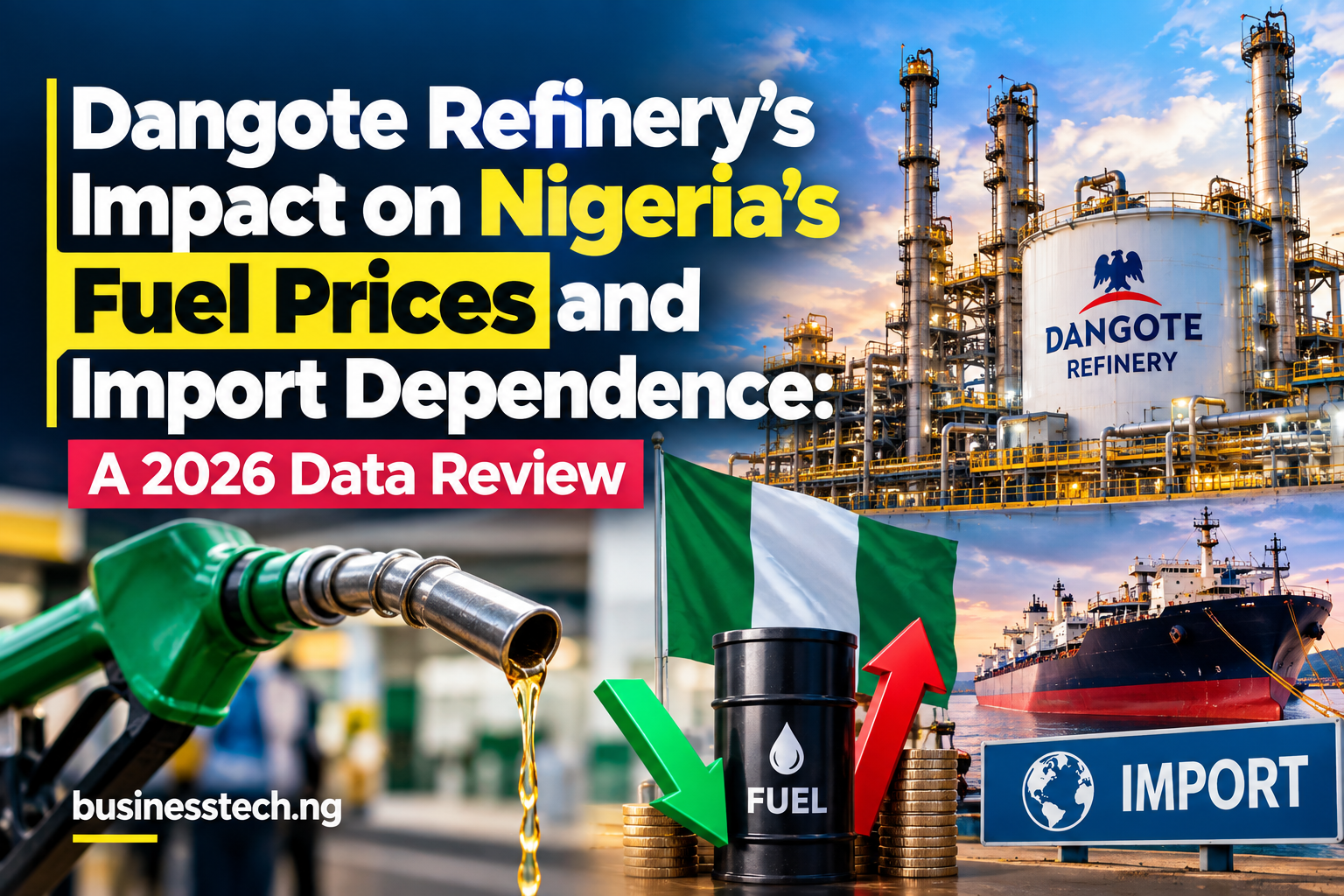
The Dangote Petroleum Refinery has fundamentally reshaped Nigeria’s fuel supply chain in 2026, moving the country from decades of near-total petrol import dependence to a position where the refinery now supplies most of what Nigerians pump, while also shipping fuel abroad. The key findings:
- Dangote supplied 71% of Nigeria’s petrol in August 2026, according to the downstream regulator’s monthly factsheet, up sharply from 62% in January.
- The refinery is running above its own nameplate capacity. August capacity utilisation was 105.21% against its 650,000 barrels-per-day design capacity.
- Petrol imports collapsed. Daily petrol imports fell to 14.6 million litres in August 2026, down 26% from July’s 19.7 million litres, and down from a market where imports once dominated entirely.
- Nigeria has become a fuel exporter, not just a domestic supplier. The country’s seaborne petroleum product exports rose from 46,000 barrels per day in 2023 to 350,000 barrels per day by Q2 2026, with Europe and other African nations as primary destinations.
- Diesel import dependence has fallen even more sharply than petrol’s. Diesel imports dropped from 7.9 million litres per day to 1.3 million litres per day between July and August 2026, an 84% decline.
This first part covers the refinery’s production and market share data through 2026, the import displacement numbers, and the export shift. The second part covers what this has meant for pump prices, the risks and limits of the current picture, the modular refinery sector, and the outlook for 2027.
The Market Share Shift, Month by Month
| Month | Dangote’s share of domestic petrol supply | Total PMS receipts (million litres/day) |
|---|---|---|
| December 2025 | Rising rapidly (32 million litres/day production) | Not directly comparable |
| January 2026 | 62% (first month domestic production exceeded imports in a 13-month period) | 64.9 |
| July 2026 | Lower than August; domestic receipts at 25.8 million litres/day | 45.5 |
| August 2026 | 71% | 50.5 |
Source: Nigerian Midstream and Downstream Petroleum Regulatory Authority (NMDPRA) monthly factsheets, as reported by CED Magazine, BusinessDay and Legit.ng.
January 2026 marked a genuine inflection point: it was the first month in the 13-month period the NMDPRA’s report covered, stretching back to January 2025, where domestic petrol production exceeded imports. The regulator attributed the shift directly to improvement in supply from the Dangote Petroleum Refinery and Petrochemicals, which increased its output from 32 million litres per day in December 2025 to 40.1 million litres per day in January 2026, a 25% month-on-month rise.
By August, the picture had strengthened further. Domestic PMS receipts jumped 39% to 35.9 million litres per day from July’s 25.8 million, representing 71% of the 50.5 million litres per day total received nationally that month.
Capacity Utilisation: Running Past the Design Limit
| Month | Capacity utilisation |
|---|---|
| March 2026 | 93.62% |
| August 2026 | 105.21% |
The refinery reached its full nameplate capacity of 650,000 barrels per day as of February 2026, making it the world’s largest single-train refinery. By August, it was operating at 105.21% of that design capacity, meaning the plant was being pushed past its rated limit to meet demand, both domestic and export. In August alone, Dangote produced an average of 41.94 million litres of petrol daily, of which 35.87 million litres went to the domestic market and 9.73 million litres were exported.
The Import Collapse
Petrol
Petrol imports fell from 19.7 million litres per day in July 2026 to 14.6 million litres per day in August, a 26% decline in a single month. Put in context, Dangote alone was delivering roughly two and a half times what all foreign suppliers brought into Nigeria combined during that same month.
Diesel
The decline in diesel (Automotive Gas Oil) import dependence has been even sharper than petrol’s. Diesel imports fell from 7.9 million litres per day in July to just 1.3 million litres per day in August 2026, an 84% drop. This matters significantly beyond just consumer diesel prices, since diesel powers much of Nigeria’s freight and generator-dependent commercial activity, connecting directly to the transport cost pressures documented in our cost of living analysis.
Liquefied Petroleum Gas: The Exception
Not every fuel category has moved in the same direction. LPG imports actually rose from 0.9 million litres per day to 1.3 million litres per day over the same period, showing that Nigeria’s refining self-sufficiency story is uneven across fuel types, and cooking gas remains more import-dependent than petrol or diesel.
From Importer to Exporter: The Bigger Structural Shift
Perhaps the most striking transformation is not just import displacement but Nigeria’s emergence as a net fuel exporter. Nigeria’s seaborne petroleum product exports rose from 46,000 barrels per day in 2023 to 350,000 barrels per day by the second quarter of 2026, a roughly sevenfold increase, with Europe and other African nations serving as primary destinations. This signals a structural shift in Nigeria’s role in regional and even European fuel markets, moving from a country that historically imported nearly all its refined products despite being a major crude producer, to one that increasingly supplies its neighbours and beyond.
What This Means in Practice
The refinery is effectively doing two jobs simultaneously from the same production run: feeding Nigerian pumps and shipping product overseas. August’s 9.73 million litres per day in exports, alongside 35.87 million litres per day for the domestic market, illustrates that Dangote’s capacity growth has outpaced Nigeria’s own domestic petrol demand of roughly 50 million litres per day, creating genuine exportable surplus rather than simply substituting for what was previously imported.
The Ex-Gantry Price History: A Volatile 2026
Dangote’s ex-gantry (ex-depot) price, the wholesale rate at which the refinery sells to marketers, has moved substantially through 2026, and each change has rippled directly into pump prices within days.
| Date | Ex-gantry price (₦/litre) | Change |
|---|---|---|
| January 27, 2026 | 799 | Down from prior level |
| July 14, 2026 | $0.779/litre (dollar pricing introduced) | Refinery briefly suspended naira sales entirely |
| July 22, 2026 | 1,215 | Returned to naira; up ₦140 (13.02%) from the pre-crisis ₦1,075 |
| August 21, 2026 | 1,185 | Up ₦20 from ₦1,165 |
| August 25, 2026 | 1,200 | Up ₦15, second hike within five days |
| September 12, 2026 | 1,350 | Up ₦85 from ₦1,265 |
| September 22, 2026 | 1,325 | Down ₦25, only partially reversing the September 12 rise |
Source: Legit.ng pricing reports, Dangote Refinery pricing notices, Petroleumprice.ng.
The Dollar Pricing Episode: A Stress Test
The most disruptive event of the year came in mid-July 2026, when Dangote suspended gantry and coastal loading operations on July 15 and briefly began pricing petrol to off-takers in US dollars at $0.779 per litre, alongside diesel at $1.087 and aviation fuel at $0.942. This single decision, in place for roughly a week, forced marketers to source fuel from private depots where limited supply pushed ex-depot prices from around ₦1,075 up toward ₦1,270 to ₦1,350 per litre at some outlets. The Independent Petroleum Marketers Association of Nigeria (IPMAN) publicly welcomed the July 22 reversal back to naira pricing, with its president stating the association expected retail prices to decline once marketers resumed lifting product at the new ex-depot rate.
This episode is instructive for understanding how much pricing power a single refinery now holds over what Nigerians pay at the pump. As one analysis put it plainly, the brief dollar-pricing experiment exposed just how fragile Nigeria’s newest fuel pricing system really is, given how concentrated supply has become in one facility.
How Pump Prices Have Tracked the Gantry Price
Each gantry adjustment has visibly moved retail prices within a day or two. When Dangote raised its price to ₦1,200 on August 25, filling stations in Abuja were already selling between ₦1,250 and ₦1,290 per litre by the following days, while Lagos stations made more marginal adjustments. Major retailers including NNPC, Rainoil, Empire Energy and Nigerian Independent Petroleum Company all moved in step with the refinery’s pricing signal, typically settling in a band ₦50 to ₦100 above the ex-gantry rate to cover transportation, distribution and marketer margins.
When Imports Briefly Fought Back
The relationship between Dangote’s output and import volumes has not moved in only one direction. In July 2026, Nigeria’s domestic petrol supply actually dropped 21% while imported fuel volumes climbed, according to official midstream and downstream data, even as Dangote’s ex-gantry price remained ₦14 cheaper than the landed cost of imported fuel during the same period, per data from the Major Energies Marketers Association of Nigeria (MEMAN). This episode illustrates a key vulnerability: when Dangote’s own output dips, even temporarily, imported fuel is ready to fill the gap, regardless of whether it is actually cheaper. As one industry report framed it, the real challenge for Nigeria going forward is not simply building refining capacity, but ensuring steady crude supply, consistent production and sufficient distribution to keep imported fuel from regaining a larger share of the market.
The Modular Refinery Sector: A Smaller but Growing Contribution
Dangote is not Nigeria’s only domestic refining story, even if it dominates the headlines. Among modular refiners in August 2026:
| Refiner | Capacity utilisation |
|---|---|
| Edo Refinery | 90.43% |
| Walter Smith | 64.77% |
| Aradel | 58.77% |
| OPAC | 16.97% |
| Duport | Shut down |
Source: NMDPRA August 2026 factsheet.
Edo Refinery’s 90.43% utilisation shows that smaller domestic refiners can also run efficiently, though their combined output remains far smaller than Dangote’s single-train capacity. Aradel Holdings has announced plans to begin petrol production at its Ogbele modular refinery in Rivers State in 2027, which would add further domestic capacity, though on a considerably smaller scale than Dangote’s operations. The uneven performance across this group, from Edo’s near-full utilisation to Duport’s complete shutdown, also illustrates that Nigeria’s broader refining renaissance is not a single success story but a mix of outcomes still playing out.
Risks and Limits to the Current Picture
1. Concentration risk. With one refinery supplying 71% of domestic petrol and running above its design capacity, any operational disruption, whether technical, a crude supply interruption, or another dollar-pricing episode, has an outsized effect on national fuel availability, as the July 2026 dollar-pricing crisis demonstrated.
2. Crude supply dependency. Dangote’s refining output depends on securing sufficient crude feedstock. The refinery’s domestic crude receipts rose to 0.683 million barrels per day in August 2026, up 17% from July’s 0.585 million barrels, showing this input itself has been variable, connecting directly to the broader crude production questions covered in our analysis of Nigeria’s oil output.
3. Pricing volatility remains real. Even with reduced import dependence, ex-gantry prices moved by more than ₦550 per litre across various points in 2026, from lows near ₦799 in January to highs of ₦1,350 in September, meaning domestic refining has not eliminated price volatility for consumers, even if it has changed its source.
4. LPG dependency persists. As noted, cooking gas imports rose even as petrol and diesel imports fell, showing Nigeria’s refining self-sufficiency gains are not uniform across all petroleum products.
What This Means for Nigeria’s Forex Position
Reduced petrol and diesel imports directly ease pressure on Nigeria’s foreign exchange demand, since fewer dollars are needed to pay for fuel purchased abroad. This connects to the broader naira stability story covered in our exchange rate analysis, where reduced import demand is one of several factors analysts cite alongside record reserves and rising oil export earnings.
Outlook for 2027
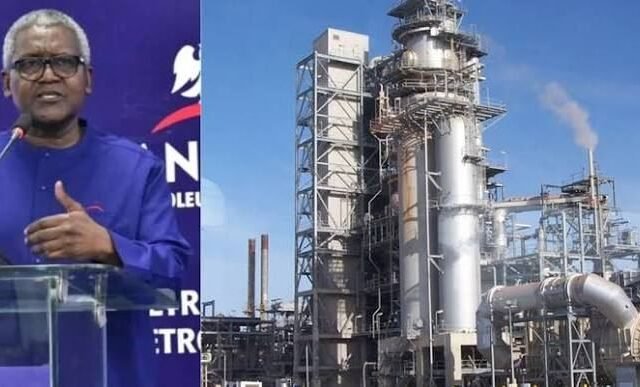
- Expansion plans could reshape the picture again. Aliko Dangote announced in October 2025 plans to expand refinery capacity from 650,000 bpd to 1.4 million bpd, more than doubling current capacity if realised, which would further increase Nigeria’s export potential.
- Modular refiners could add meaningful supplementary capacity, particularly if Aradel’s Ogbele facility begins petrol production as planned in 2027.
- The core vulnerability remains unresolved. Until Nigeria has multiple large-scale refineries operating reliably, any disruption at Dangote carries national consequences, as 2026’s dollar-pricing episode showed.
- Watch the crude supply relationship closely. Dangote’s ability to sustain or grow output depends on Nigeria’s upstream production keeping pace, making the crude production trends covered in our related analysis directly relevant to the refining story.
Frequently Asked Questions
How much of Nigeria’s petrol does Dangote Refinery supply?
Dangote supplied 71% of Nigeria’s petrol in August 2026, up from 62% in January, according to NMDPRA data.
Has Dangote Refinery reduced Nigeria’s petrol imports?
Yes, substantially. Petrol imports fell to 14.6 million litres per day in August 2026, down 26% from July, though imports briefly rose again in July when Dangote’s own output dipped.
What is Dangote Refinery’s current petrol price?
The ex-gantry (wholesale) price was ₦1,325 per litre as of September 22, 2026, though this changes frequently. Retail pump prices are typically ₦50 to ₦100 higher.
Is Nigeria now exporting petrol?
Yes. Nigeria’s seaborne petroleum product exports rose from 46,000 barrels per day in 2023 to 350,000 barrels per day by Q2 2026, with Dangote exporting a portion of its output alongside supplying the domestic market.
Why did Dangote briefly price petrol in dollars?
In mid-July 2026, the refinery suspended naira sales and priced petrol in dollars for about a week, reportedly linked to foreign exchange sourcing concerns, before reversing the decision after marketer pushback and returning to naira pricing at a higher rate.
Conclusion
Dangote Refinery has genuinely transformed Nigeria’s fuel supply chain in 2026, cutting import dependence sharply and turning the country into a fuel exporter for the first time in decades. But the transformation has come with real volatility, both in pricing, as the dollar-pricing episode and repeated gantry adjustments show, and in reliability, as July’s import rebound during a Dangote output dip demonstrated. Nigeria’s fuel security now rests heavily on one facility’s continued performance, a concentration that expansion plans and a stronger modular refining sector could eventually diversify, but have not yet.