Spain’s government moved Tuesday to shield millions of households from a sharp jump in gas bills this winter, approving a measure that caps the next increase in regulated gas prices at 15 percent, well below what the market would otherwise dictate as colder weather sets in.
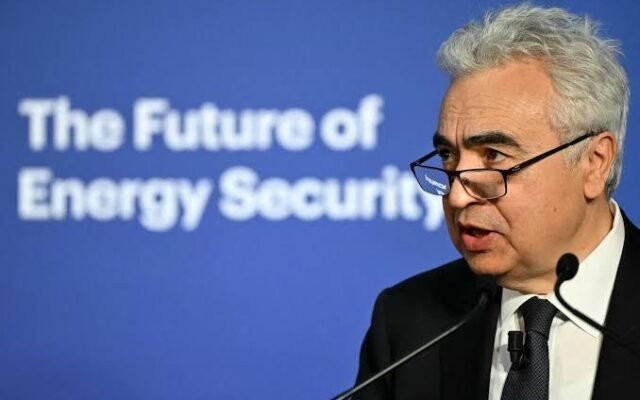
Energy Minister Sara Aagesen confirmed the decision upon arriving at a European Energy Council meeting in Dublin, saying the cap would be approved by Spain’s Council of Ministers later that day. Without the intervention, the regulated household gas tariff was on track to rise by more than 45 percent starting next month, according to Aagesen, a figure that lines up closely with an estimate from Spanish consumer association OCU, which had projected an increase of between 45 and 49 percent for households on the affected scheme.
The tariff at the center of this, known as the Last Resort Tariff or TUR in Spanish, is reviewed every three months, in January, April, July and October, with its price tied directly to movements in international wholesale gas markets. That link is precisely why the tariff was facing such a steep jump this round, as gas prices globally have climbed sharply amid the ongoing conflict involving the US, Israel and Iran, a disruption that has rippled through energy markets well beyond the Middle East itself. Roughly 3.1 million Spanish households, representing around 39 percent of the country’s total gas customers as of the first quarter of this year, are subscribed to the regulated TUR scheme and stand to benefit directly from Tuesday’s cap.
The measure isn’t limited to piped natural gas. The same decree also addresses bottled butane, a fuel that more than 8 million Spanish households still rely on for cooking and heating despite the broader shift toward natural gas networks and electric alternatives. The government will hold the maximum price for a standard 12.5-kilogram butane bottle at €19.55 through June 2027, an increase from the current regulated maximum of €18.84, which only took effect on September 15. Some consumers have reported paying closer to €25 for what they describe as the basic, cheapest version of that same bottle, prompting questions about whether suppliers are exceeding the legal cap. Spain’s Ministry for the Ecological Transition has clarified that the official regulated maximum isn’t a gas-only figure, it also covers the cost of delivering the bottle to a customer’s home, meaning legitimate price differences can exist between bottles, distributors and delivery services. Anyone being charged notably more than the published cap has been advised to check the bottle size, review their receipt closely, and confirm whether a separate delivery or service charge has been added before assuming the regulated limit has actually been breached.
Tuesday’s decree forms part of a broader support package the Spanish government first introduced back in March specifically to cushion households and businesses from the economic fallout of the wars in Iran and Ukraine. According to Aagesen, the package revives tools that Spain originally deployed during the 2022 energy crisis triggered by Russia’s invasion of Ukraine, when the government similarly capped regulated gas tariff increases at 15 percent for an extended stretch to protect vulnerable households and small businesses from volatile international prices. That earlier intervention, overseen at the time by then-Ecological Transition Minister Teresa Ribera, established the same basic mechanism now being reactivated, a sign that Spain has effectively built a standing playbook for responding to energy price shocks rather than improvising a new response each time a fresh crisis emerges.
The gas measures also sit alongside a separate but related piece of Spain’s broader energy relief effort: an extension of fuel tax cuts on gasoline and diesel, originally introduced as part of a 5 billion euro package in March to offset the impact of the Iran war on local energy costs. That tax break currently stands at 5 cents per liter, but it includes an automatic escalation mechanism that would raise it to 20 cents per liter if year-on-year fuel-price inflation exceeds 15 percent, giving the government a built-in trigger to intervene further without needing to pass fresh legislation if prices at the pump keep climbing.
Aagesen has not ruled out additional measures beyond Tuesday’s package, saying the government’s response would continue to depend on how circumstances evolve, language that leaves the door open for further intervention if the conflict driving up global energy prices drags on or worsens through the winter months. For now, the combination of the gas tariff cap, the frozen butane price and the existing fuel tax relief gives Spanish households a fairly comprehensive, if temporary, buffer against an energy market that shows little sign of settling down on its own in the near term.