|
Getting your Trinity Audio player ready...
|
Oil Prices Rise for a Second Straight Session as Middle East Supply Worries Persist
Oil prices climbed for a second consecutive session on Tuesday, with traders continuing to price in the risk of prolonged Middle East supply disruption even as fresh data pointed to crude actually flowing out of the region at a faster pace than it has in months.
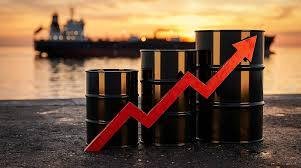
Brent crude futures gained as much as 1.6 percent to touch $106.99 a barrel, while US West Texas Intermediate rose a similar 1.5 percent to trade near $94. Both benchmarks had already closed roughly a dollar higher in the prior session, meaning the market has now added close to $3 a barrel across two days of trading built almost entirely on lingering concern rather than any single new disruption.
That’s the core tension shaping the oil market right now: worry about the conflict between the US, Israel and Iran is outweighing evidence that crude is still finding its way out of the Gulf. Preliminary figures from data provider Kpler, released Monday, showed crude exports from major Middle Eastern producers climbed to 12.8 million barrels a day in September, the highest level since February, helped by increased shipments from Saudi Arabia and the United Arab Emirates. On paper, that’s the kind of number that should ease pressure on prices. Instead, prices kept climbing, a sign that traders are more focused on how that oil is getting out than on the raw volume itself.
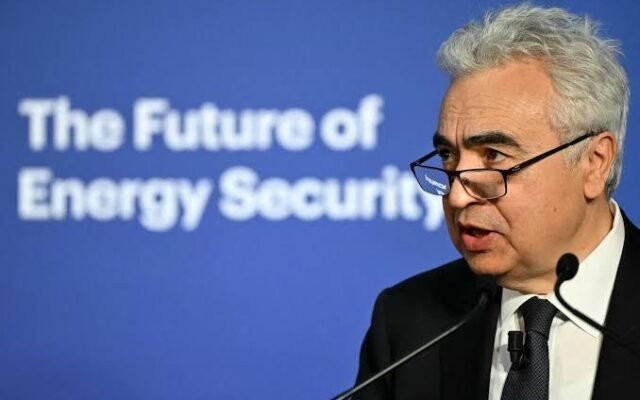
Tim Waterer, chief analyst at KCM Trade, said a clearer picture is emerging of higher export volumes leaving the Gulf, but much of that increase still depends on workarounds such as ship-to-ship transfers rather than normal shipping routes. Those methods cost more and move slower than standard tanker traffic, which is part of why prices have stayed elevated even as the raw export figures improve. Waterer also pointed to something that’s kept Brent from breaking decisively higher: the recurring hope that a diplomatic resolution is close. He described that hope as the main factor keeping Brent from moving sustainably above $110 for now, even with all the supply concerns weighing on the market, noting that traders are essentially trying to separate genuine signal from short-term noise in a market where both bullish and bearish forces are pulling at once.
The conflict driving all of this began in late February, when US and Israeli forces launched attacks on Iran, an escalation that immediately drew attention to the Strait of Hormuz, the narrow waterway through which a large share of the world’s seaborne oil and gas passes. Disruption to that route has upended energy markets for months, and this week’s price action follows directly from the latest round of that story: President Donald Trump rejected an Iranian proposal over the weekend to reopen the strait, and while both sides have said talks will continue, there’s no visible sign yet of a breakthrough. That stalemate is precisely the kind of uncertainty Waterer described as keeping traders cautious rather than confident in either direction.
On the policy side, Reuters reported that the United States is weighing regulatory relief that would allow broader sales of red-dyed diesel, a fuel typically reserved for off-road and agricultural use and taxed differently from standard diesel sold at the pump. People familiar with the discussions said the move could let some buyers avoid the federal fuel tax, effectively lowering the price they pay even if the underlying wholesale cost of diesel stays high. It’s a narrow, technical fix rather than anything that addresses the broader supply disruption, but it reflects how seriously officials are treating the diesel shortage specifically, a fuel that has run tighter than crude oil itself throughout much of this crisis due to constrained refining capacity across the region.
The ripple effects of sustained high oil prices are reaching well beyond the markets where crude actually trades. In Nigeria and across other African economies, rising global crude and refined product prices are feeding directly into domestic energy costs, transportation expenses and broader inflation, a reminder that a price move measured in dollars per barrel in London or New York shows up in very different, very tangible ways at fuel pumps and grocery counters thousands of miles from the Persian Gulf.
For now, oil is trading in a fairly defined range, roughly between $104 and $108 a barrel on Brent, caught between genuine supply anxiety and genuine signs that exporters are finding ways to keep barrels moving despite the disruption. Whether that range holds, breaks higher toward $110, or eases back depends almost entirely on what happens next in the US-Iran talks, the same variable that has driven nearly every significant move in oil prices since the conflict began seven months ago.