|
Getting your Trinity Audio player ready...
|
Hundreds of oil executives descended on Caracas this week for a sold-out industry conference, a scene that would have been unthinkable in Venezuela just a year ago. The gathering, drawing representatives from international supermajors, regional producers, and oilfield service companies, captures just how dramatically the country’s energy sector has shifted since President Nicolás Maduro was ousted in early January, opening the door to a wave of foreign capital returning to a country holding the world’s largest proven oil reserves.
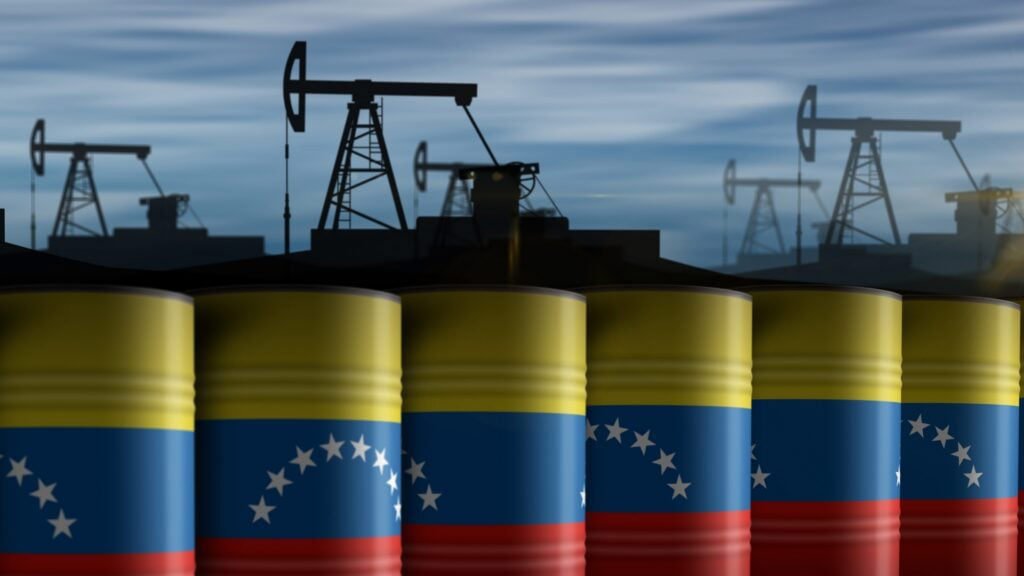
The numbers behind this recovery are genuinely striking given how far Venezuela’s oil sector had collapsed in recent years. Production had fallen sharply at the start of 2026 after export constraints forced state oil company PDVSA to shut in wells once domestic storage filled up, a crisis born of years of sanctions, underinvestment, and chronic mismanagement under the previous government. Since then, output has climbed to around 1.25 million barrels per day, according to recent industry analysis, with other estimates putting the figure closer to 1.1 million barrels daily as of mid-year, a rebound that reflects operational execution rather than new discoveries. The recovery has centered on reactivating shut-in wells, restarting joint venture output, and restoring activity across the Orinoco Belt, where PDVSA reversed earlier production cuts and brought idle capacity back online, essentially restoring infrastructure that already existed rather than building anything genuinely new.
The political turning point came January 3, when Washington’s shifting posture toward Caracas opened a pathway for US oil companies to resume operations that had been frozen under sanctions for years. The interim government under Delcy Rodríguez embraced a dramatically different approach from its predecessor, opening the sector to foreign capital and dismantling the state’s previously absolute control over the industry. Reforms introduced over the course of 2026 expanded possibilities for private sector participation and gave international companies considerably greater operational control than they’d held under Chavista-era nationalism, changes one policy analyst described as a dramatic shift away from both that earlier nationalist tradition and the broader leftist approach to Venezuelan oil policy that had defined the sector for decades.
Chevron’s trajectory through this recovery offers the clearest case study of how quickly things have moved. Having remained in Venezuela even as most other Western and European companies exited after earlier nationalization efforts, Chevron held a genuine early-mover advantage and deep familiarity with the country’s regulatory landscape once sanctions eased. The company’s Venezuelan oil exports surged from 100,000 barrels per day in December 2025 to 300,000 barrels per day by March 2026, and Chevron announced an expansion of its operations in April, having stated back in January that it saw a pathway to grow production by 50 percent over an 18 to 24 month window. By some estimates, Chevron alone has handled roughly a quarter of Venezuela’s total export volume in recent months, a scale that underscores how central the company has become to the country’s broader recovery.
Chevron isn’t operating alone in this renewed rush, and the list of companies making formal commitments since January reads like a roll call of the industry’s major players. ExxonMobil has reportedly entered negotiations to acquire production rights across as many as six Venezuelan oilfields, a notable return given the company’s much more complete exit from the country in earlier years. Shell and Repsol have both shown renewed interest tied directly to recent hydrocarbon law changes offering more flexible fiscal terms and greater operational autonomy for foreign partners. Smaller and more specialized players have entered the picture too, including Hunt Overseas Oil Company and Crossover Energy, whose entry carries geopolitical significance that extends beyond their relatively modest operational footprint, given how closely Washington is watching exactly which companies and countries gain access to Venezuelan crude during this reopening.
That geopolitical dimension runs through nearly every aspect of Venezuela’s recovery, and it shapes which foreign partners get welcomed versus scrutinized. US Treasury Department licensing through the Office of Foreign Assets Control sits on one side of the equation, working alongside Venezuela’s own domestic hydrocarbon law on the other, together determining which companies can legally operate and under what terms. One energy policy analyst expects Washington to remain considerably more accommodating toward European investment in Venezuela than toward companies associated with China, Russia, or Iran, particularly where that European participation helps grow overall Venezuelan production rather than simply securing favorable terms for a single foreign power’s interests.
Despite the genuine momentum behind this recovery, the scale of what’s actually required to rebuild Venezuela’s oil industry to anything resembling its former capacity remains sobering. Energy experts estimate the full rebuilding process could take well over a decade and cost upwards of $100 billion, a figure that stands in stark contrast to President Trump’s own earlier prediction that expanded US oil company operations in Venezuela could be “up and running” within less than 18 months, a timeline most industry analysts have described as starkly unrealistic given the depth of the country’s infrastructure deficit. Trump has suggested the US government might even help reimburse energy companies for their investment costs in rebuilding Venezuela’s industry, framing the broader project as serving American interests by helping keep global oil prices lower through expanded supply.
The broader strategic calculation driving US interest in Venezuela’s recovery extends well beyond any single administration’s rhetoric. Having a stable, growing oil producer in Venezuela genuinely does factor into global supply dynamics, particularly at a moment when fuel markets worldwide remain strained by disruptions tied to the ongoing Middle East conflict and China’s own periodic restrictions on fuel exports. For foreign energy companies deciding whether Venezuela’s reopening represents a genuine long-term opportunity or a politically fragile window that could close as quickly as it opened, the answer will likely hinge on how durable the current reform framework proves to be, and whether the interim government’s commitment to foreign capital and operational autonomy survives whatever political transitions Venezuela faces in the years ahead as it works to rebuild an industry that took decades to fall apart and will take considerably longer to fully restore.