|
Getting your Trinity Audio player ready...
|
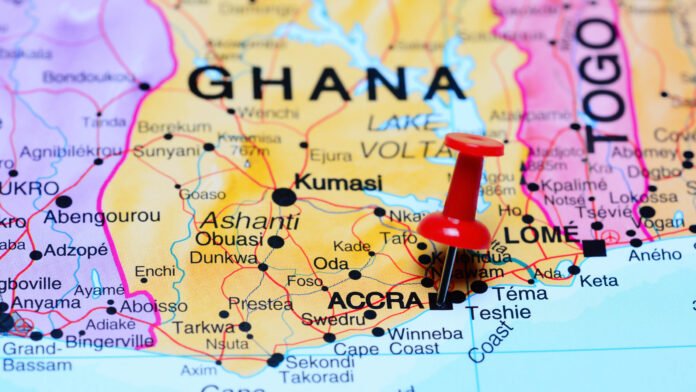
Ghana is preparing the most significant overhaul of its mining laws in two decades, with a draft bill reviewed by Reuters showing the government intends to claim sweeping new control over how foreign and domestic mining companies operate across Africa’s largest gold producer. The Minerals and Mining Bill, 2026 would replace the Minerals and Mining Act, 2006, and is expected to come before Parliament when lawmakers return to session in October.
The centerpiece of the proposed legislation is a mechanism giving the state what amounts to a golden share in mining operations. Under the draft, Ghana’s mines minister would have the discretion to require mining companies to issue the government a free special share carrying veto rights over a defined set of major corporate decisions, including lease transfers, voluntary liquidations and the disposal of significant overseas assets tied to a company’s Ghanaian operations. That special share would sit alongside, rather than replace, the state’s existing 10 percent free-carried interest in mining projects, a stake Ghana has held under current law and which the new bill explicitly preserves.
Companies would not have unlimited time to comply. The draft bill gives mining operators two months to issue the special share once required to do so, and failure to meet that deadline could trigger fines of up to the cedi equivalent of $150,000, a penalty structure designed to give the new requirement real enforcement teeth rather than leaving it as a symbolic gesture.
Lease terms would shrink considerably under the proposed changes as well. Mining leases, currently granted for periods of up to 30 years, would be cut to a maximum of 15 years or the projected operational life of a given mine, whichever proves shorter. That shift would meaningfully compress the investment horizon mining companies can count on when planning large capital projects in Ghana, and it represents one of the provisions industry figures have flagged as particularly consequential given how significantly it departs from the terms companies have operated under for the past 20 years.
Beyond ownership structure and lease length, the bill would hand the government new authority over how Ghana’s mineral output actually leaves the country. The draft legislation would allow the state to require local processing of minerals and, through future regulations, potentially restrict or ban the export of unprocessed mineral concentrates altogether. That provision fits squarely within a broader push across African mineral-producing nations to capture more value domestically rather than exporting raw material for processing elsewhere, a strategy Ghana’s government has framed as central to extracting greater long-term economic benefit from its natural resource base.
Not every element of the bill arrived as a surprise to the mining industry. Ghana’s cabinet had already approved a draft amendment to the existing mining law back in July, introduced by Minister for Lands and Natural Resources Emmanuel Armah-Kofi Buah, aimed broadly at tightening state control over mining activity, cracking down on illegal small-scale mining known locally as galamsey, and expanding local participation across the mining value chain. The galamsey crisis has been a significant driver of Ghana’s broader push for mining reform, after a legislative instrument known as LI 2462 had effectively permitted mining activity within the country’s forest reserves, creating a legal gray zone that illegal operators were widely able to exploit, fueling public pressure for the government to reassert tighter control over the sector.
Industry reaction to the specific provisions revealed in the draft has been measured but clearly cautious. One mining executive, speaking to Reuters on condition of anonymity, said measures including the shorter lease terms and the proposed special state share had not featured in earlier rounds of industry consultation ahead of the bill’s drafting, suggesting the government added or significantly strengthened some of the more consequential provisions after initial talks with mining companies had already taken place. Mining companies are now expected to submit their own proposals and feedback during the formal legislative process, with industry figures reportedly hoping the government will engage further on the bill’s more contentious elements before lawmakers take up formal debate.
The stakes for Ghana’s economy are substantial given how central mining remains to the country’s finances. Mining accounts for roughly 14 percent of Ghana’s gross domestic product and generates more than half of the country’s total export earnings, making any significant regulatory shift in the sector a matter of broad national economic consequence rather than a narrow industry concern. Major operators active in the country include Newmont, Gold Fields, Zijin Mining and Perseus Mining, companies whose Ghanaian operations would all fall under the new ownership and oversight requirements if the bill passes in its current form. Zijin Mining, the Chinese company with significant gold assets in Ghana, has drawn particular attention from analysts given how directly the proposed special share and shortened lease terms could reshape the terms of its existing and future deals in the country.
Ghana’s push toward tighter mining sector control also fits within a broader regional pattern across Africa, where several resource-rich nations have moved in recent years to renegotiate mining terms, increase state ownership stakes and demand greater local value addition from extractive industries operating within their borders. Analysts tracking the sector have noted that Ghana’s proposed 12 percent ceiling on certain mining terms sits toward the higher end compared with peer African mining jurisdictions, introducing competitive considerations for how the country stacks up against other destinations courting the same pool of global mining investment capital.
With Parliament set to take up the bill once it resumes session in October, the coming weeks are likely to determine how much of the draft’s more contested language, particularly the golden share mechanism and the shortened lease terms, survives the formal legislative process intact. Given how directly the proposed changes would affect major operators including Newmont and Gold Fields, sustained industry lobbying and continued government negotiation over the bill’s specific terms appear likely before any final version reaches a parliamentary vote. Continuing coverage of how mining and resource policy is evolving across African markets is available on Business Tech. Additional detail on the bill’s provisions is available through MINING.COM’s coverage of the draft legislation, and the bill’s official legislative record can be found through the Parliament of Ghana’s public document archive.