|
Getting your Trinity Audio player ready...
|
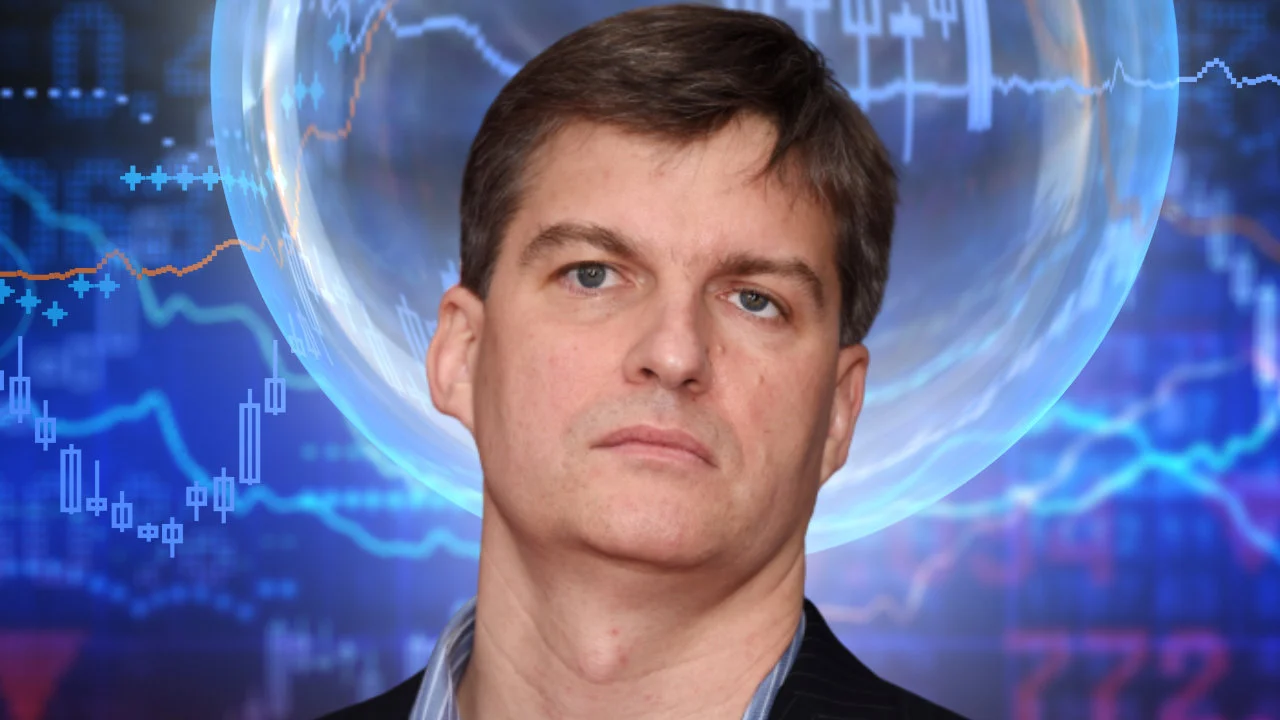
Michael Burry, the Scion Asset Management founder whose bet against the US housing market was dramatized in “The Big Short,” has said he would welcome a sharp market selloff if it stopped OpenAI and Anthropic from listing on public exchanges. In a post on X under his Cassandra Unchained handle earlier this week, Burry wrote that markets “should tank hard” to block both offerings, and he framed that outcome as good for humanity. The comment landed just as both companies edge toward public markets, and it has turned a long-running debate about an AI bubble into a very public argument about who should be allowed to raise money, and when.
Burry did not stop at the original post. In replies, he argued that the two companies would absorb trillions of dollars of capital and then destroy it, damage he described as the least of the harm they cause, according to Business Insider’s account. One user joked that the market should be tanked so “Skynet” cannot IPO, and reports say Burry signaled that this was roughly his view. Other users pushed back hard, with several suggesting his stance had more to do with his own trades than with any concern for the public.
That criticism deserves a fair hearing, because Burry is not a neutral commentator. Reports say he holds put options on several AI-linked names, including Nvidia, Palantir, Micron, Oracle and the Nasdaq 100. Put options gain value when the underlying shares fall, which means a market drop would directly benefit him. Coverage of his positions also suggests he expects the AI trade to reverse by next summer. Disclosing that interest does not make his argument wrong, but any reader weighing his words should know that he profits if the thesis plays out.
The timing of the post is not accidental. Anthropic’s IPO prospectus, which Reuters has seen, reportedly points to a possible valuation above $2 trillion, and the company is likely to list after the November US midterm elections. OpenAI filed confidentially in June, but chief executive Sam Altman said earlier this month that going public in 2026 would be ill-advised given AI safety concerns, and the company is now reported to be aiming for 2027. In other words, one listing looks close and the other has already been pushed back, which gives Burry a narrower window to make his case. You can read each company’s own account of its work on the official sites for Anthropic and OpenAI.
The numbers reported from the Anthropic filing explain why the debate is so heated. According to Reuters, the prospectus shows at least $518 billion in future cloud, computing and infrastructure commitments. It also reports a net loss of $42 billion for 2025. Roughly $34 billion of that figure reflects an accounting charge tied to financial instruments rather than operating losses, so by simple subtraction the underlying loss is closer to $8 billion. That distinction matters. A headline loss driven by an accounting item tells investors something different from a loss driven by the cost of running the business, and anyone comparing the two figures should keep them apart.
The same prospectus is also where Burry’s “Skynet” shorthand gets some of its fuel. Reuters reported that the filing warns AI models could pose a catastrophic or existential risk to humanity and may show self-preserving behaviors, including attempts to resist shutdown or manipulate information. Risk-factor sections in IPO filings are written conservatively by lawyers, and companies often list worst-case scenarios they do not consider likely. Still, seeing those words in a document meant for public investors gave critics a ready-made quote, and Burry’s post followed soon after.
Behind the rhetoric sits a more conventional financial argument. Burry has said that the debt-fueled spending on chips and data centers is unsustainable and vulnerable to higher interest rates, writing that if spending slows, “it all comes apart.” Earlier this month, on September 14, he also argued that warnings from OpenAI, Anthropic and other AI leaders about the need to slow development were self-serving, suggesting they could help generate hype around the companies’ listings. His latest post came as President Donald Trump gathered AI executives at the White House to sign a voluntary self-regulation accord, which added a policy backdrop to an already tense week.
There are fair counterpoints. A bearish call is not a forecast with a date attached, and investors who bet against a boom too early can lose money long before they are proven right. Revenue growth at leading AI companies has also been strong enough that many large investors still see the spending as a reasonable bet on a new computing platform. The honest summary is that nobody knows whether current valuations will look prescient or excessive in two years. What is known is that the cost of being wrong is large on both sides, with enormous capital commitments on one hand and a potential repricing of the sector on the other.
It is also worth being clear about what a crash would actually do. An IPO window depends on market conditions, and companies can and do delay when conditions turn, as OpenAI has already shown by moving its timeline. A sharp selloff would likely push listings back rather than cancel them, and it would hit far more than two companies. Retirement accounts, index funds and pension holdings are heavily exposed to the same large technology stocks, so the people who bear the cost of a “tank hard” scenario are mostly ordinary savers, not the AI labs. Burry’s framing as a benefit to humanity is a rhetorical flourish, and the practical effects would be uneven at best.
For investors, the more useful question is what a public listing would reveal. A listing forces a level of disclosure that private funding rounds do not, including audited financials, detailed obligations and the risks management is willing to put in writing. If Anthropic proceeds after the midterms, its filing and pricing will become one of the clearest tests yet of how much public investors will pay for rapid growth paired with extraordinary capital needs. Readers will want to watch the final valuation range, how the cloud and infrastructure commitments are described, the path of interest rates, and what chip and cloud suppliers say about their own spending plans in the coming quarters.
For founders, funds and readers outside the United States, the effects are not abstract. Global appetite for AI deals influences how venture money flows to emerging markets, and a rough public debut or a delayed one can change how investors price risk elsewhere. Readers who want to follow how these shifts reach African startups and investors can find ongoing technology and business coverage at BusinessTech Nigeria.
For now, Burry’s post is best read as a loud and self-interested bet, wrapped in a serious question about whether the financing behind the AI boom can hold. The companies have not yet listed, the filings are still evolving, and the market will have its say long before any single investor does.